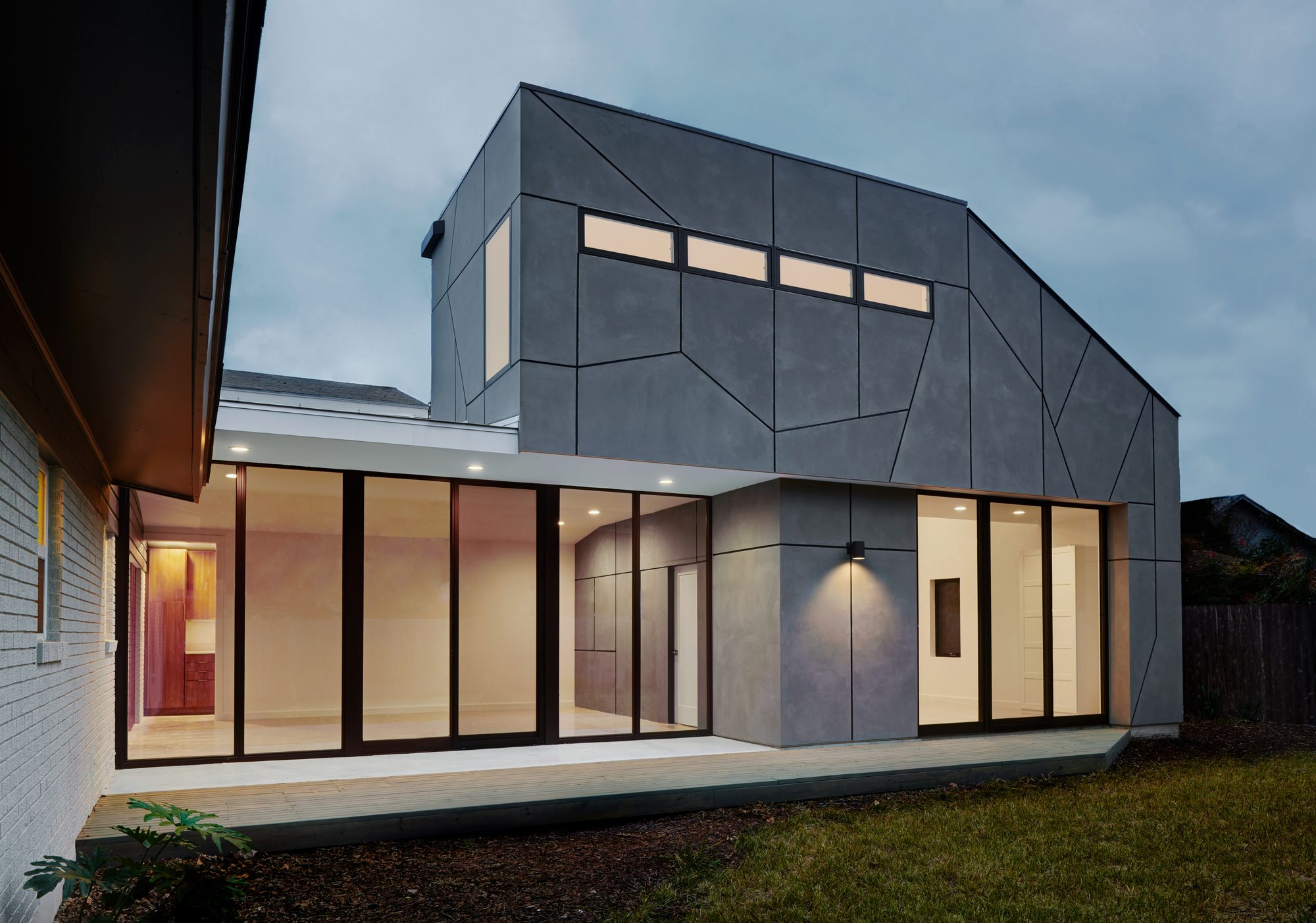
Client and program
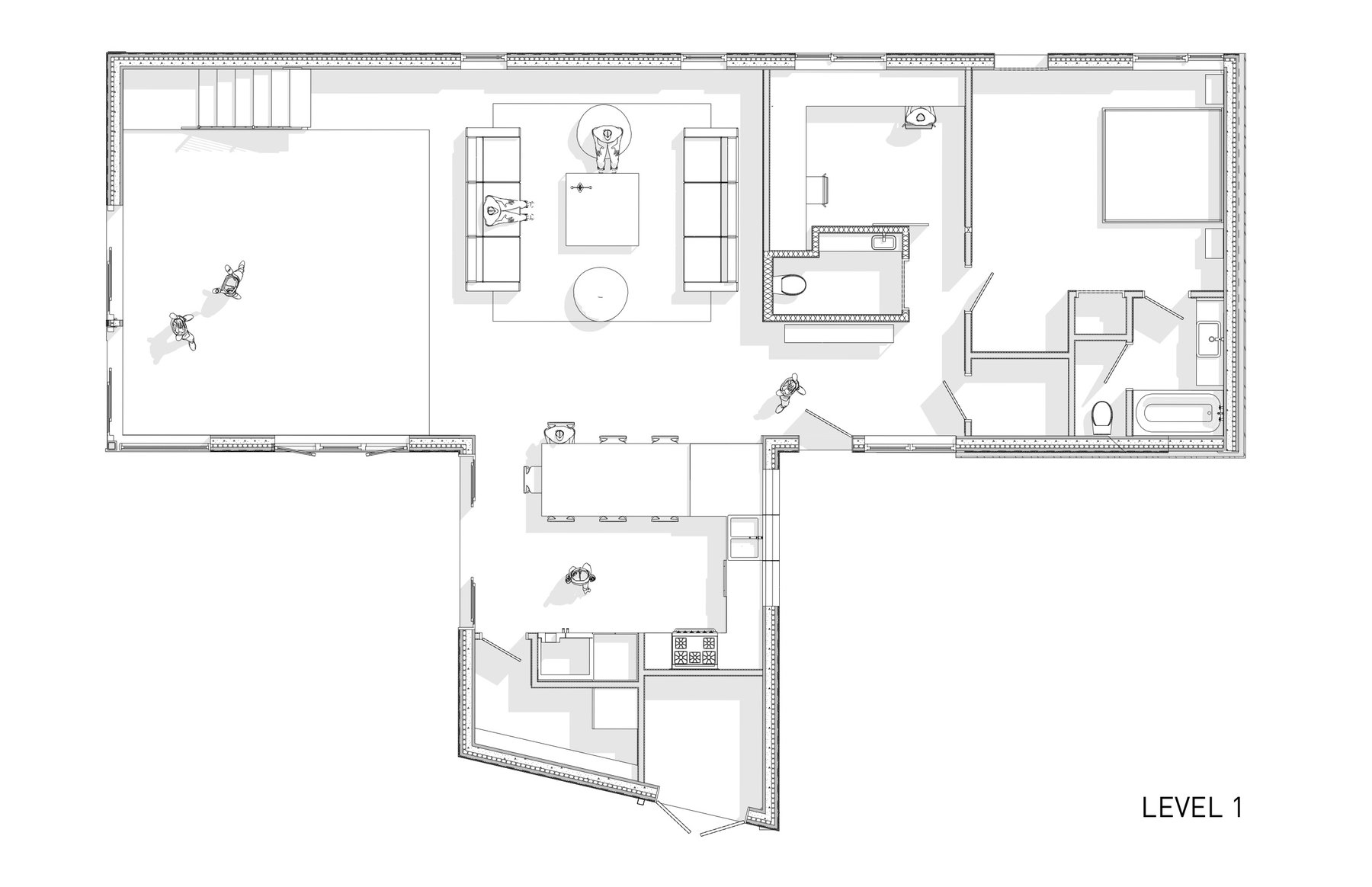
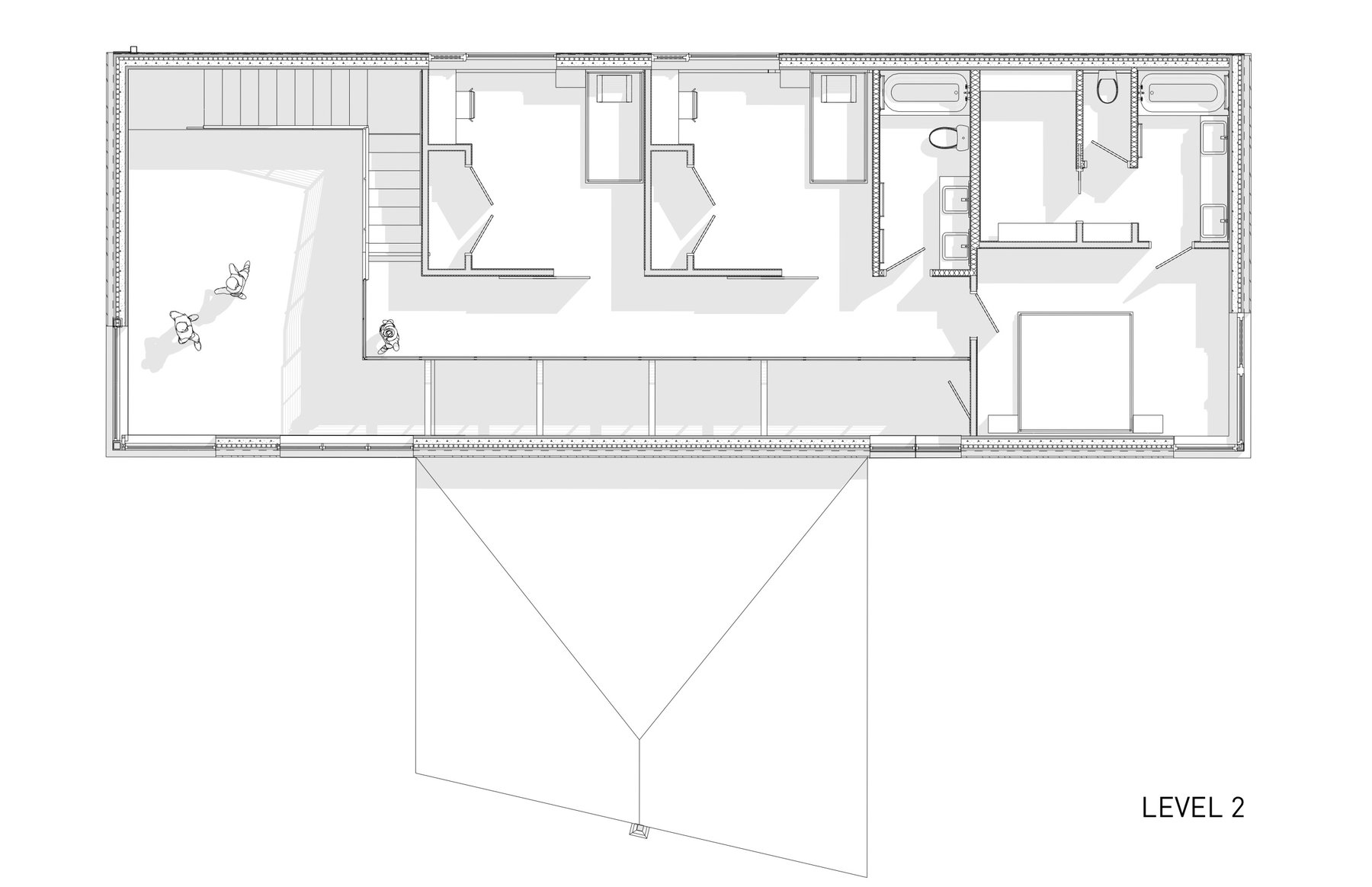
The clients had bought a small mid-century house in East Austin with a single-story footprint of unfinished concrete-block walls and asked the studio for a renovation that would add a second story without losing what was already there. The brief was an open ground-floor living/kitchen/dining plan, a primary suite and second bedroom upstairs, and a building that would read as one project rather than as two stitched together.
Site and constraint
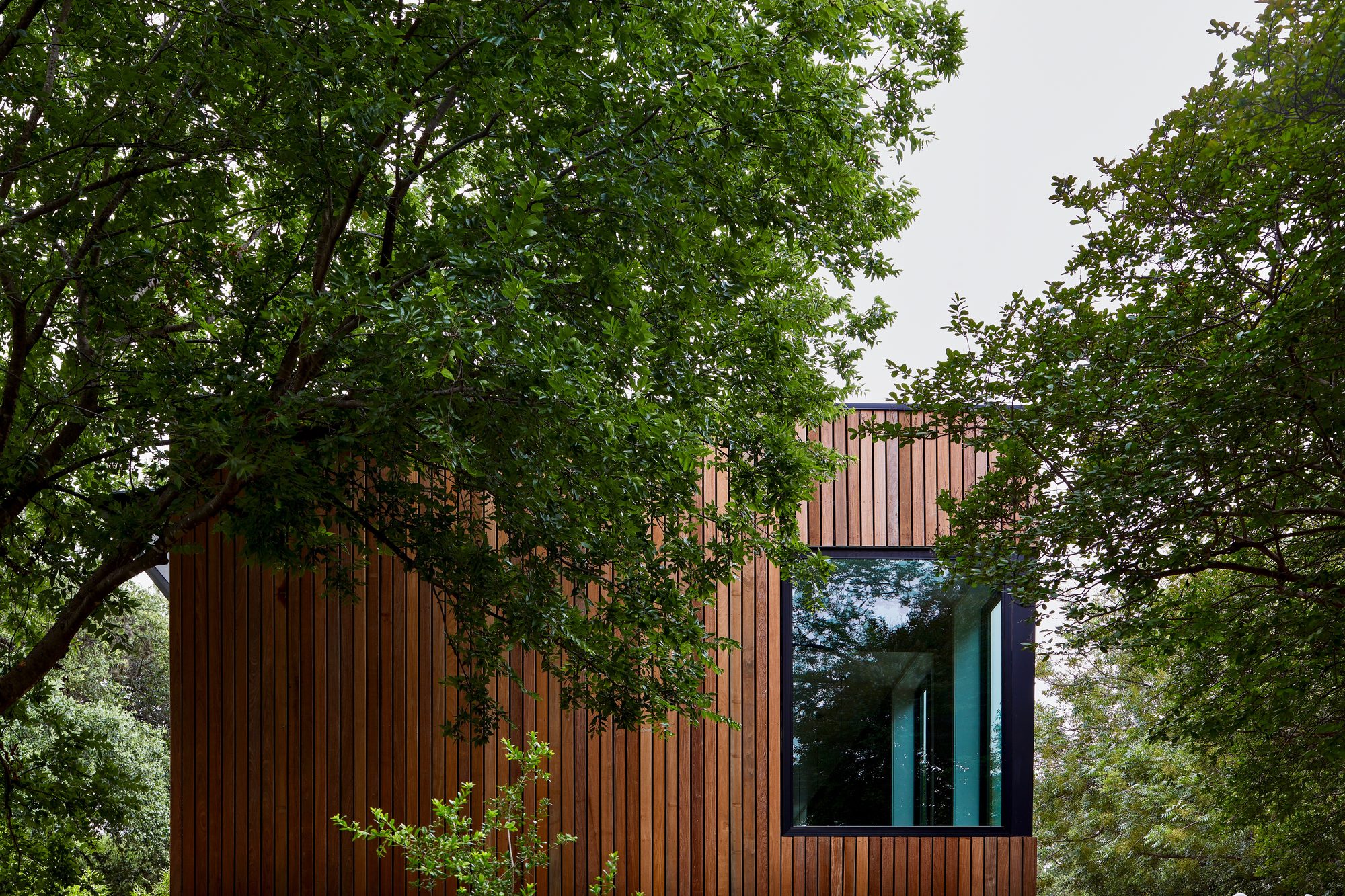
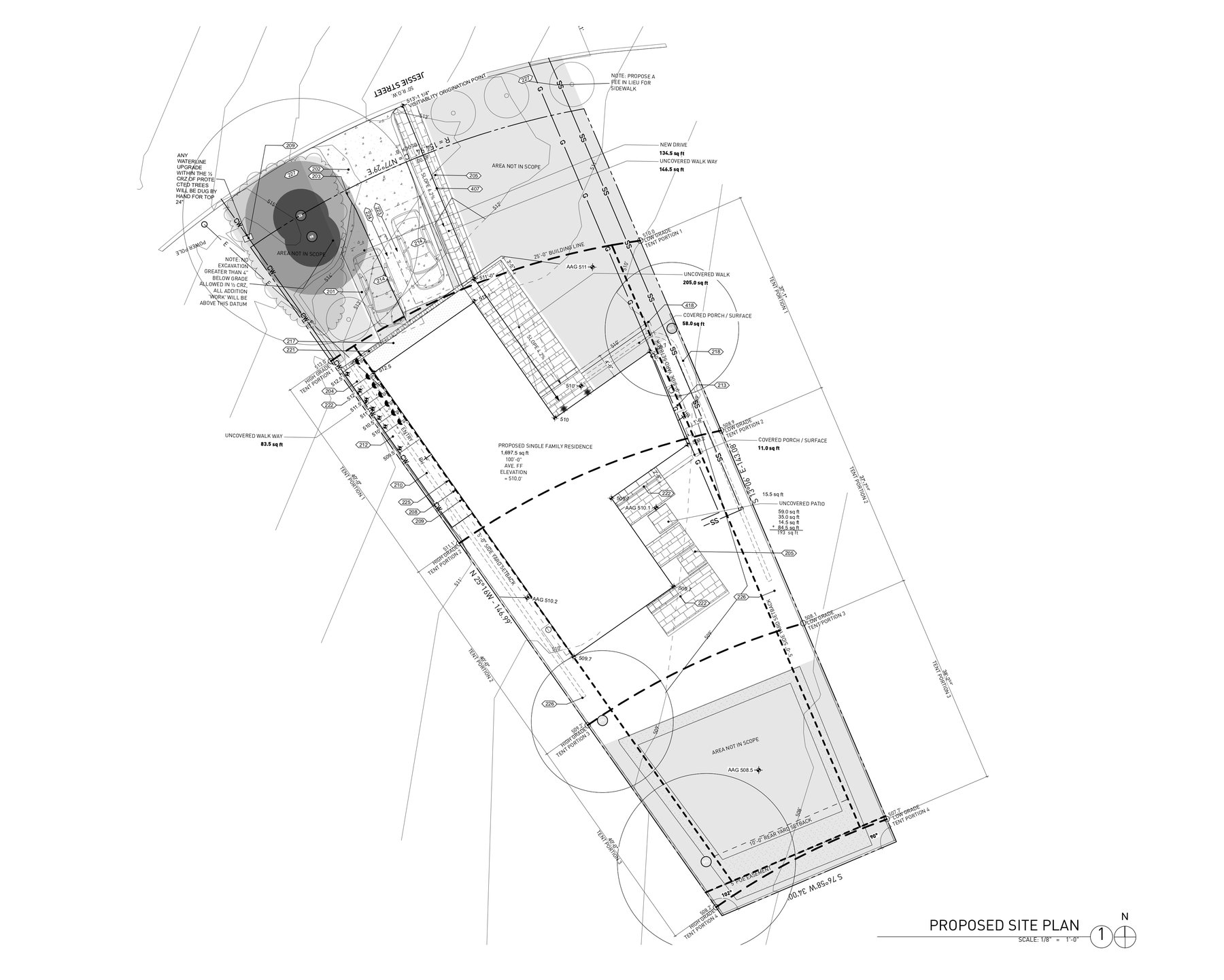
The site is a tight East Austin residential lot with a mature tree canopy that the clients wanted preserved at all costs. The constraints were the existing block walls (load-bearing in places, decorative in others), the trees (most of which were within 10 feet of the building footprint), and the neighborhood scale — anything we added had to read as a neighbor, not as an upgrade.
Design move
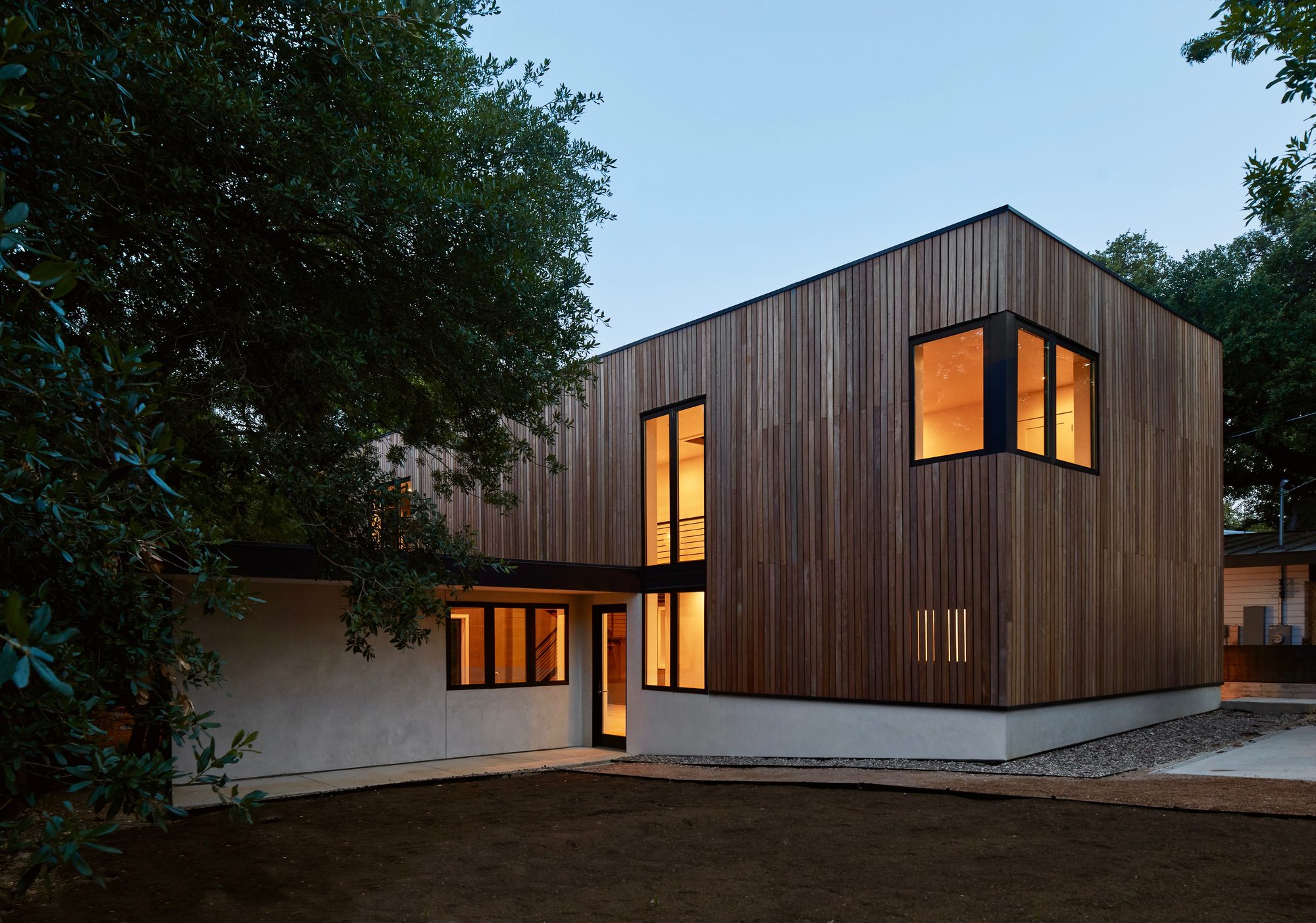
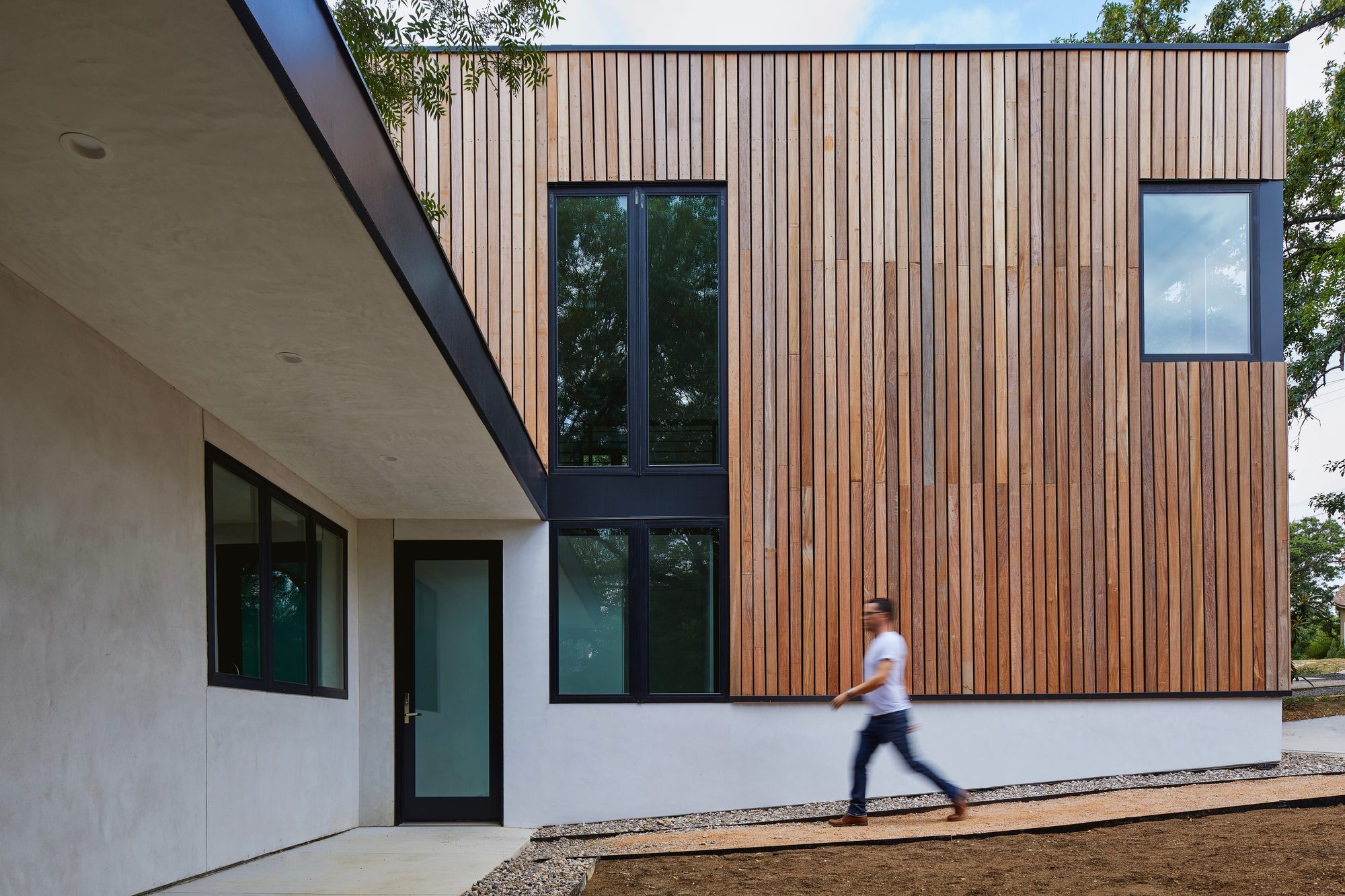
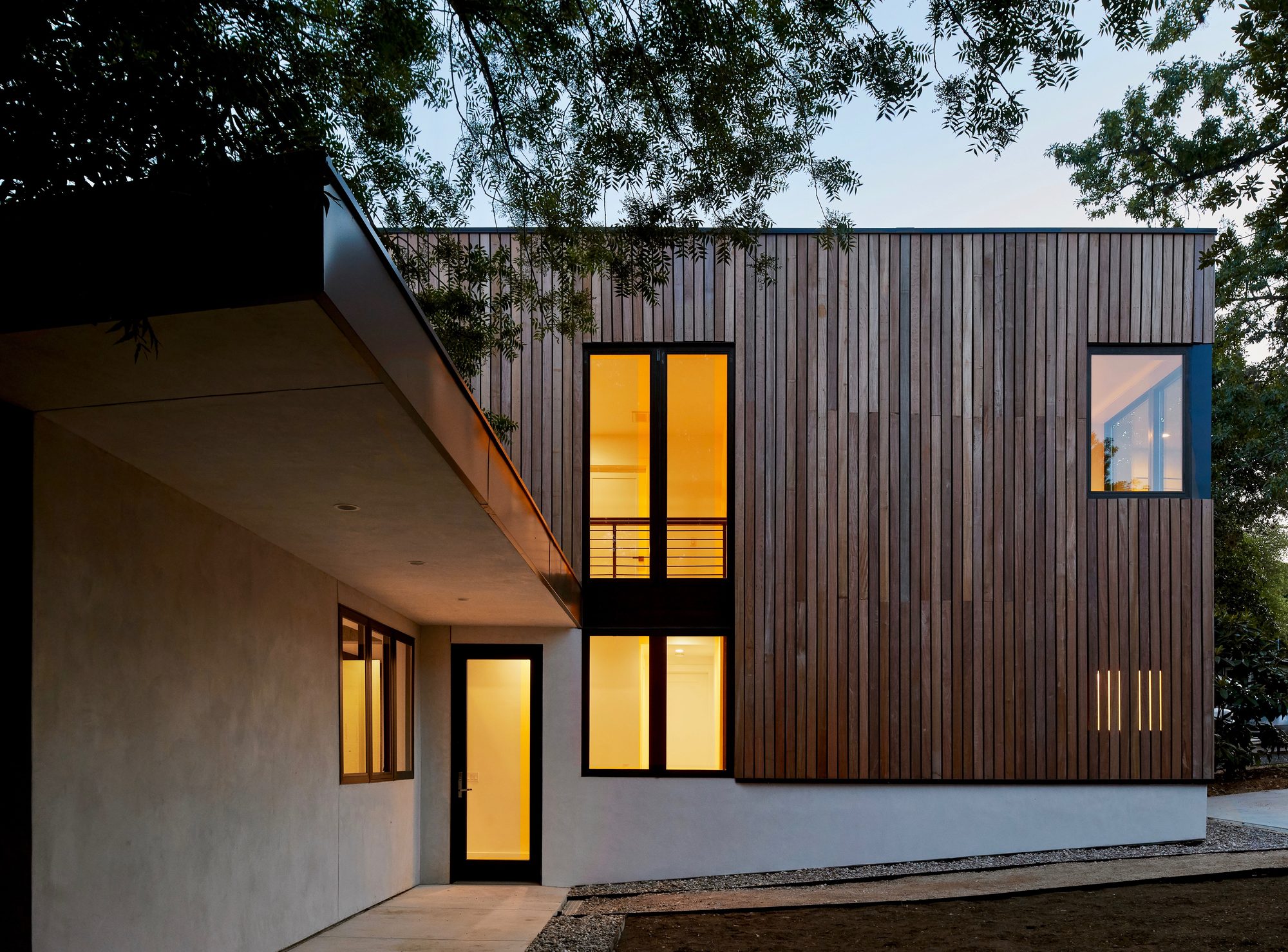
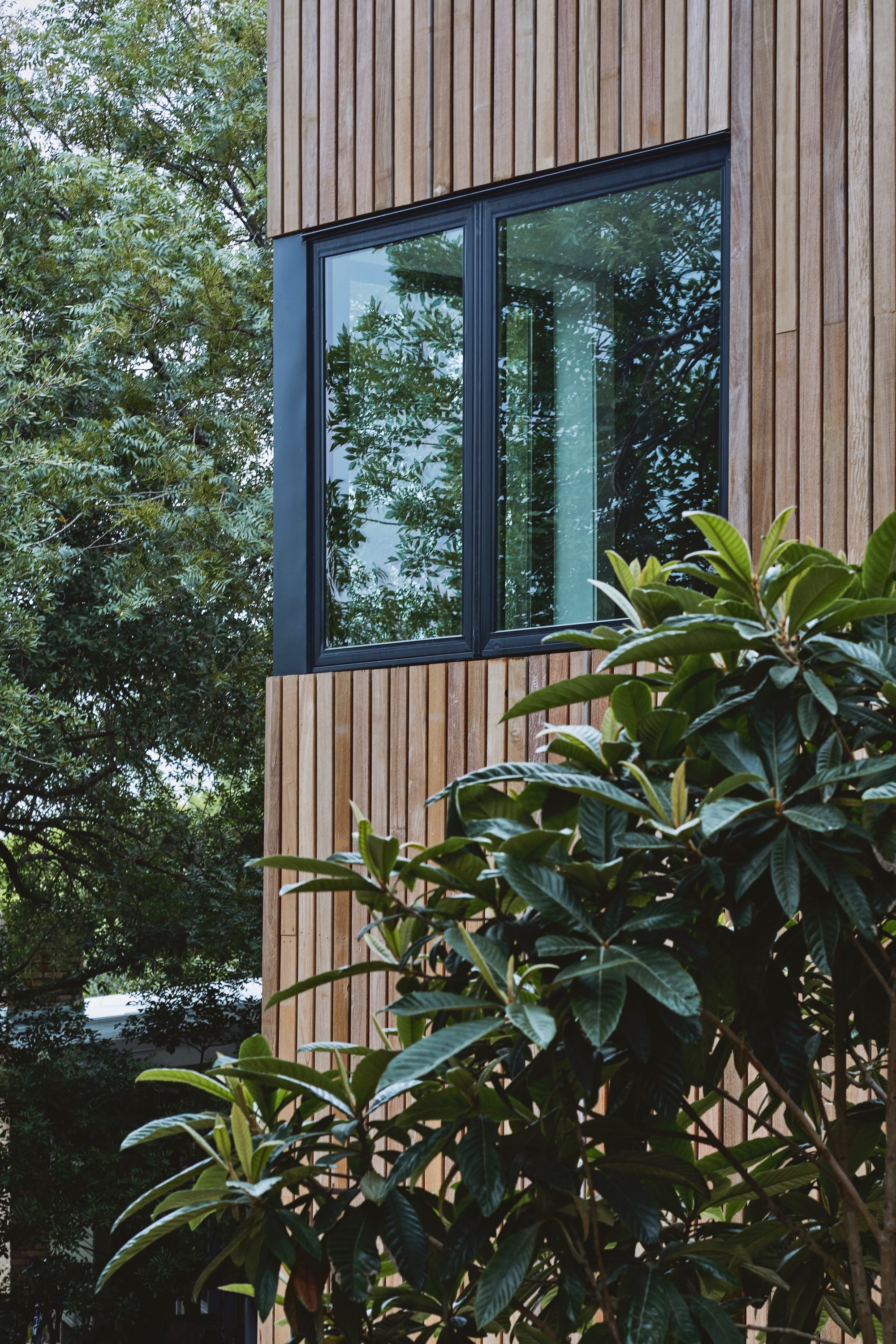
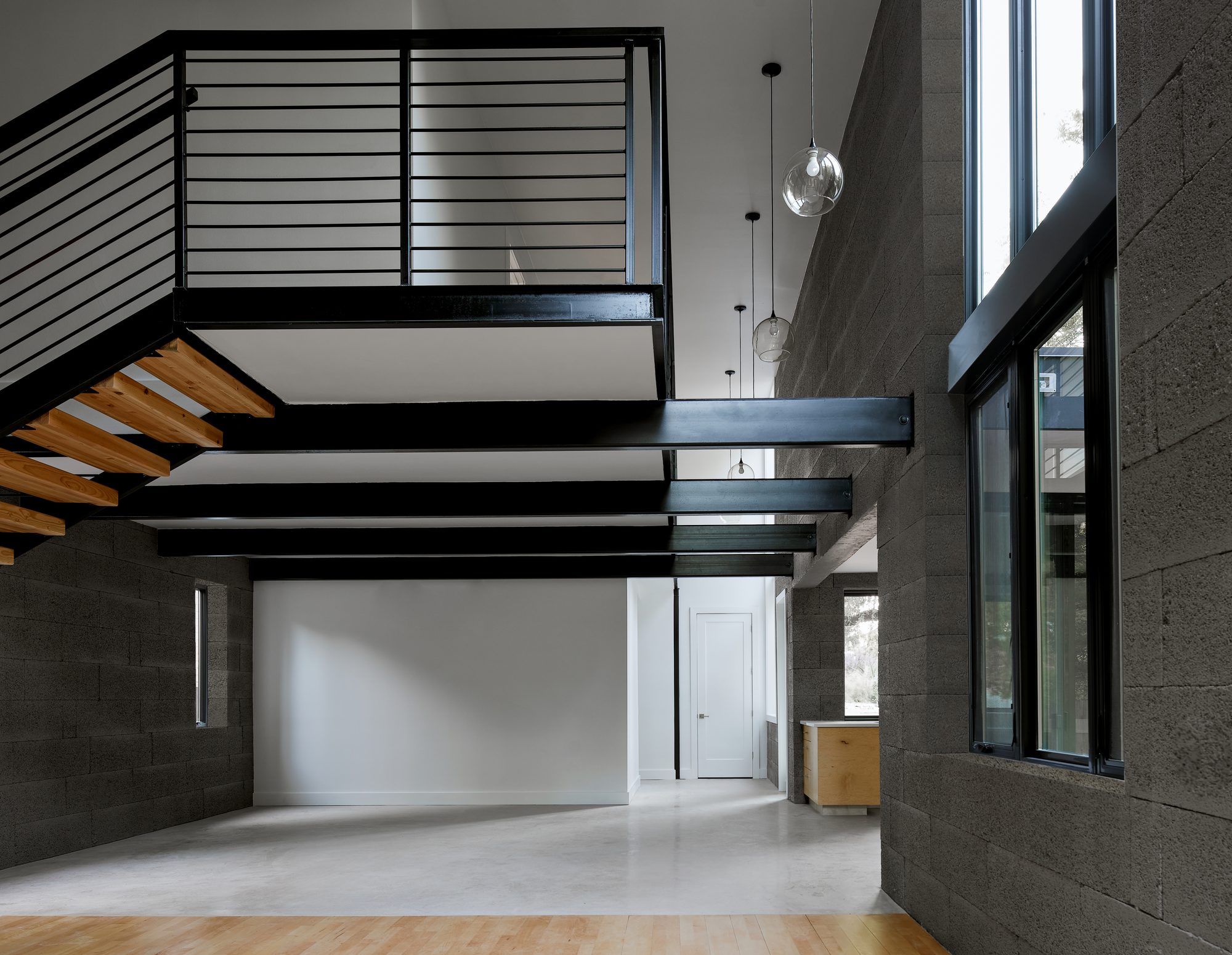
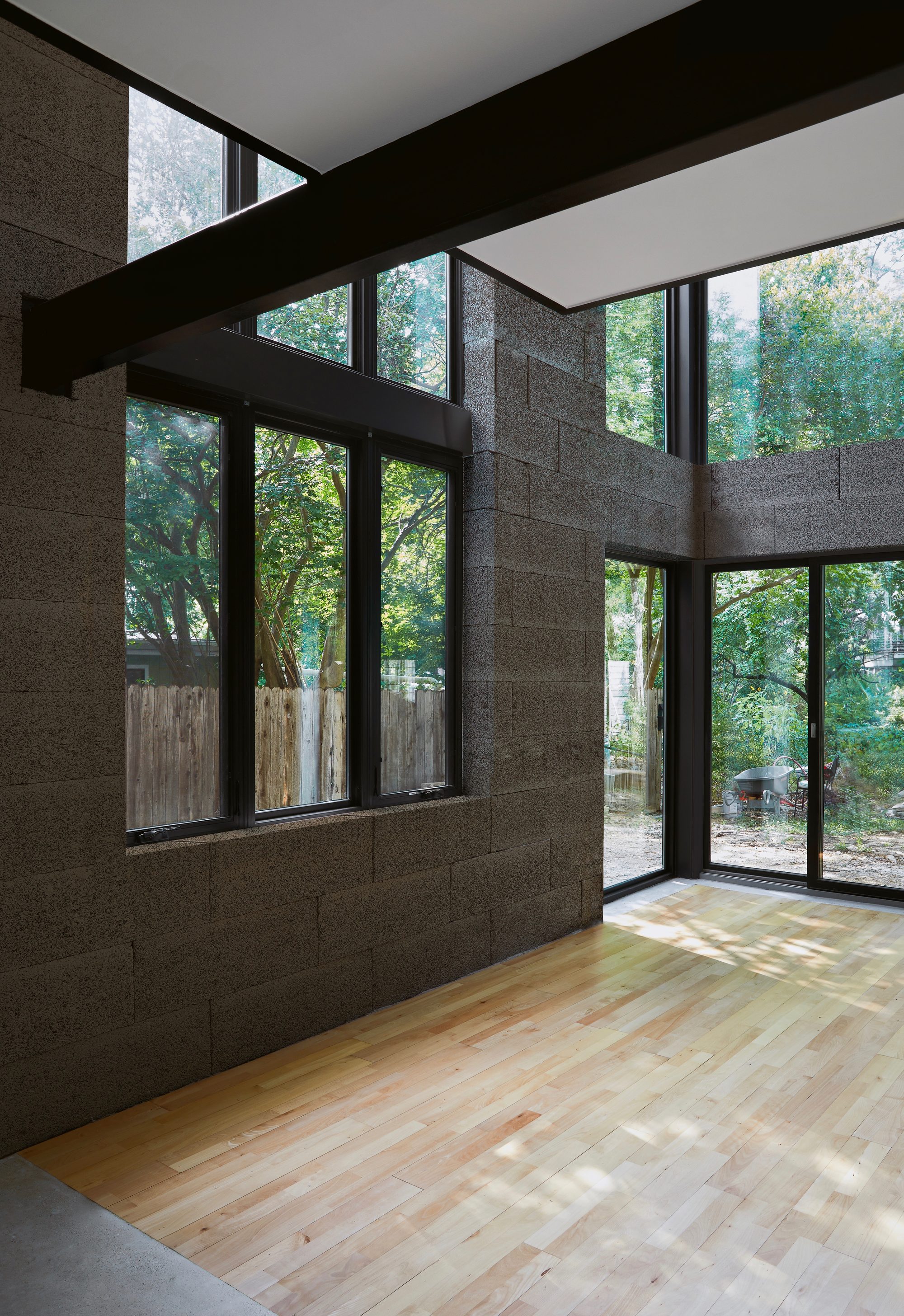
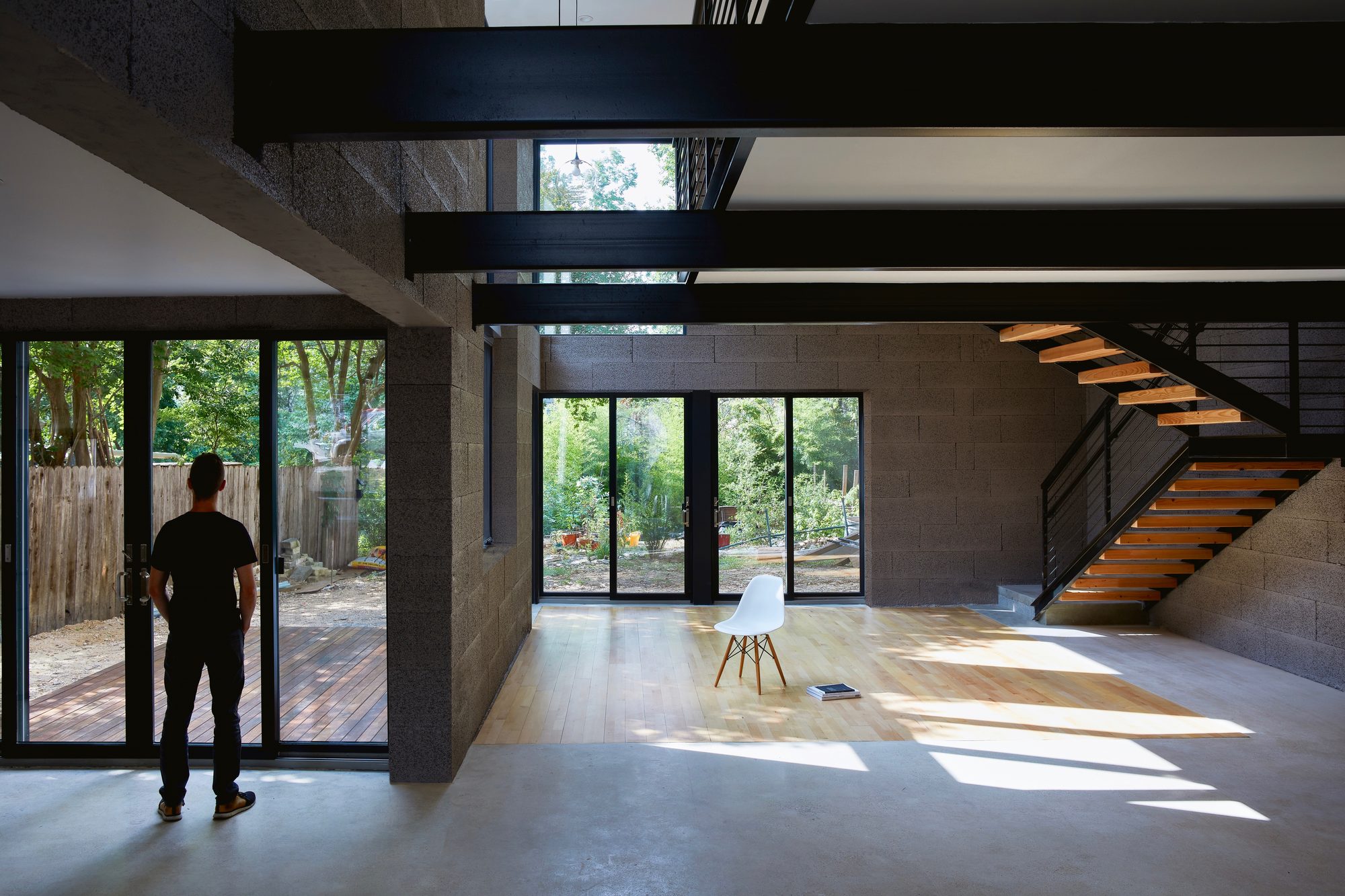
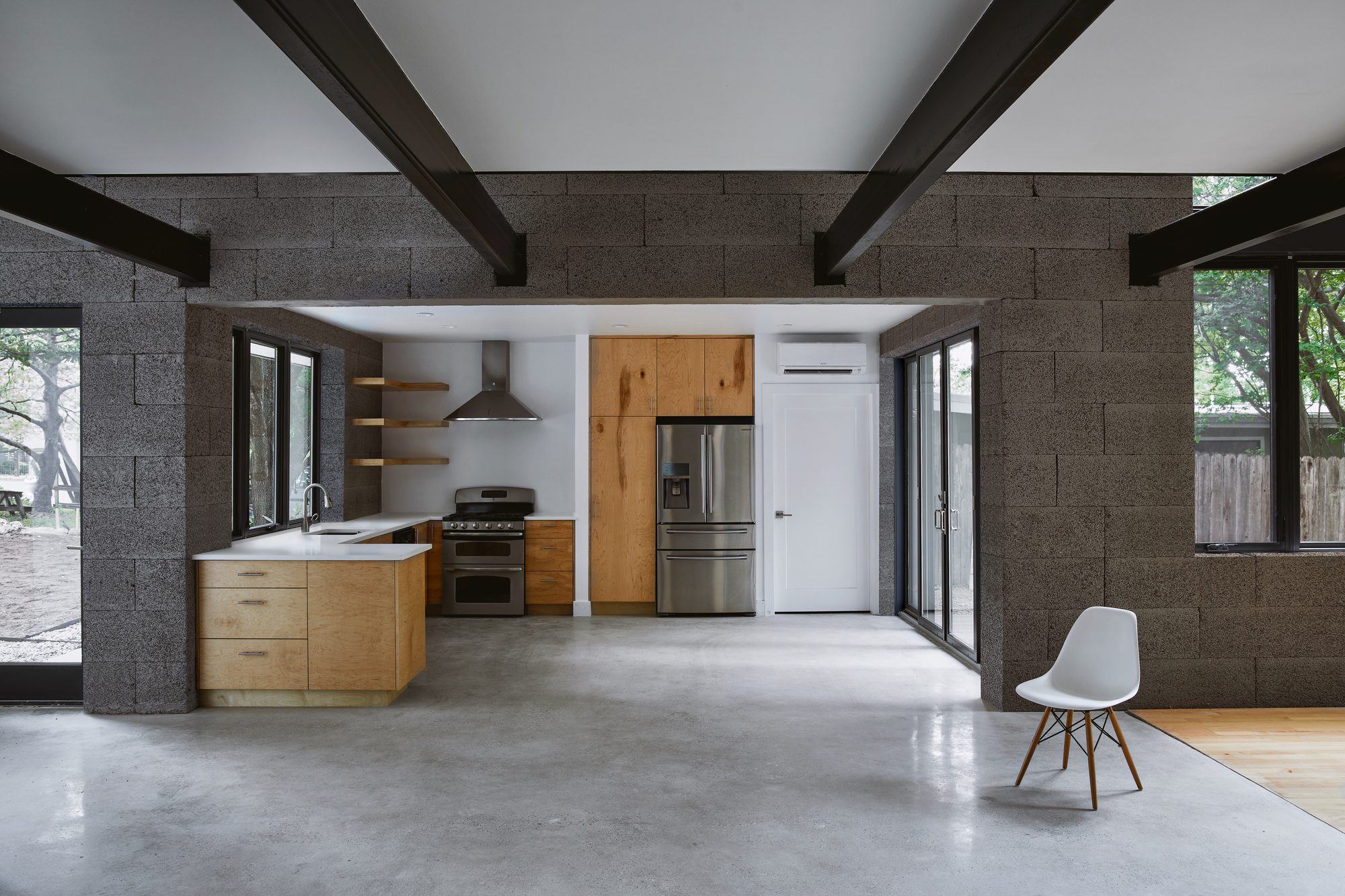
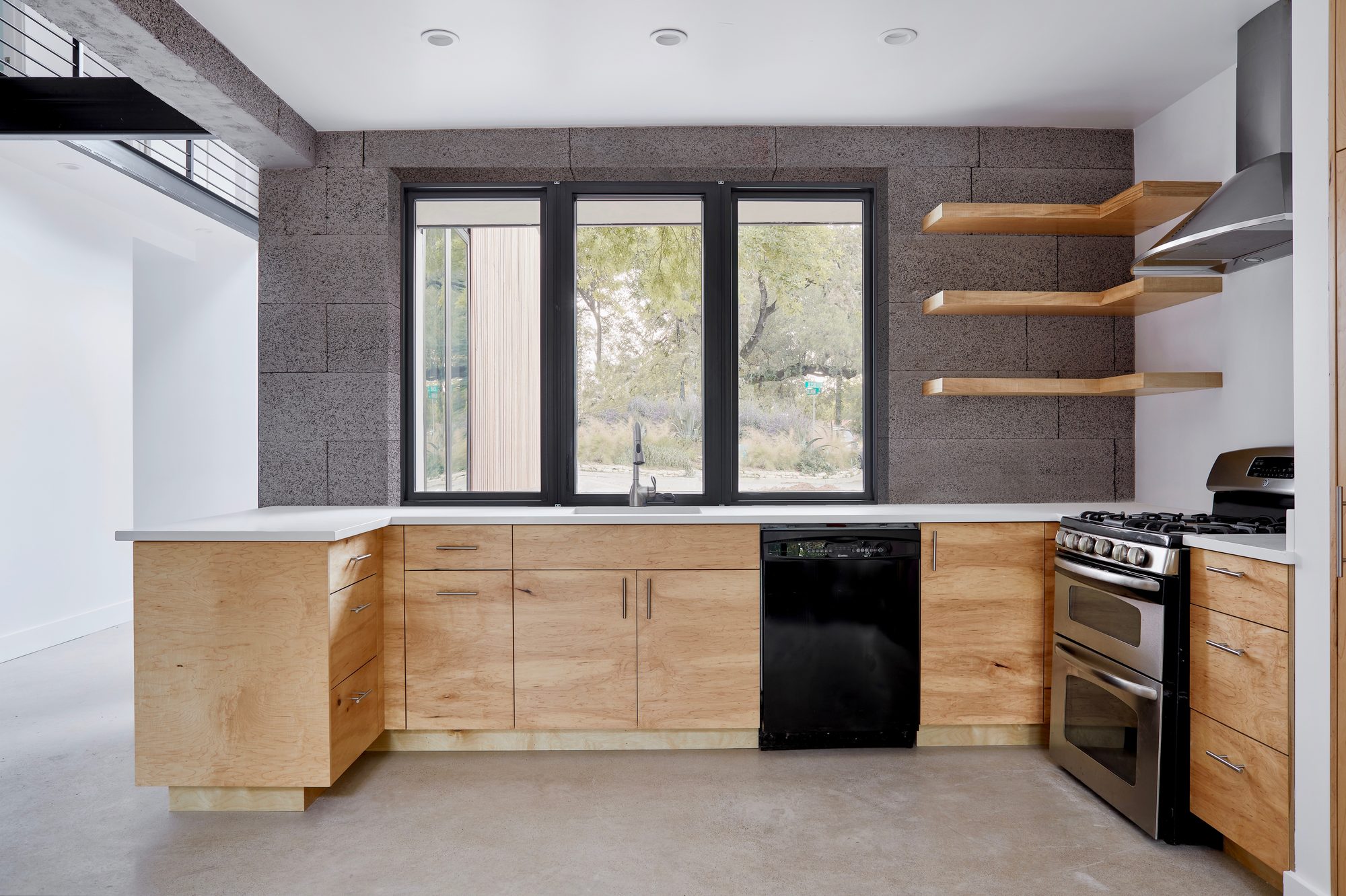
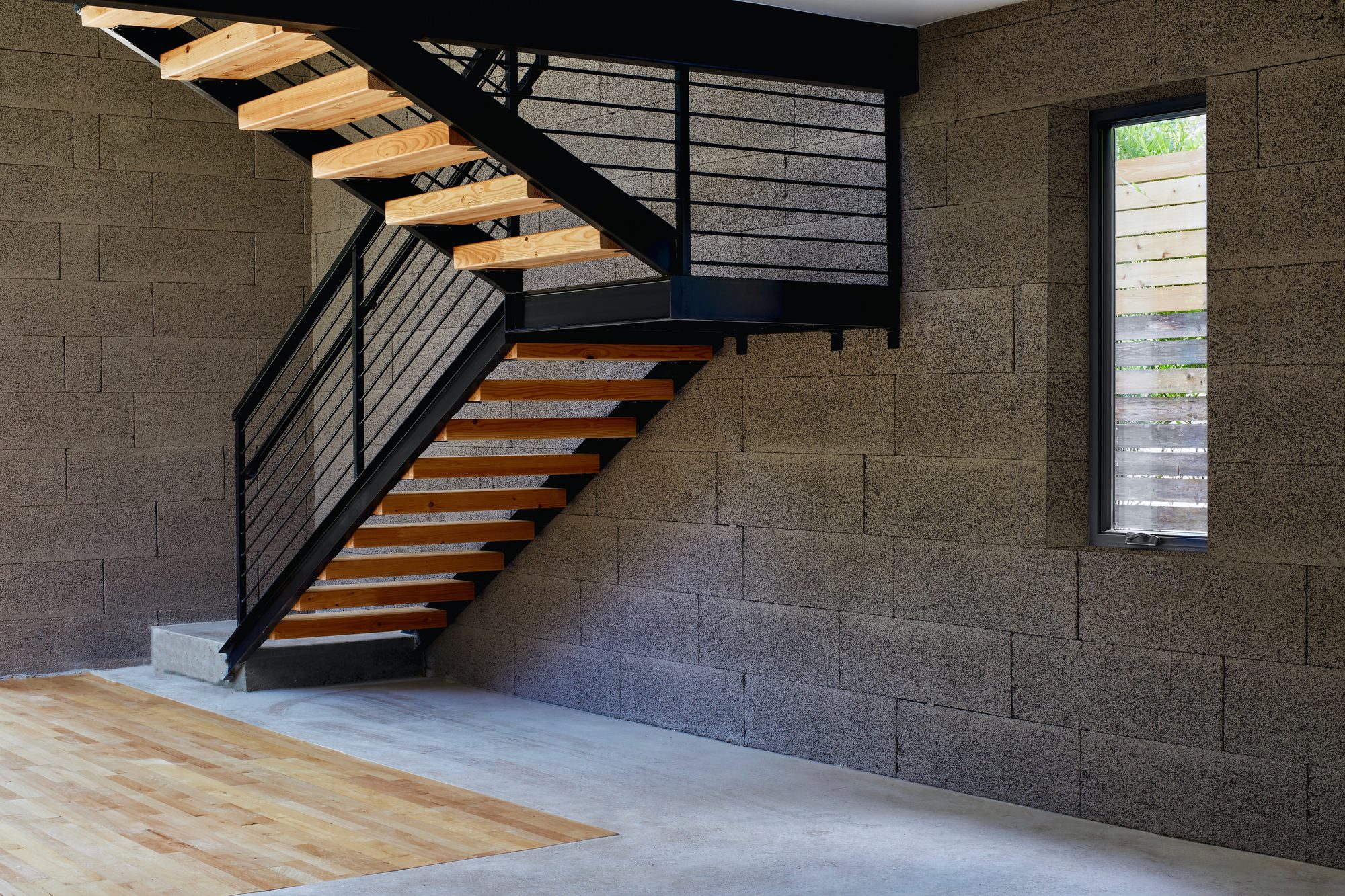
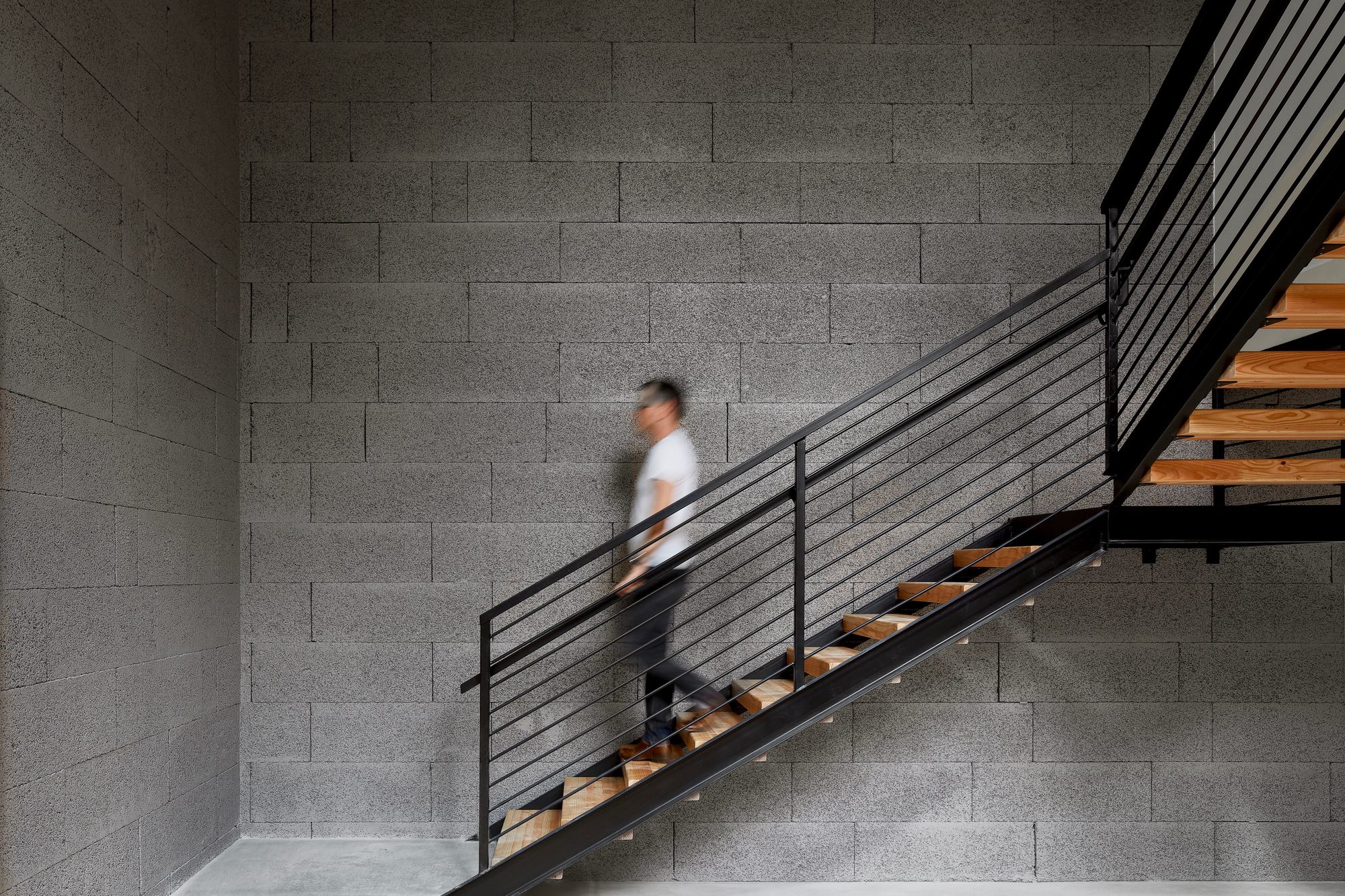
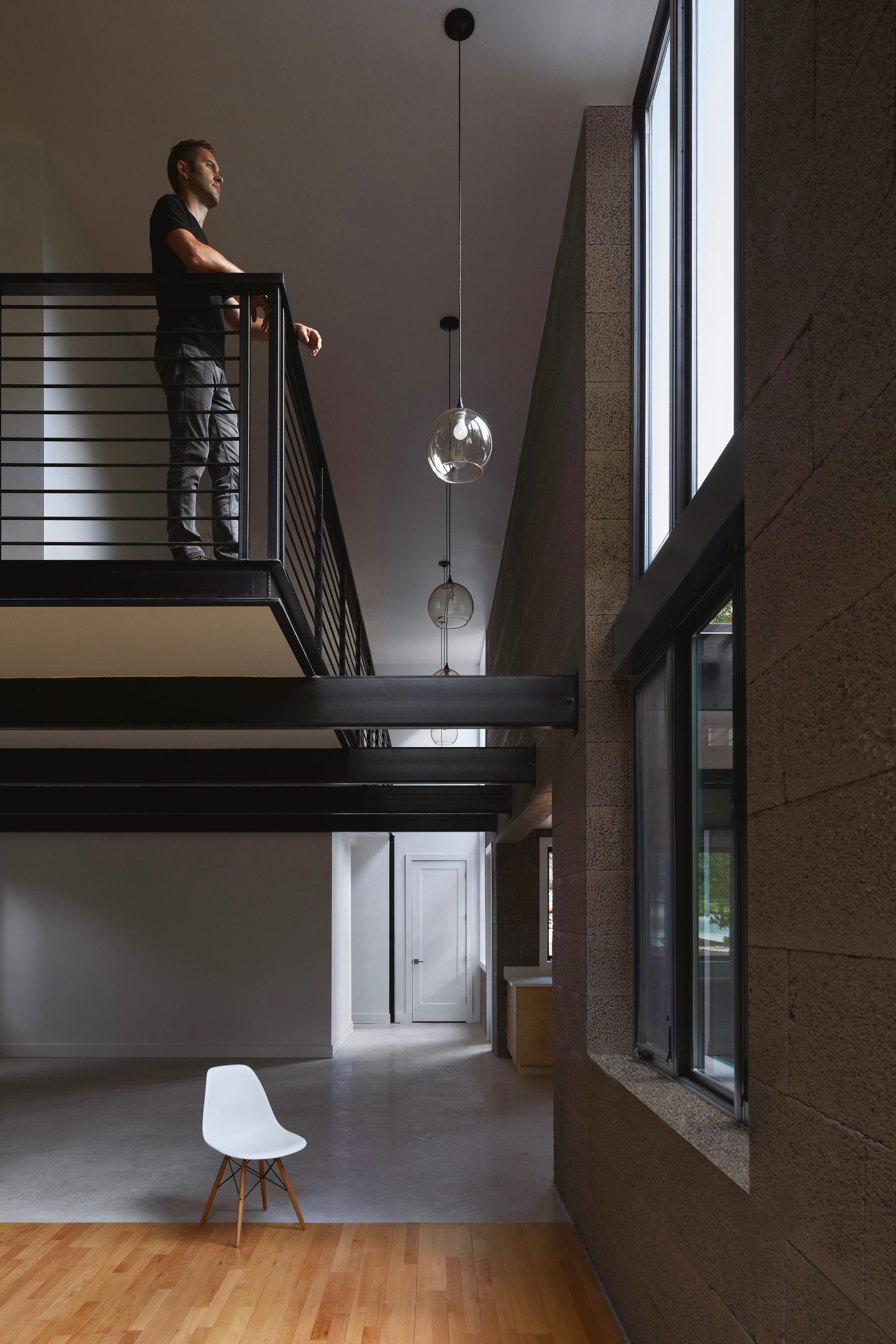
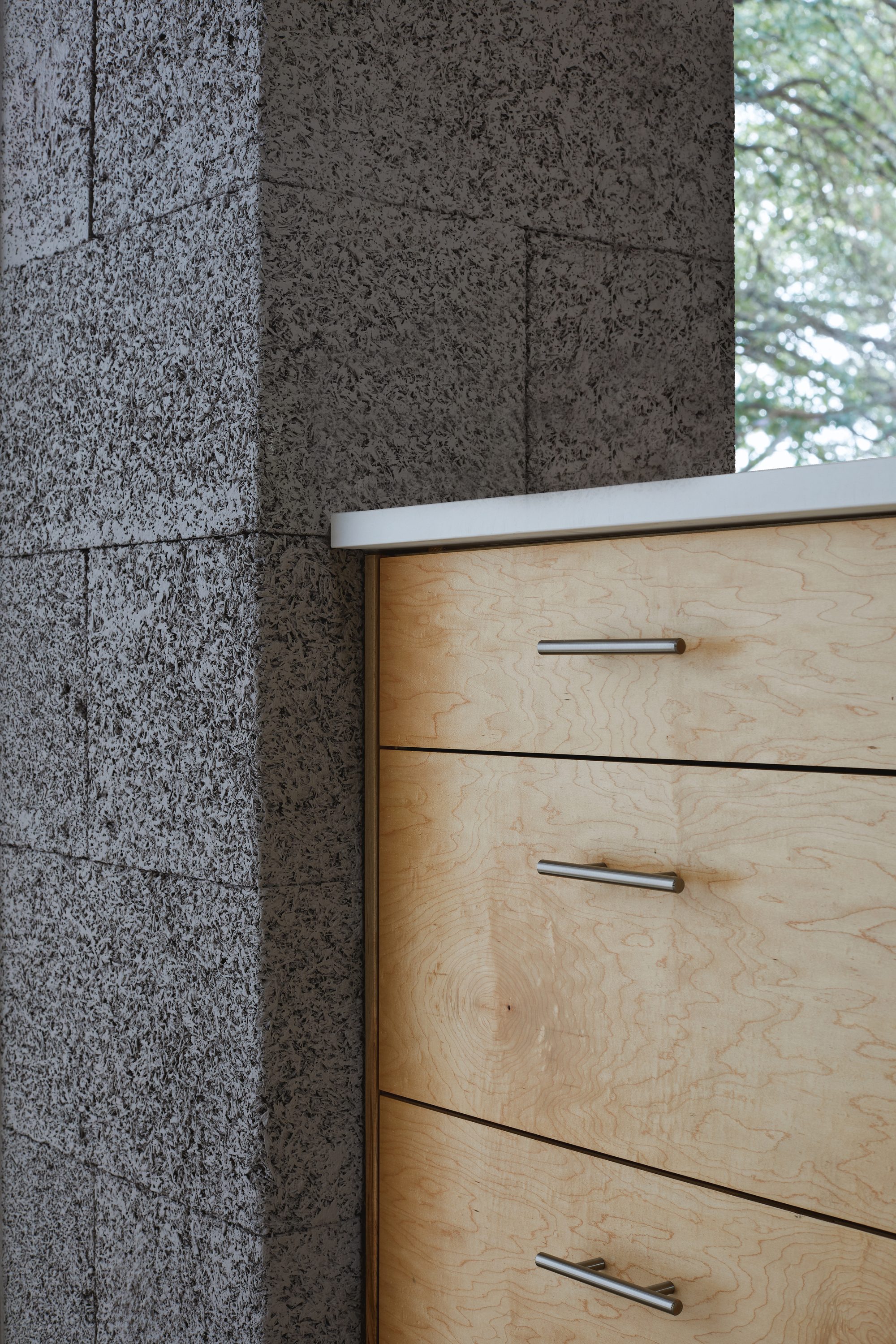
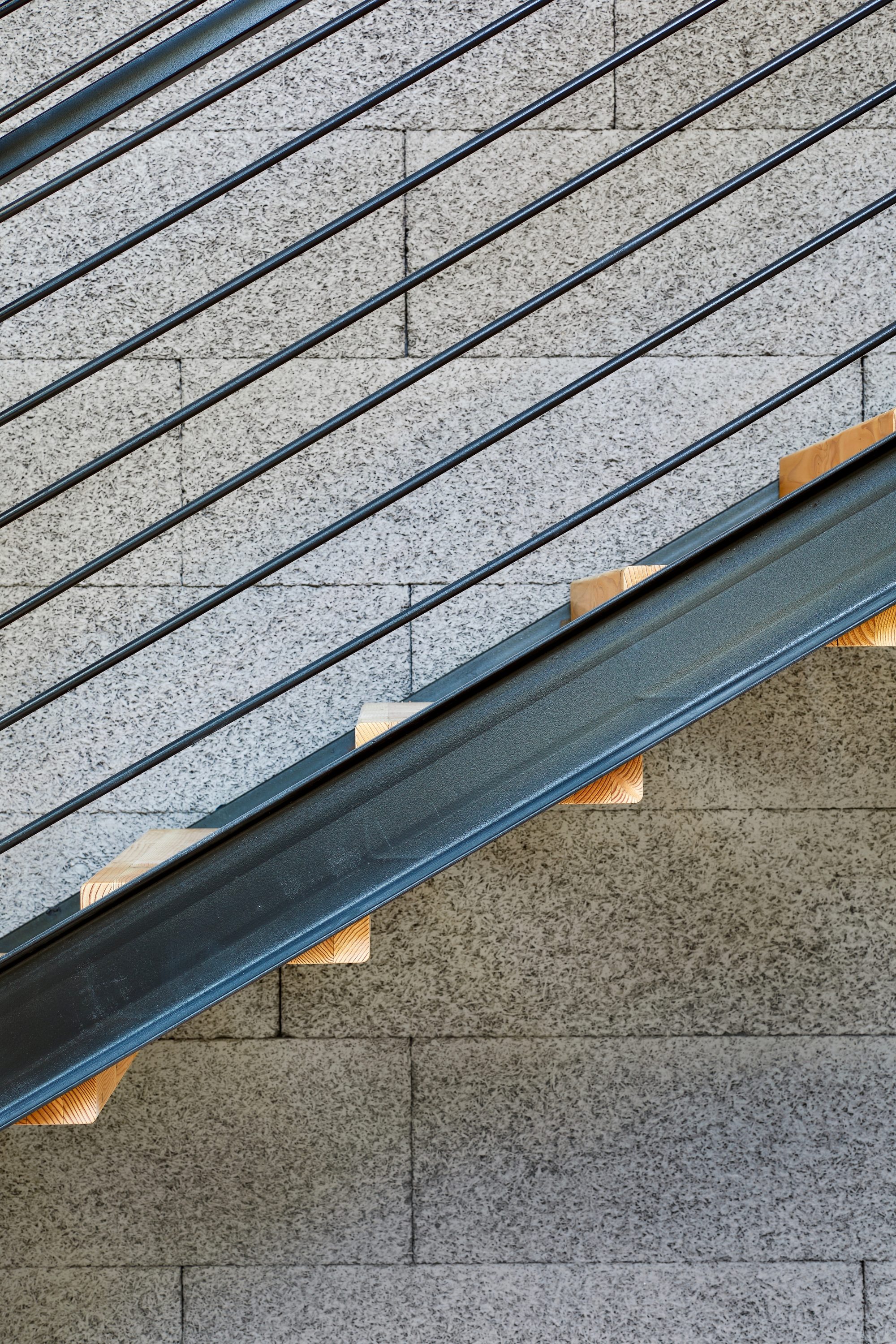
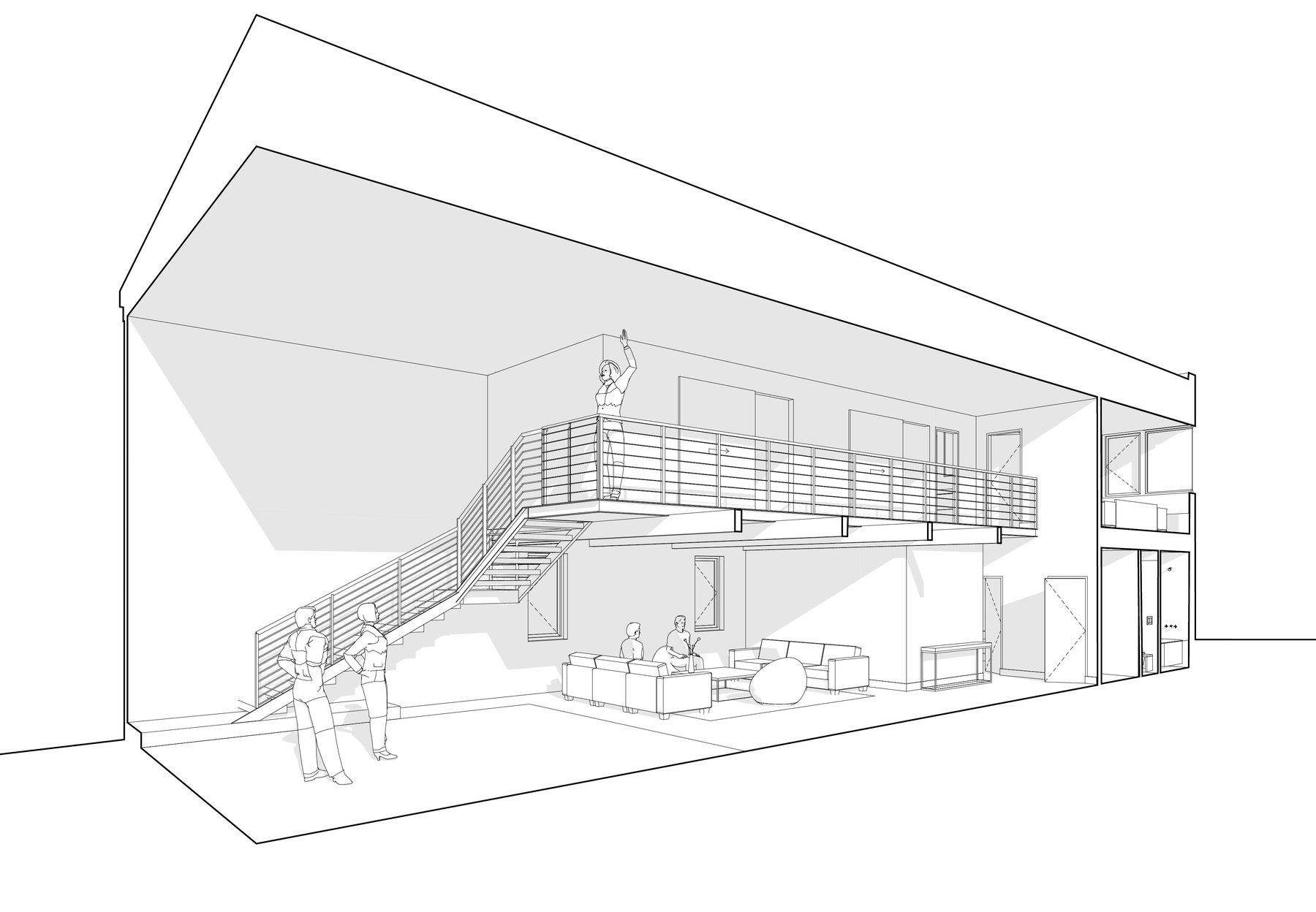
The original block walls were left exposed inside and out, as the building’s primary architectural material. New black steel beams were threaded across the ground floor at the existing wall heights, opening what had been a series of small rooms into a single open-plan space. A new cedar-clad second-story volume was built above, set back from the front and the rear, sized to fit inside the existing tree canopy. The cedar reads as a counter-material to the gray block; the steel reads as the seam between the two.
Construction approach
Conventional residential renovation sequencing, with one critical move handled carefully: the existing block walls were braced before any second-story load was introduced, and the new steel beams were installed before any of the old roof was removed. The cedar siding was specified for its tonal warmth against the cool gray block, and detailed for replacement (boards can be swapped one at a time).
Outcome
Jesse Street House is the studio’s clearest residential argument for the broader adaptive-reuse method. The existing building is the room; the new work is the volume above it. The block walls — the project’s most distinctive feature — were not added by the studio but by whoever poured them in the first place; the project’s discipline was leaving them alone.