Client and program
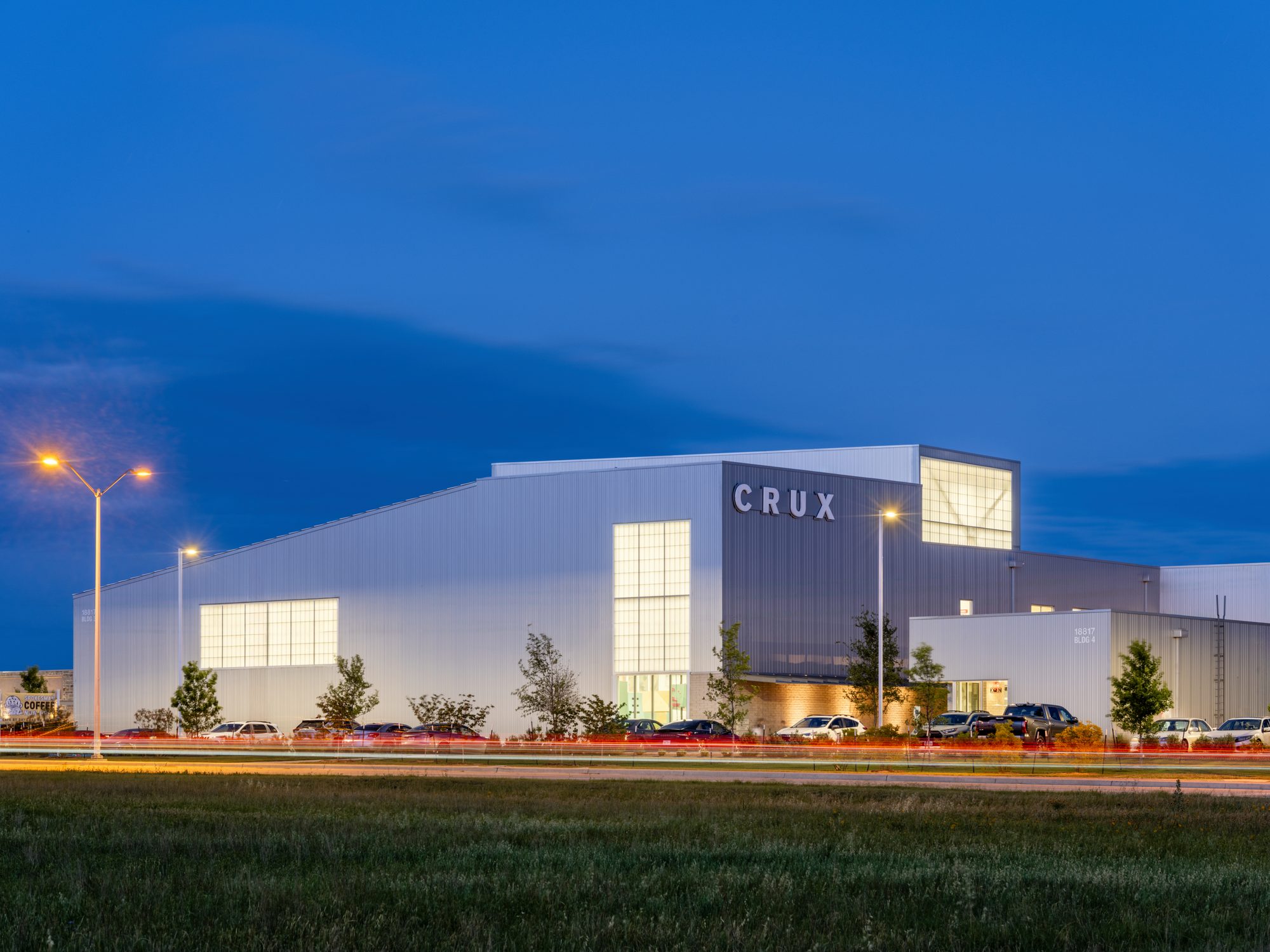
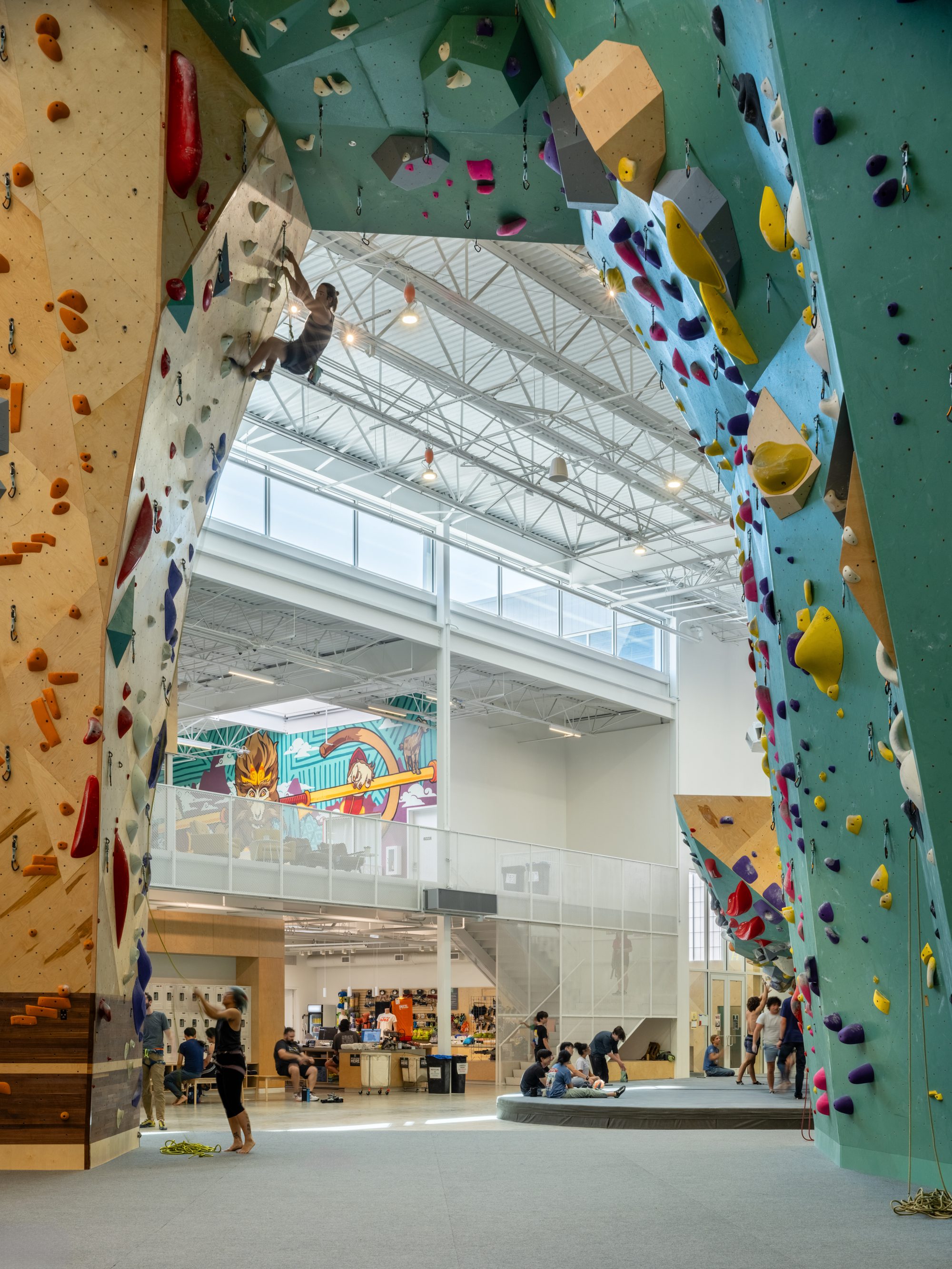
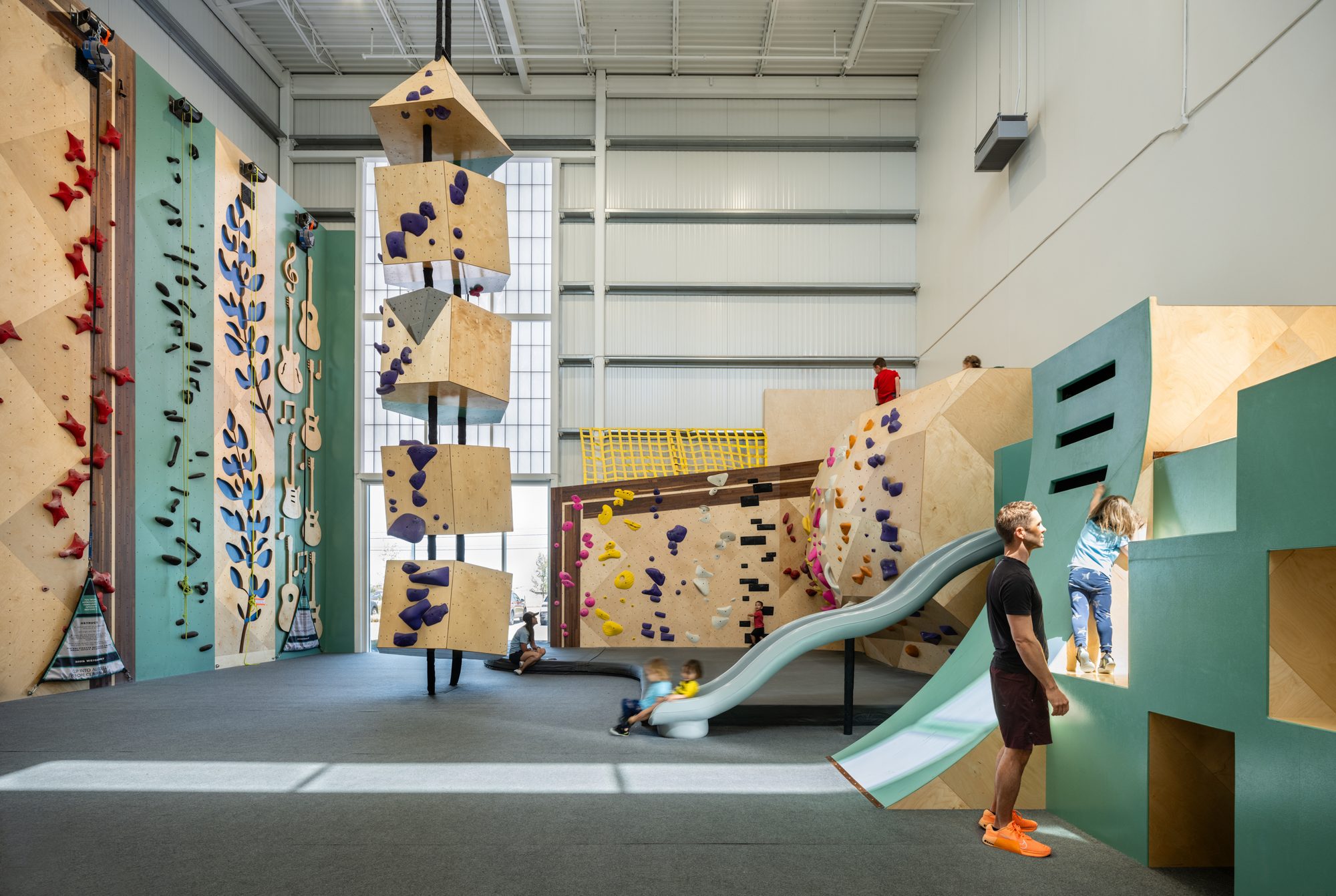
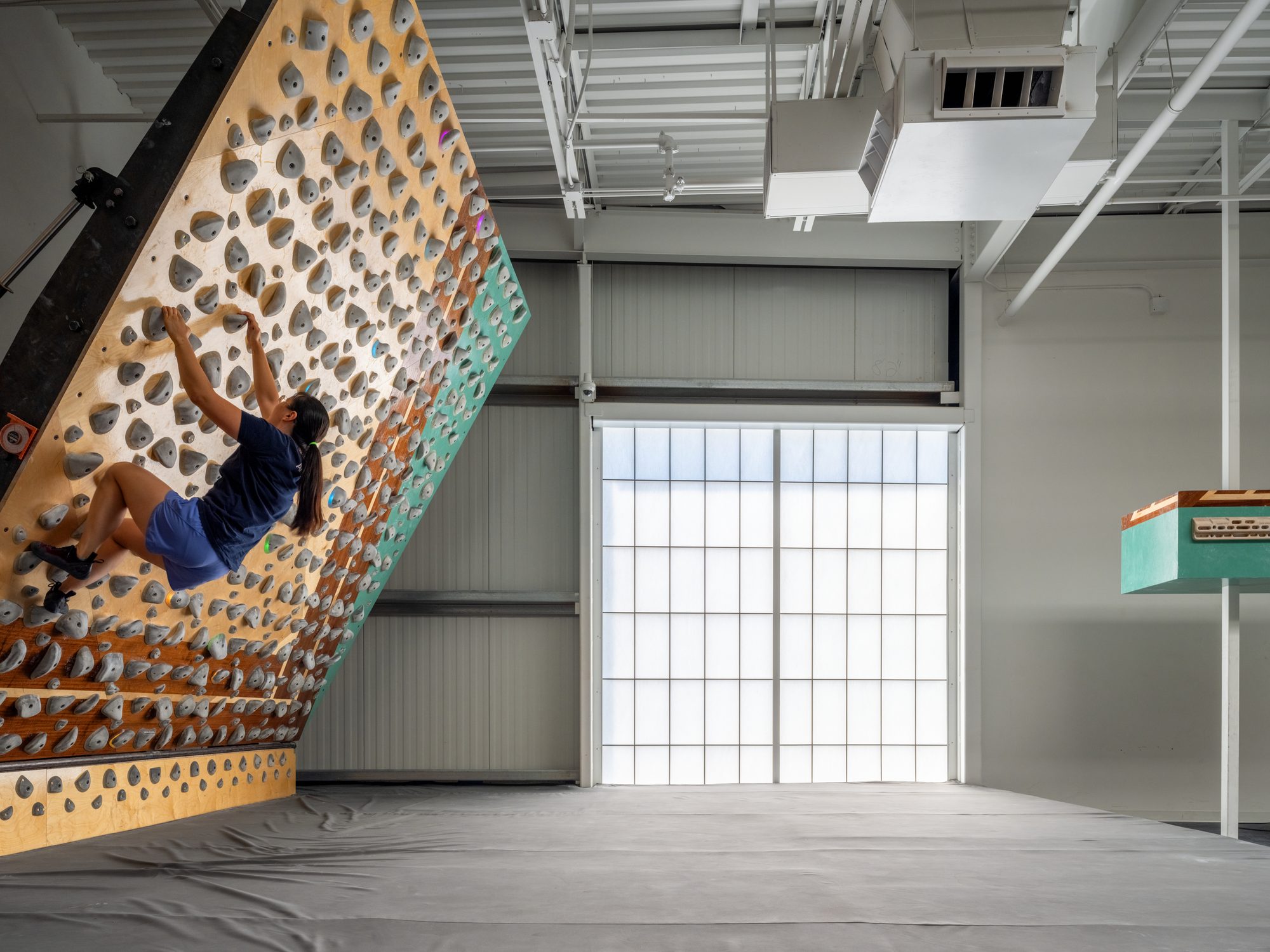
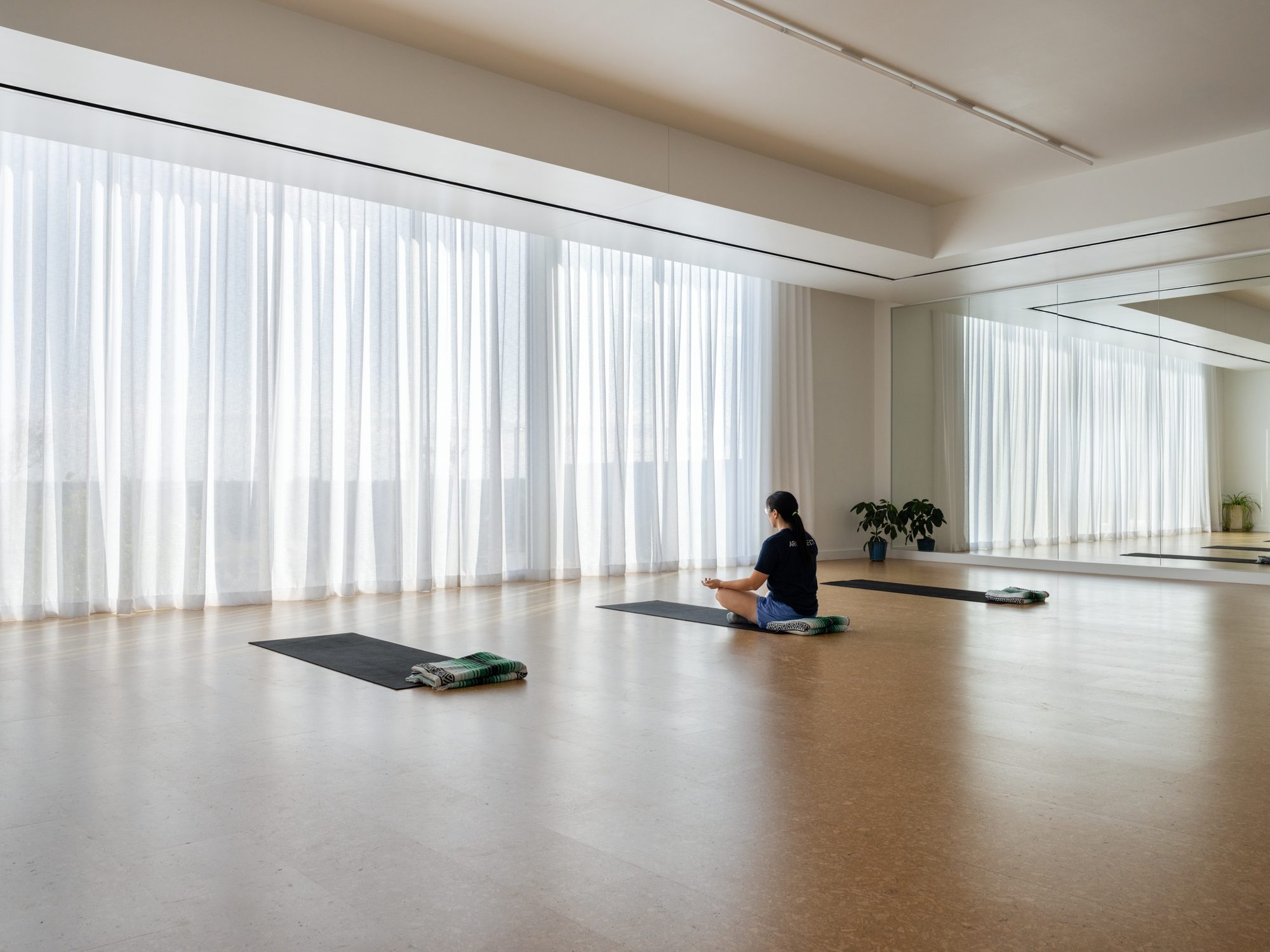
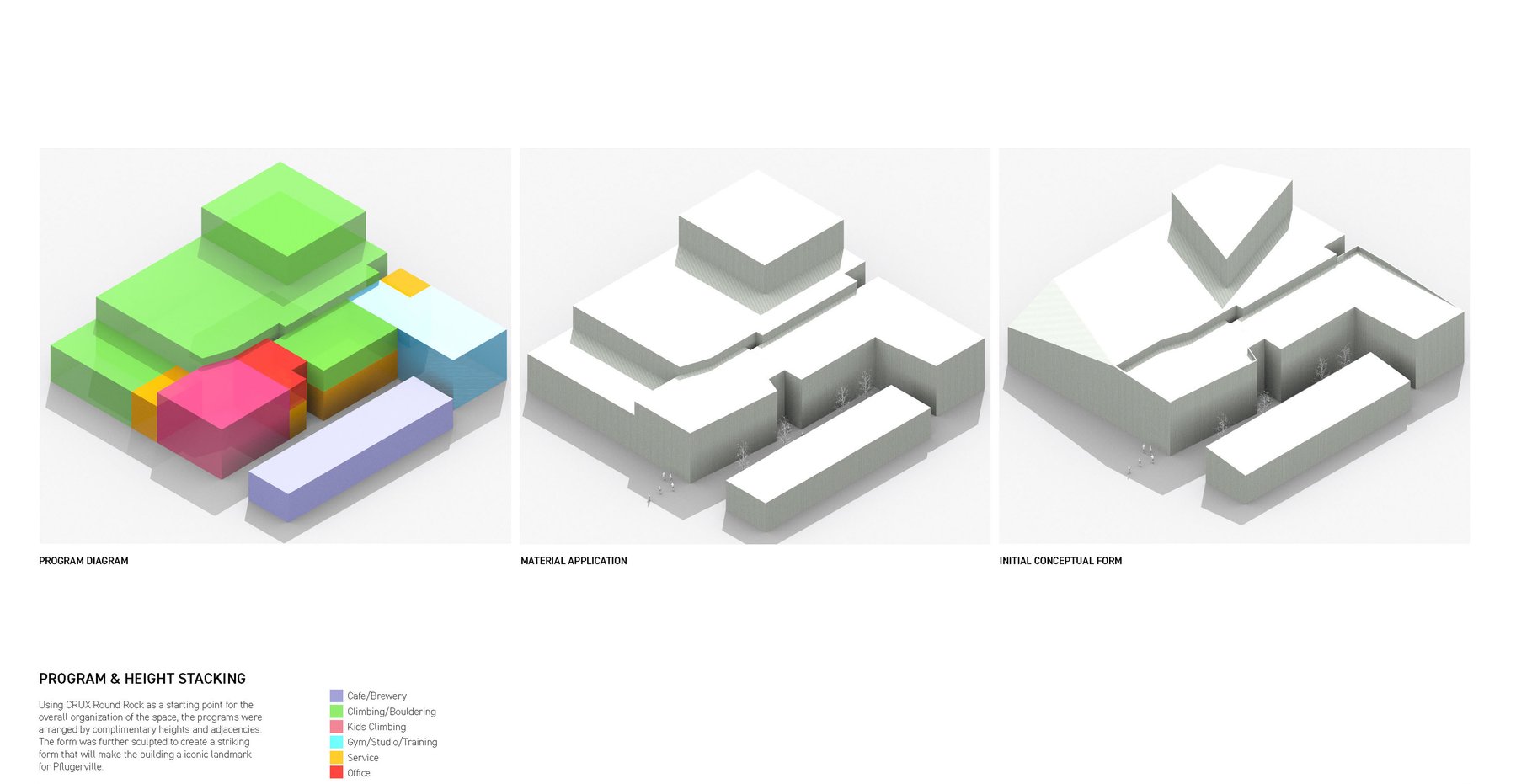
Crux Climbing came to the studio with a clear brief: replicate the operational success of their existing Austin gyms in a fast-growing northern suburb, but on a ground-up site that allowed every move that adaptive reuse had previously constrained. Thirty-three thousand square feet, five program zones — bouldering, top-rope, yoga, fitness, and retail — plus a coffee shop and a kids’ area, all needing to read as one continuous experience from the moment a member opens the door.
Site and constraint
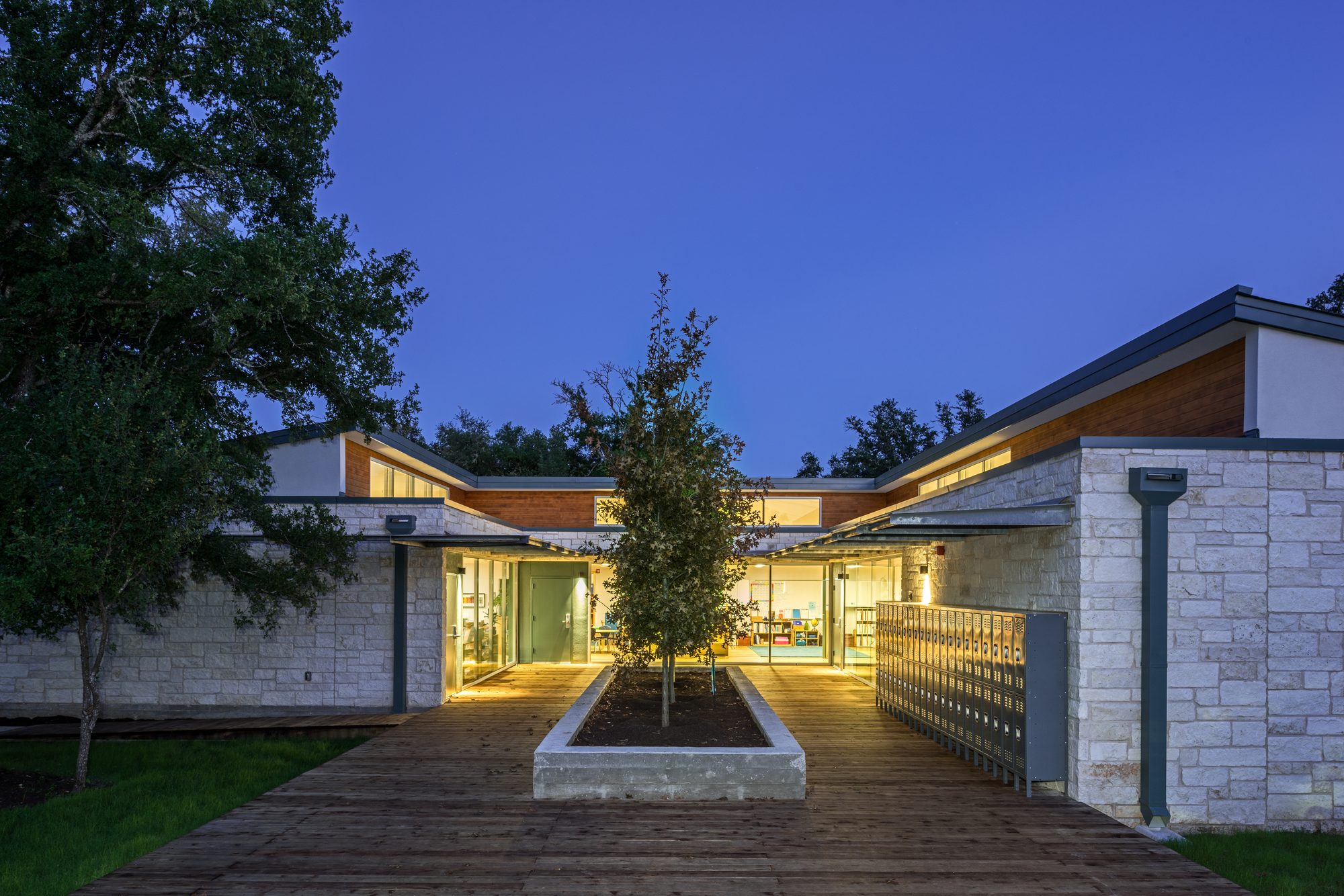
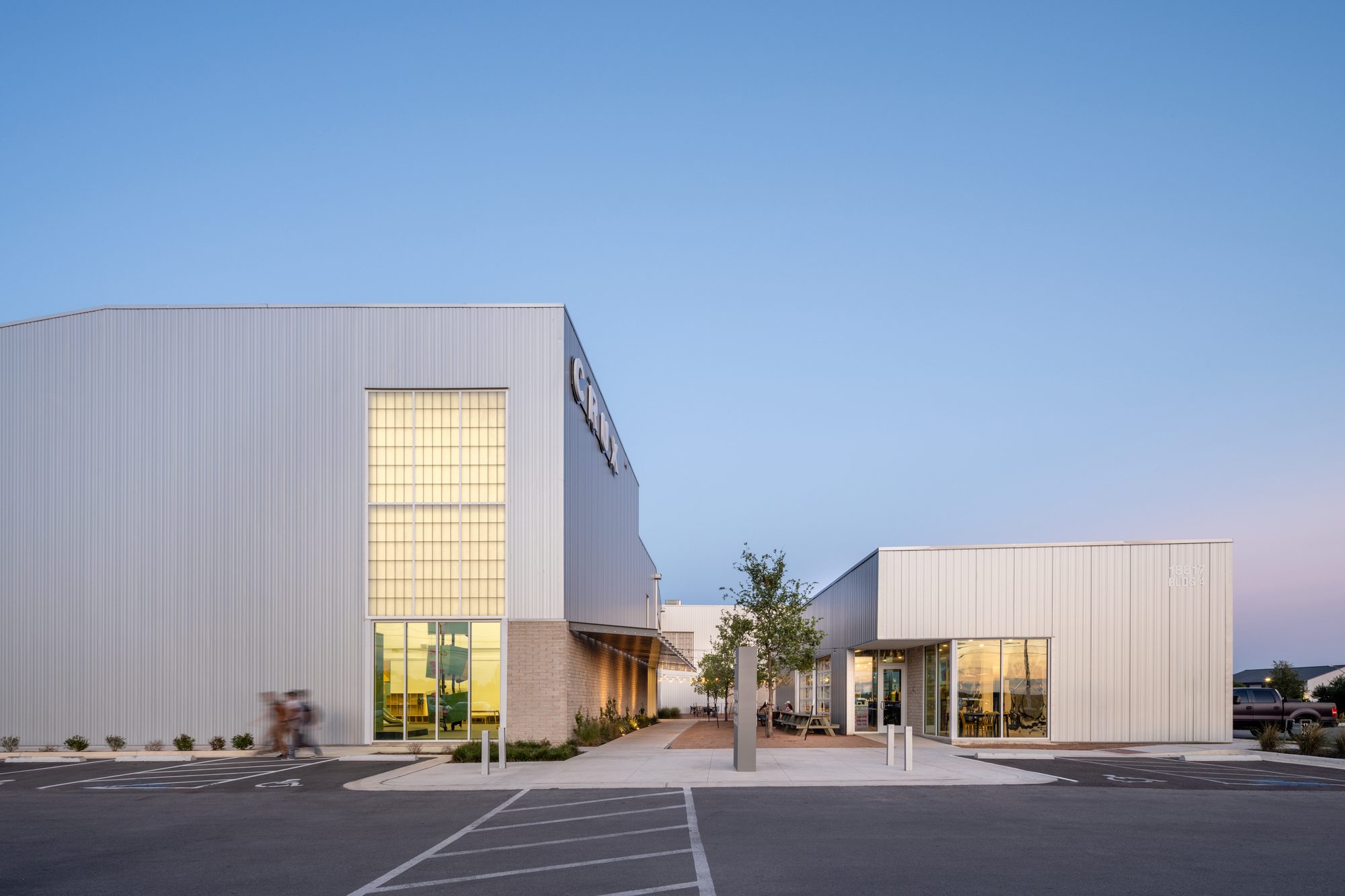
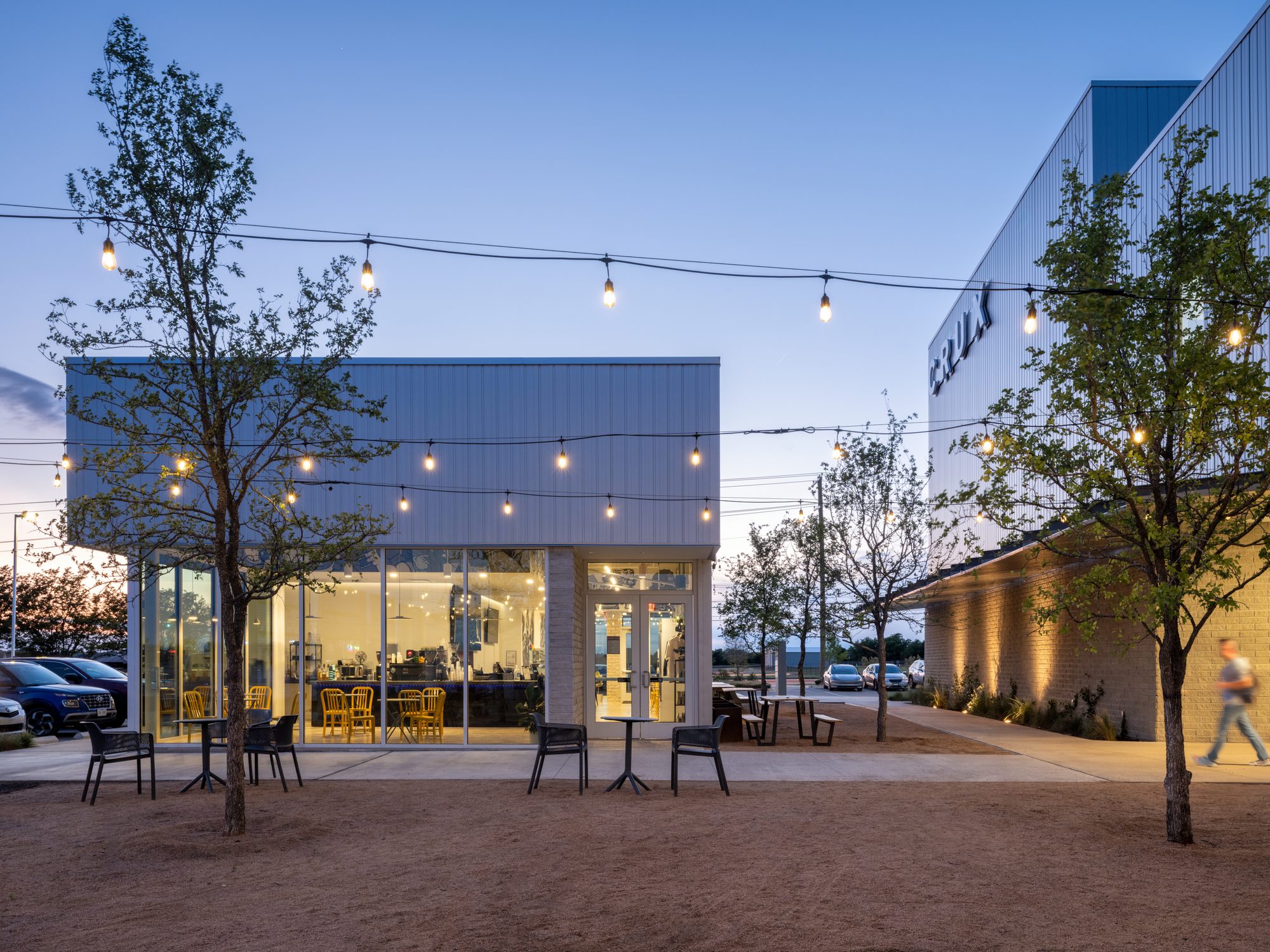
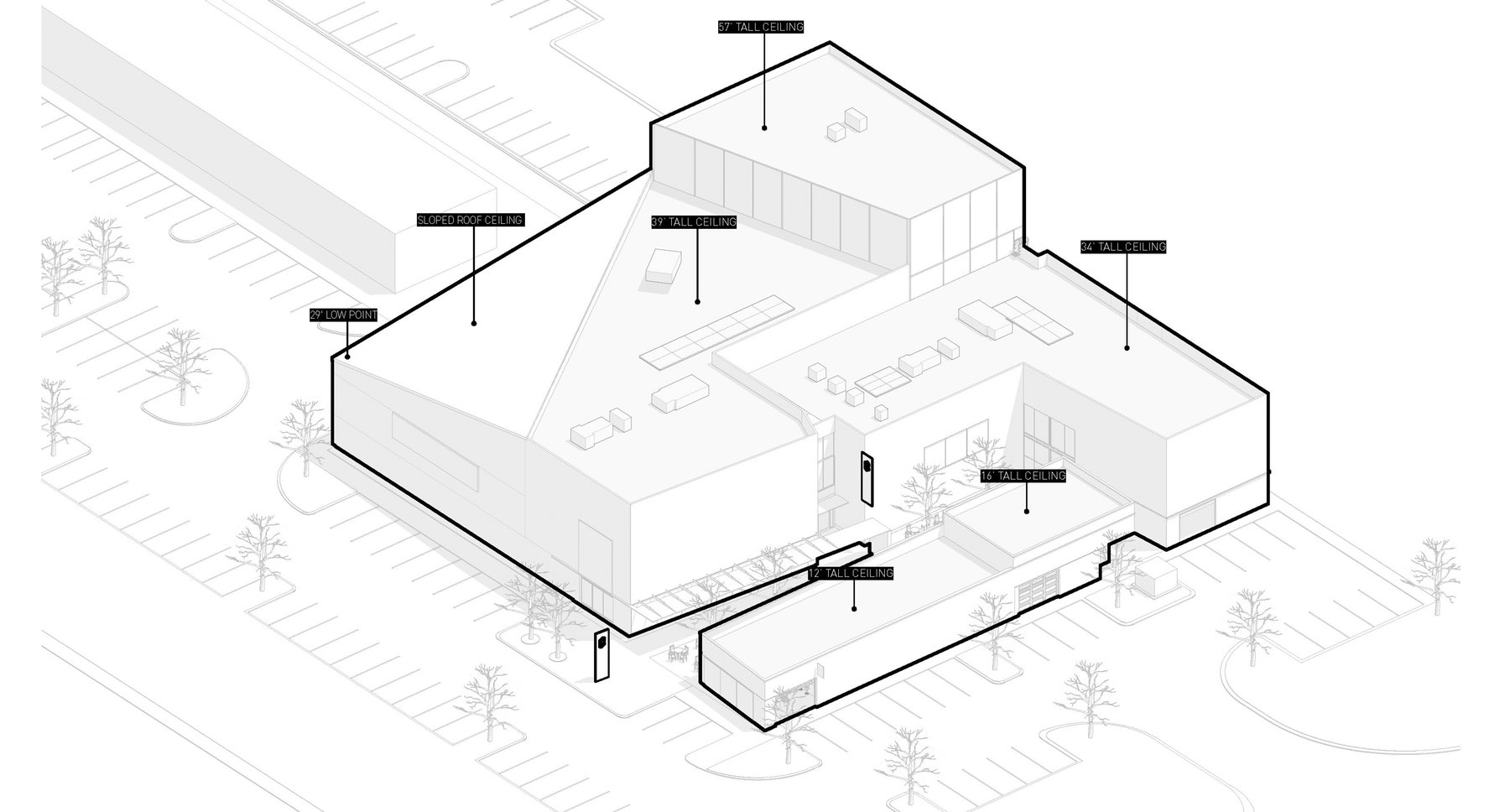
The site is a flat suburban parcel with no contextual cues to lean on — no slope, no view, no neighbor whose vernacular to extend. We took the absence of constraint as a constraint. Rather than treating the building as one monolithic shell containing rooms, we organized the program around an outdoor courtyard. Members move from the lobby through the courtyard to reach the gym proper. The courtyard does the heavy cultural work of the entry sequence and gives every interior room a daylit edge.
Design move
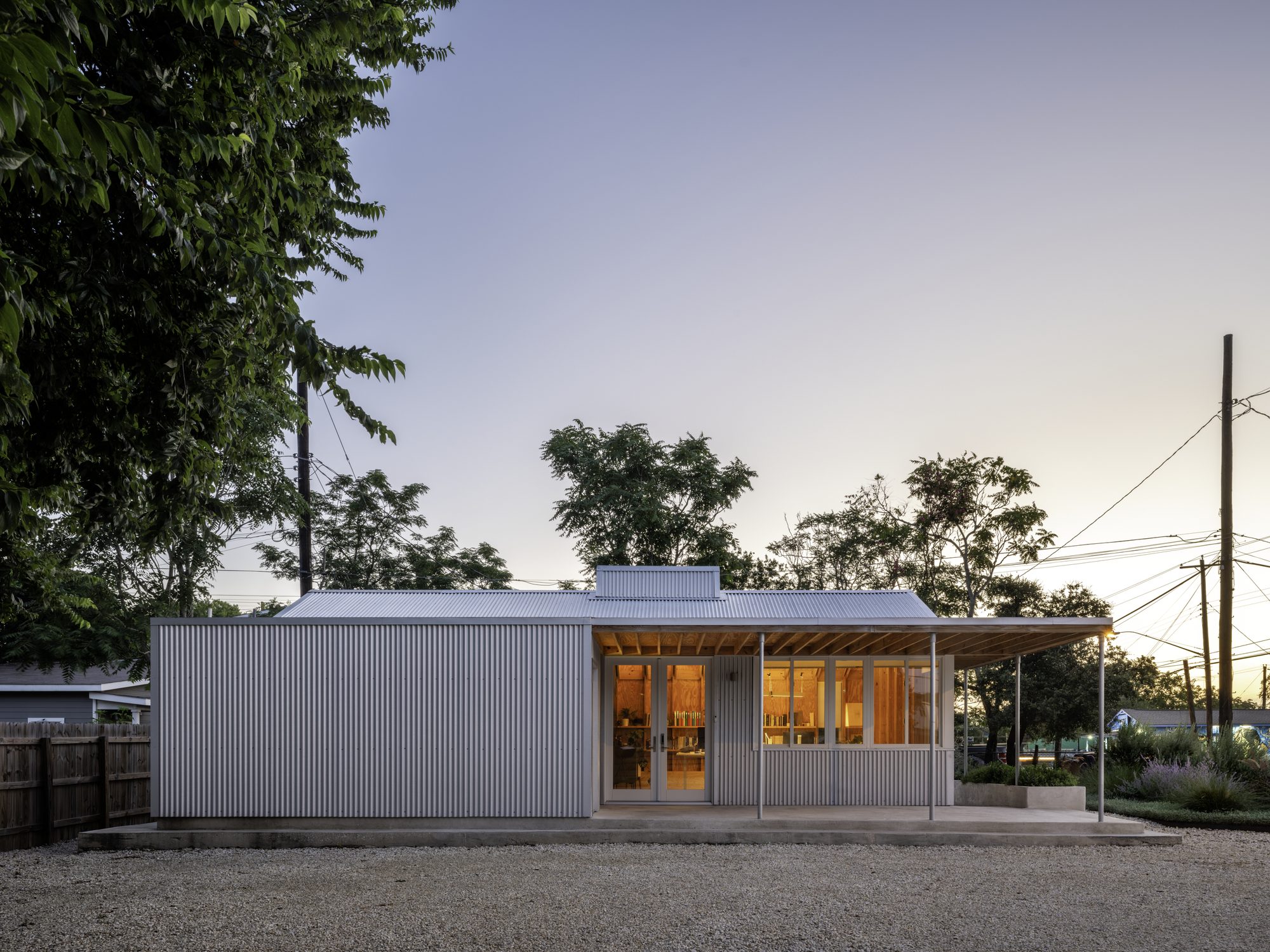
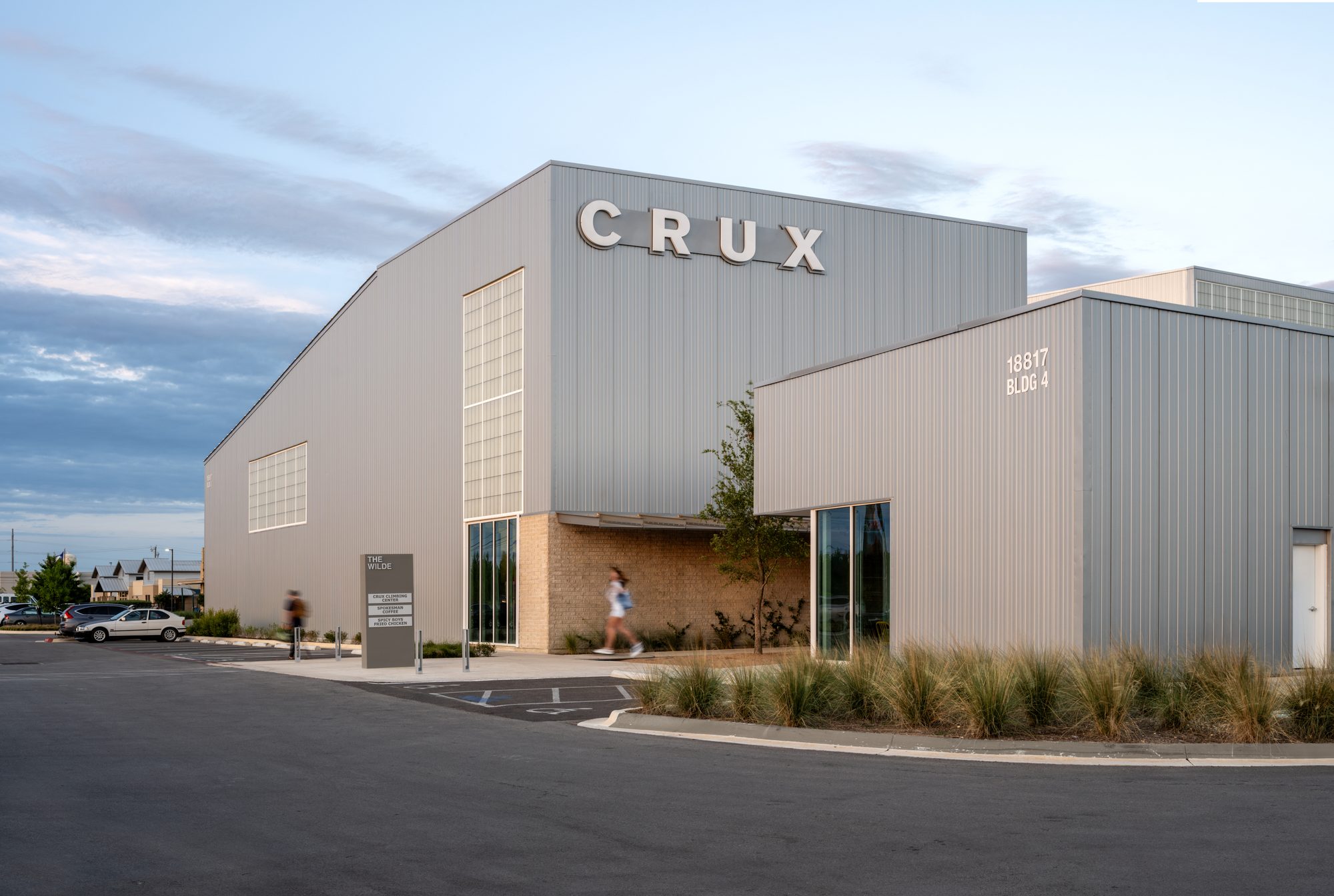
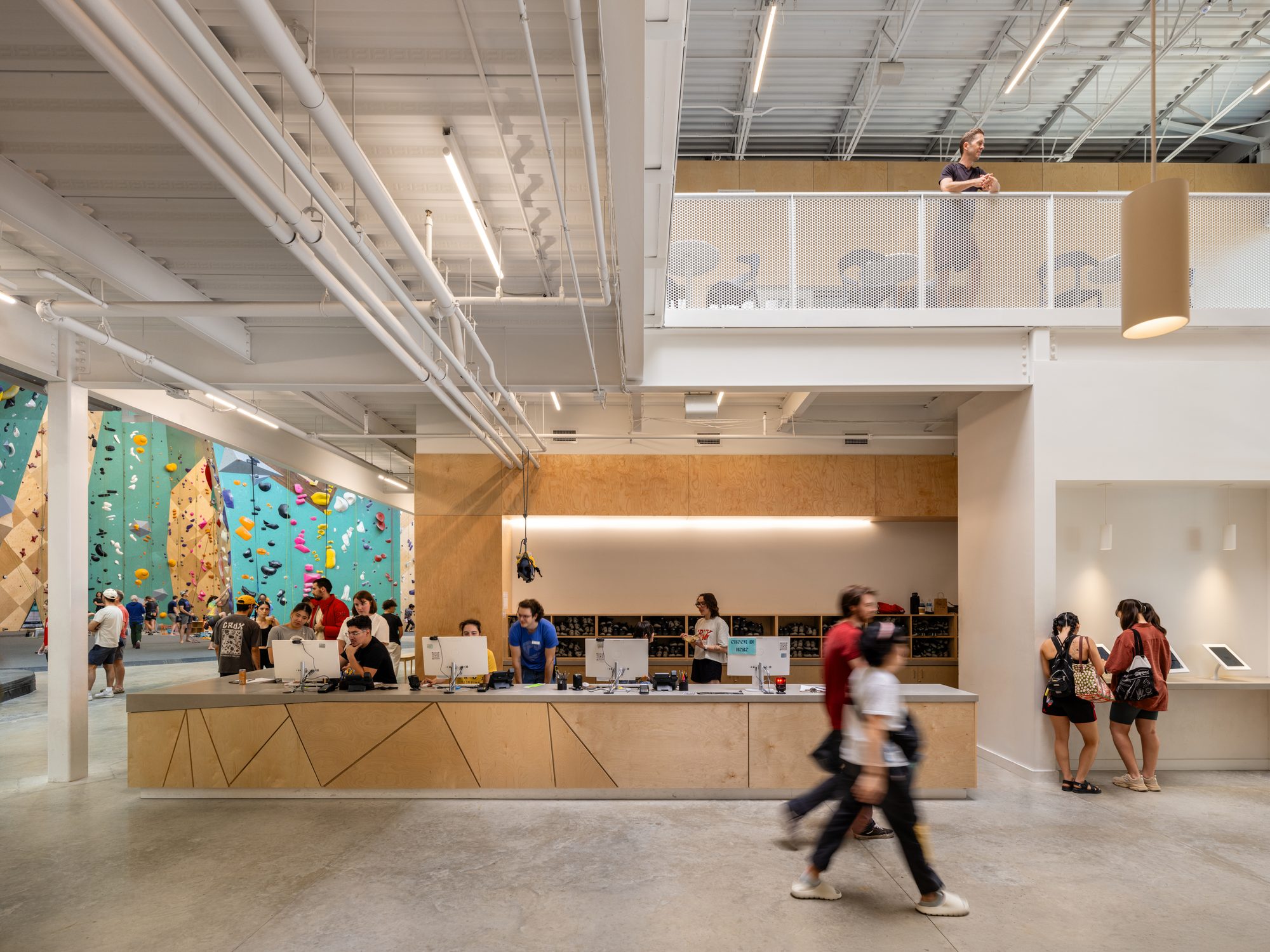
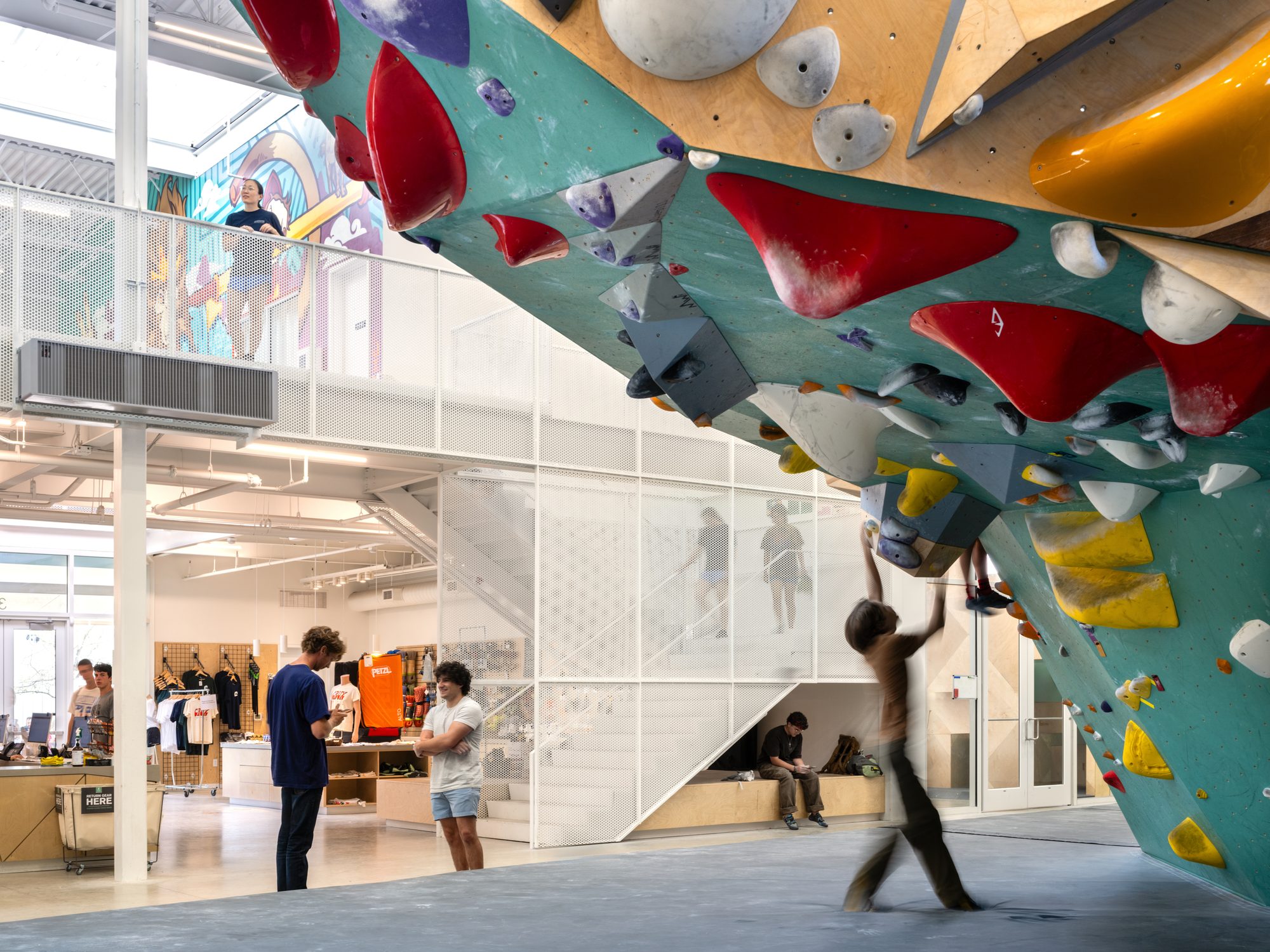
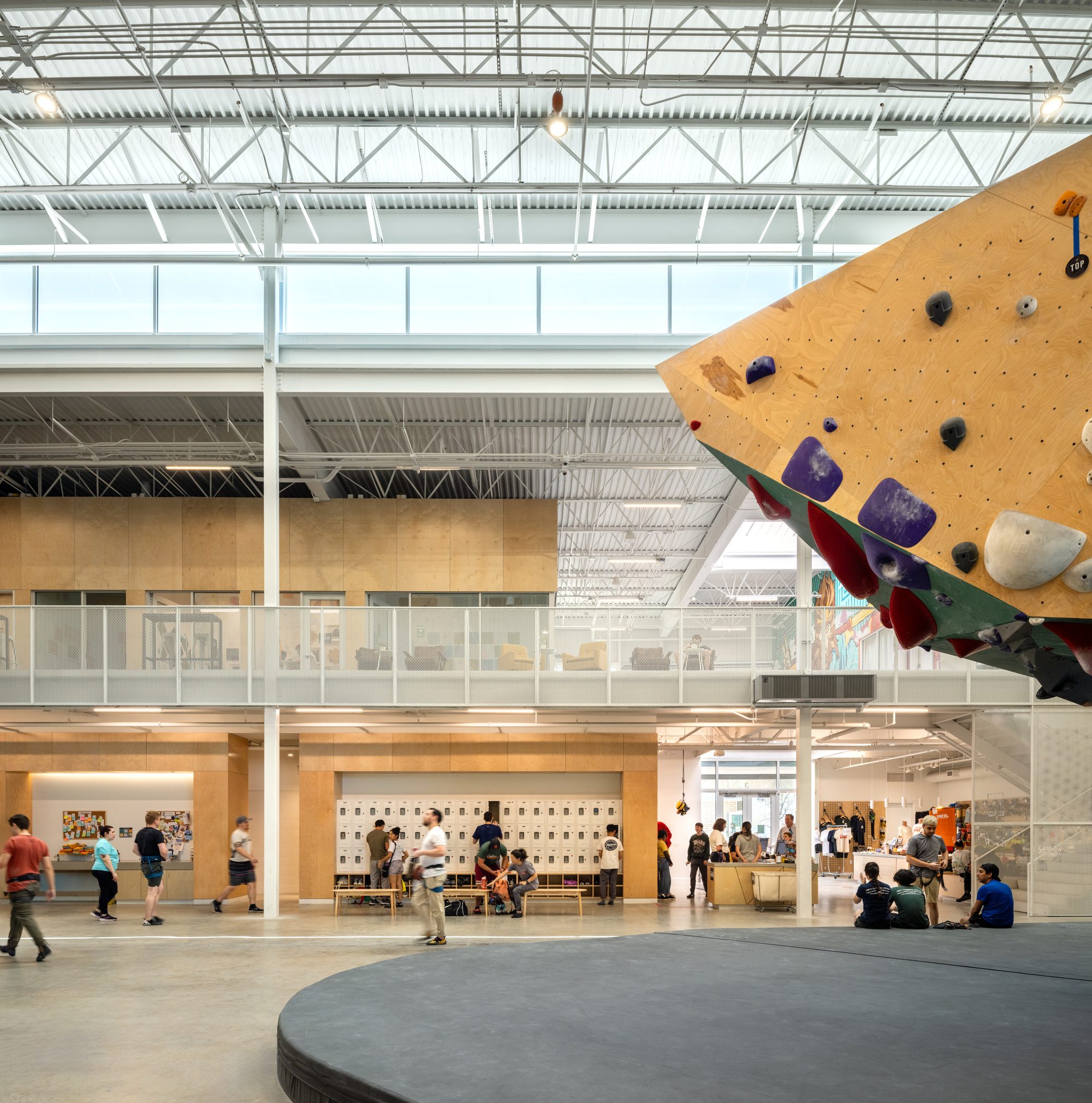
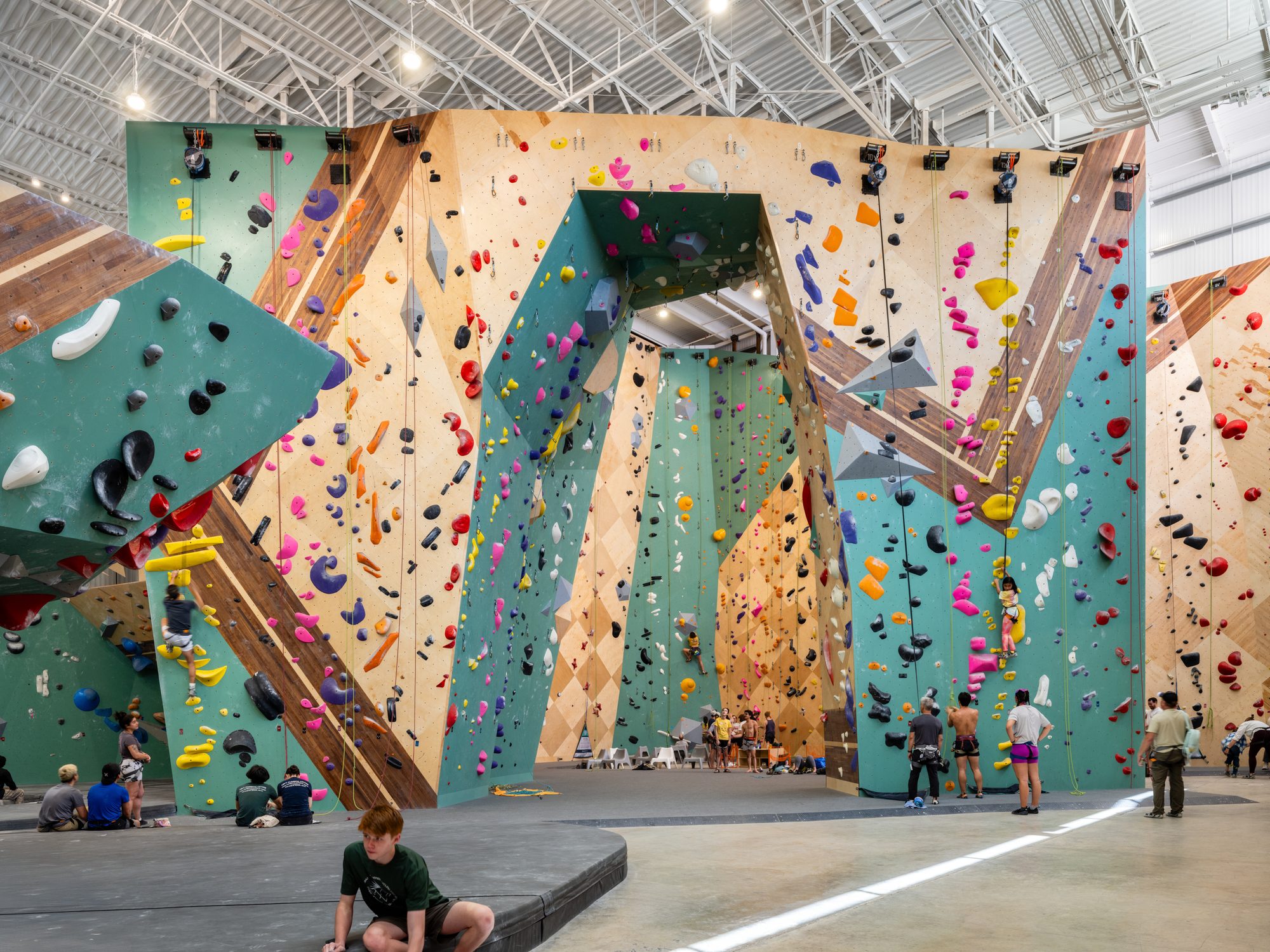
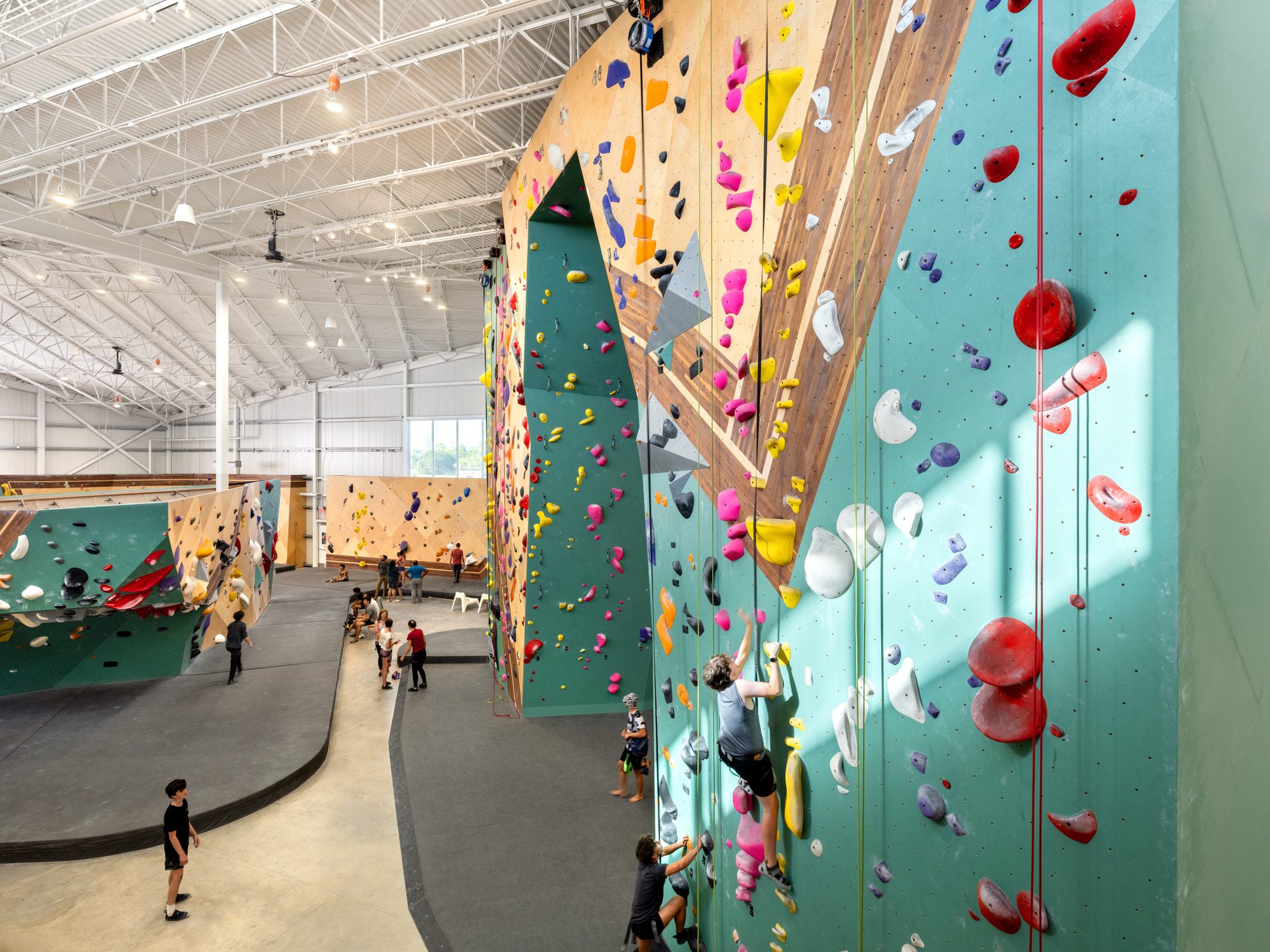
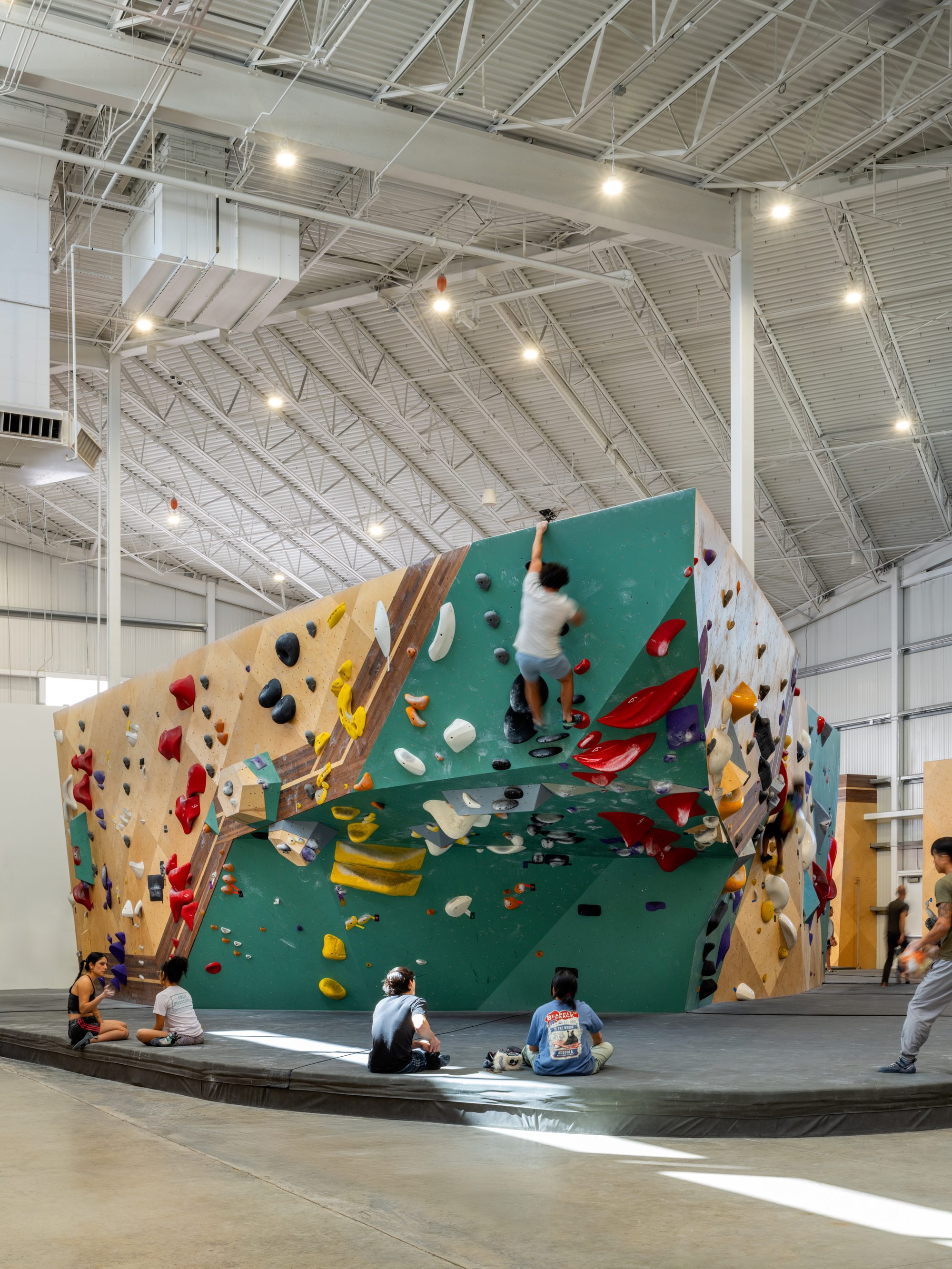
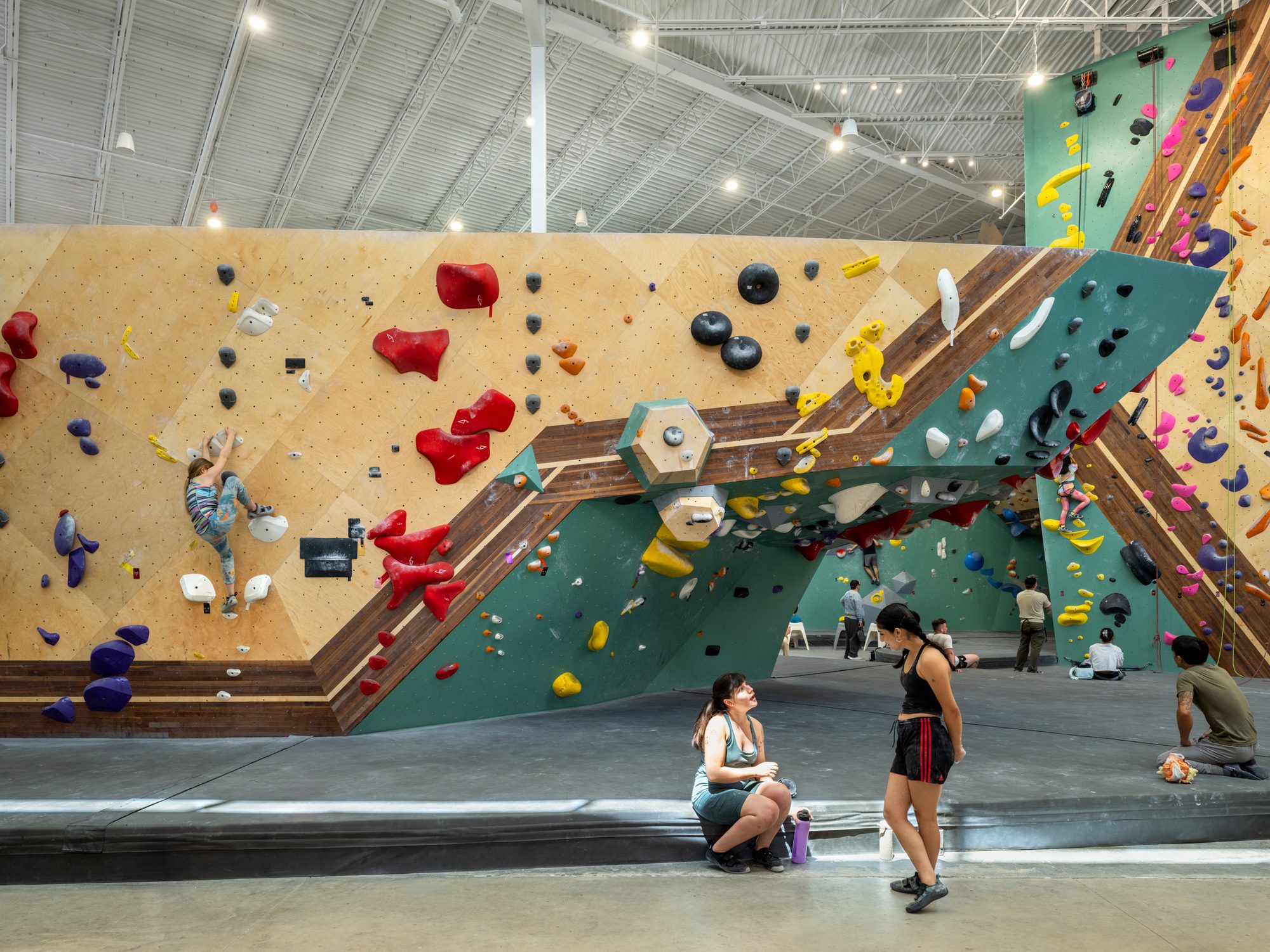
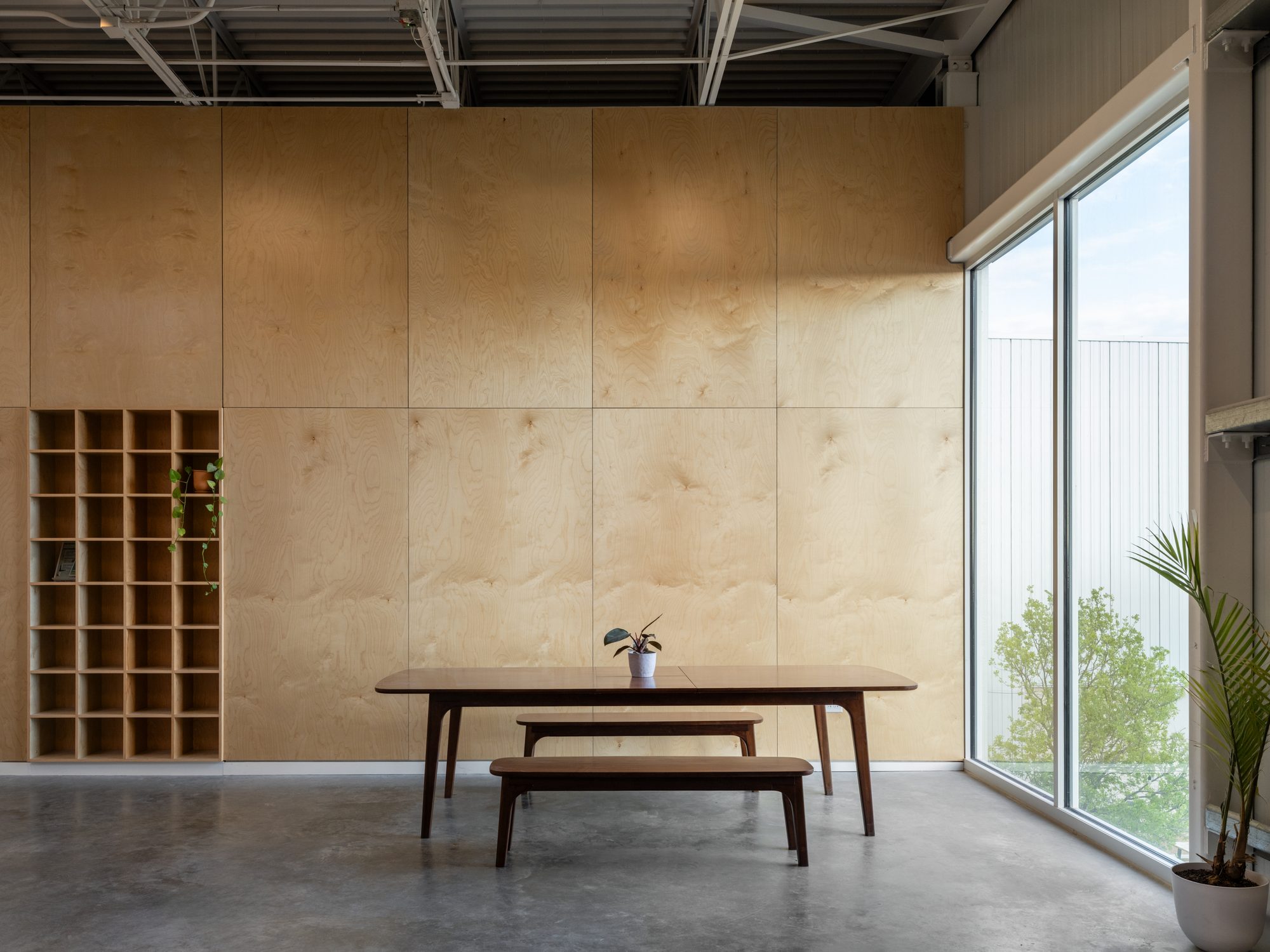
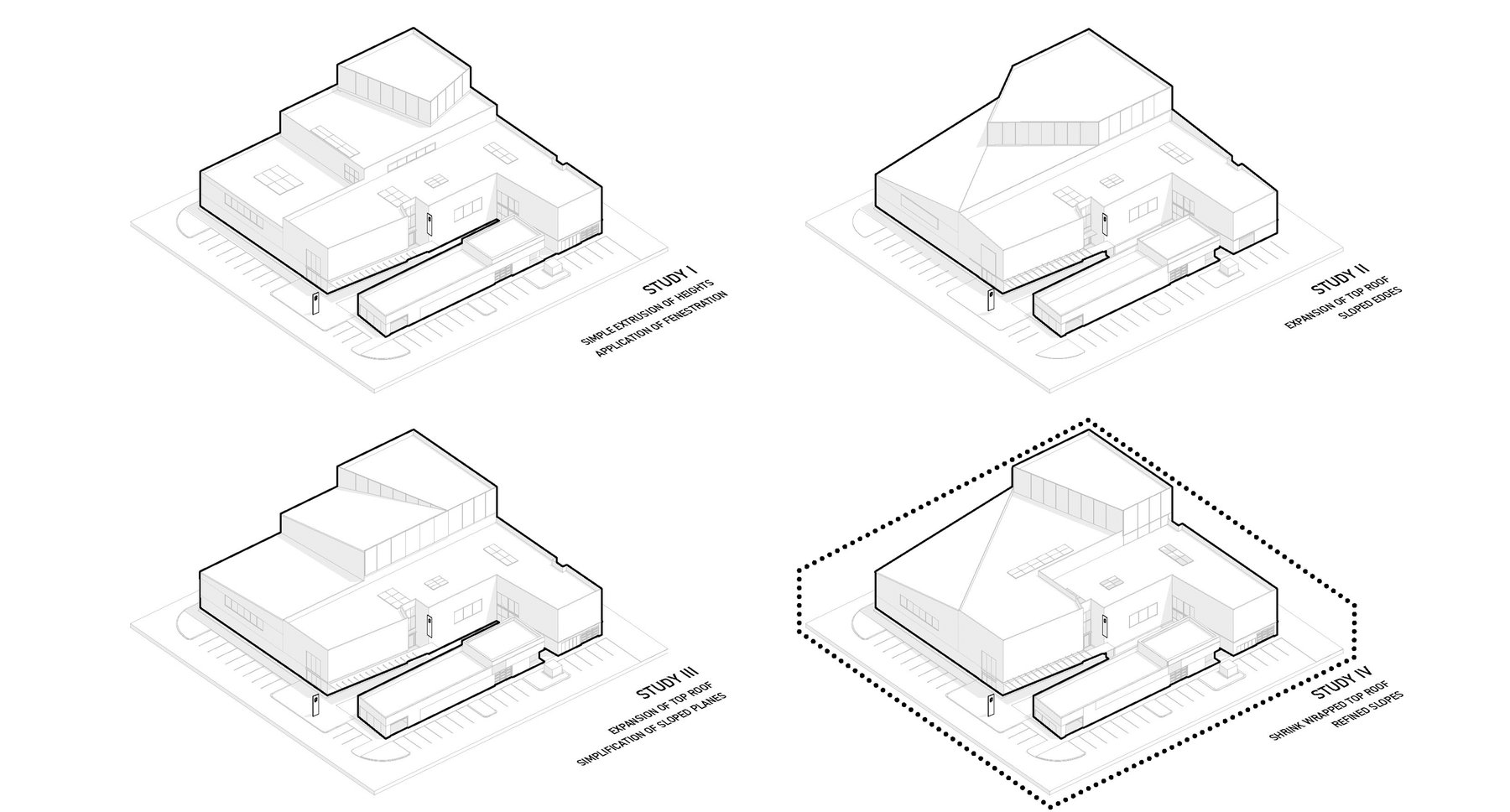
The building reads as a single Type IIB shell — exposed steel structure on tilt-wall concrete and CMU — with the program inserted as honest, low-finish volumes. We left the trusses visible, the conduit visible, the connectors visible. The detailing is concentrated where the body touches the building: the holds on the wall, the timber of the yoga floor, the joinery at the coffee bar. The investment is legible exactly where members register it.
Construction approach
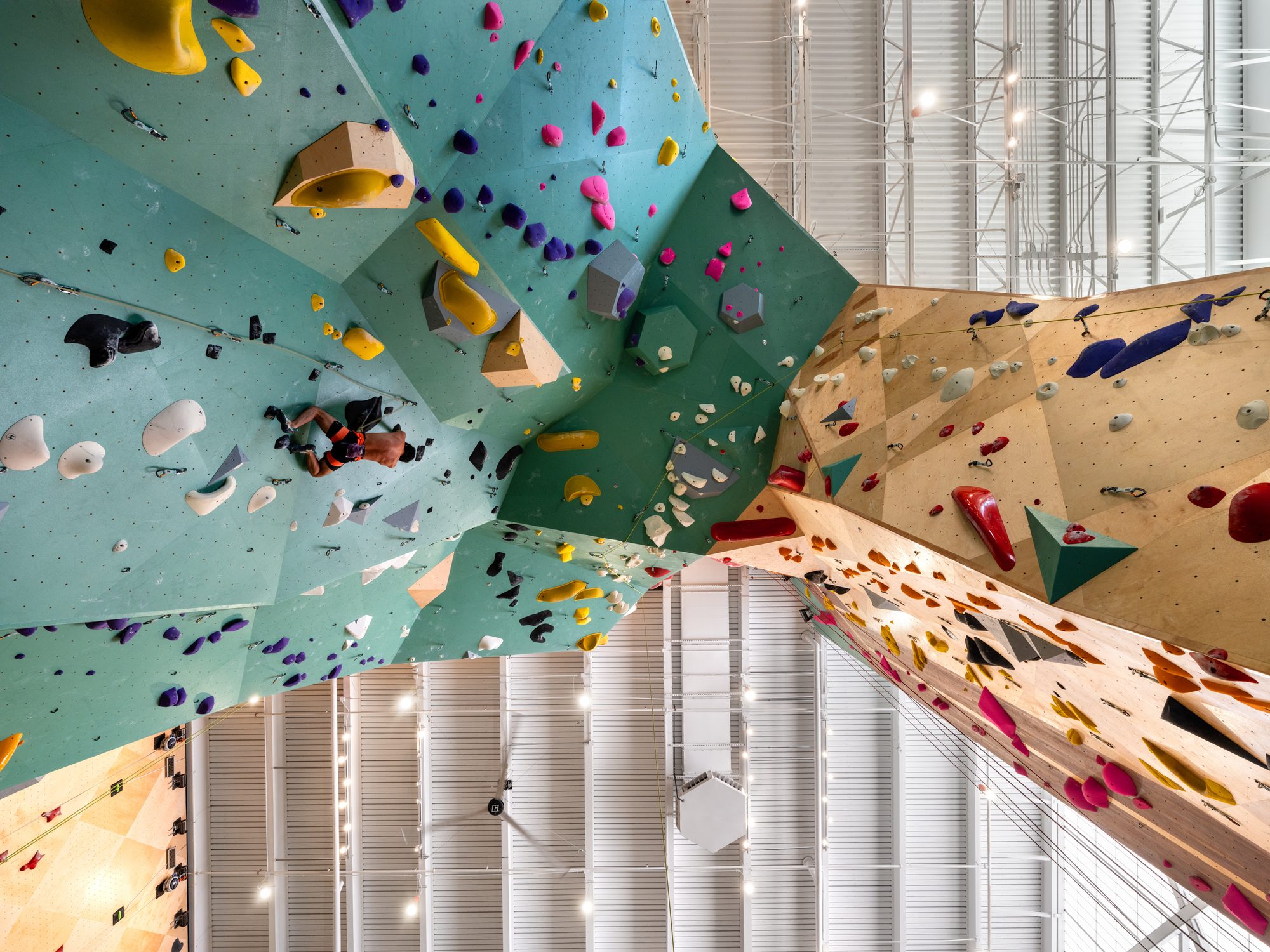
Type IIB construction protects the developer’s pro forma without giving up on the experience. By holding the architectural ambition in the geometry — the courtyard, the daylight strategy, the proportion of the climbing volumes — and letting the materials stay close to commercial vernacular, the project delivered on a budget consistent with a non-design-led gym. The exposed structure also collapsed the finish schedule: the trusses we’d be required to install structurally are also the visible ceiling.
Outcome
Crux Pflugerville opened to the strongest first-year membership of any gym in the network and became the prototype for every subsequent Crux. The courtyard model — exterior room as organizing device — has been carried forward into Crux South and is being studied for the next two locations. The project codified what we now describe as the Crux typology: design ambition expressed through structure, geometry, and daylight rather than through finish.