Client and program
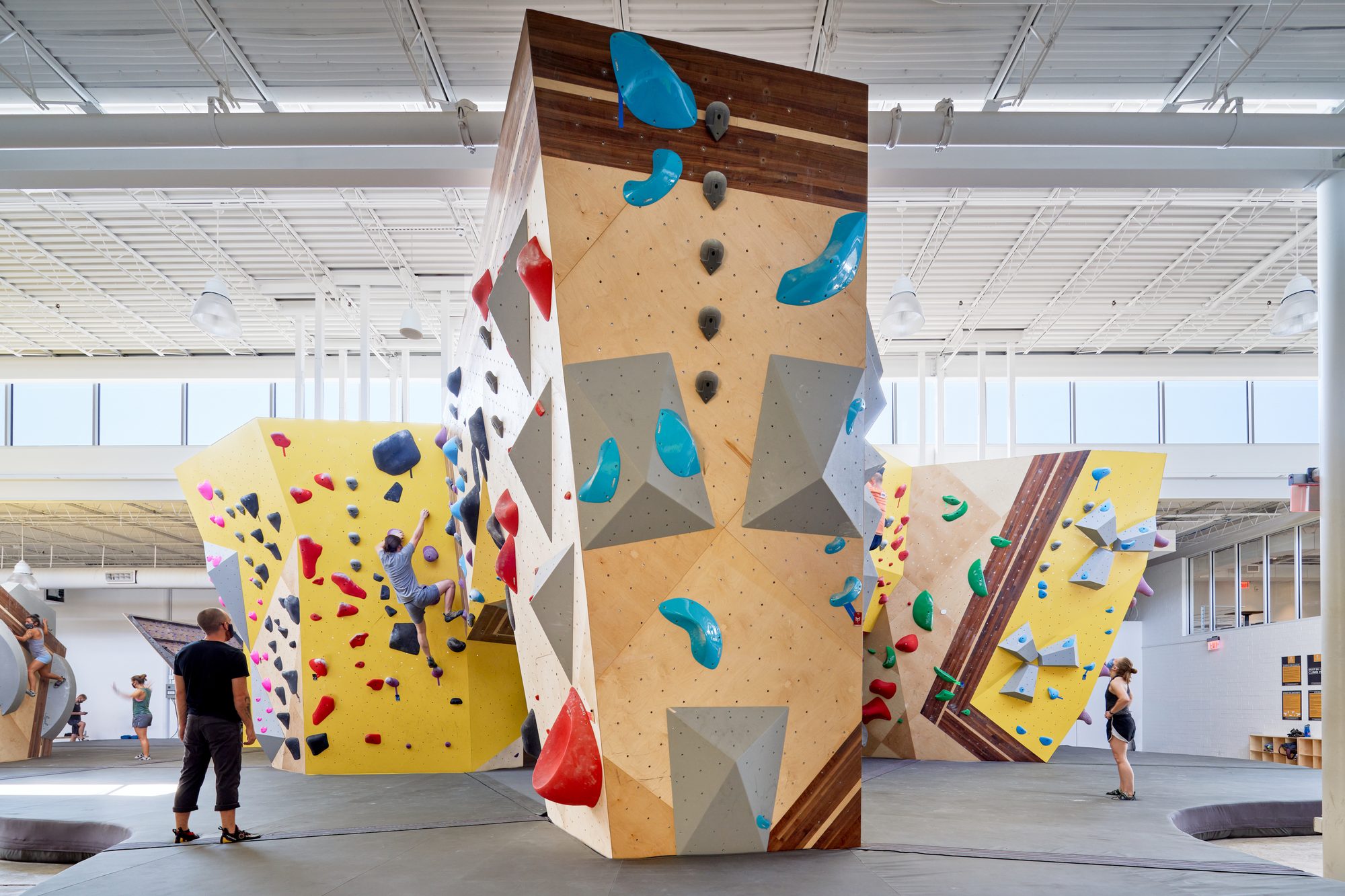
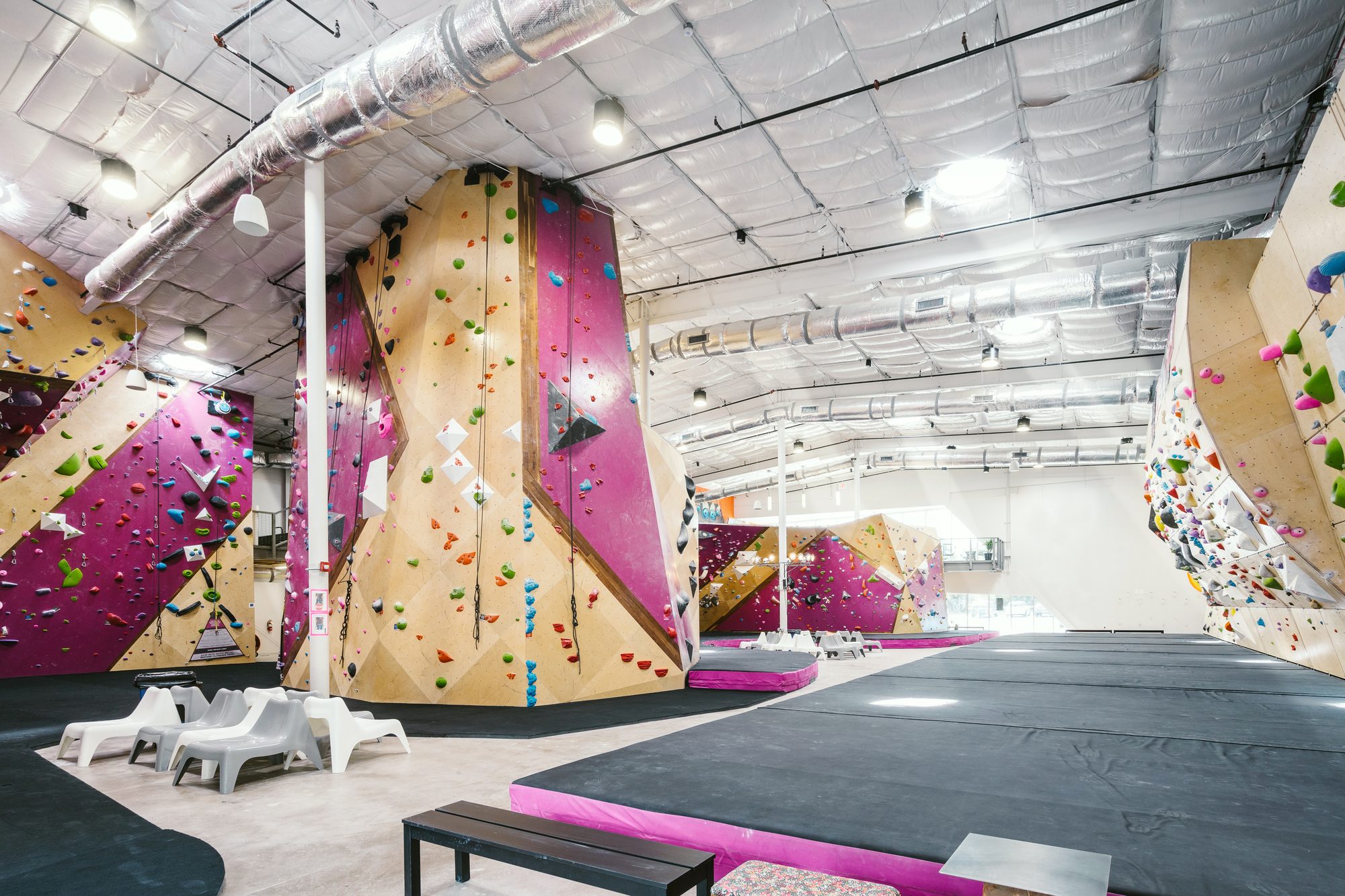
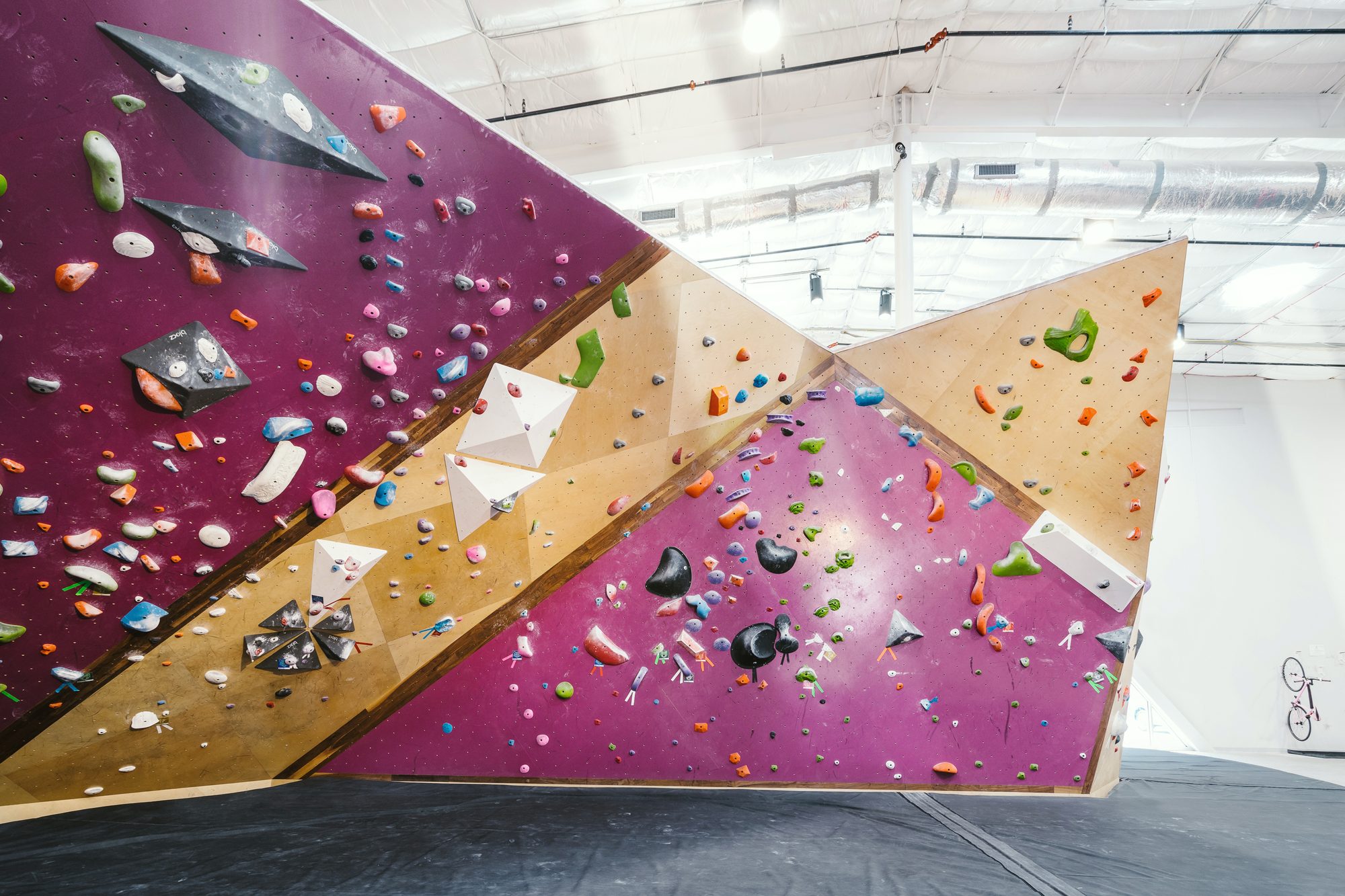
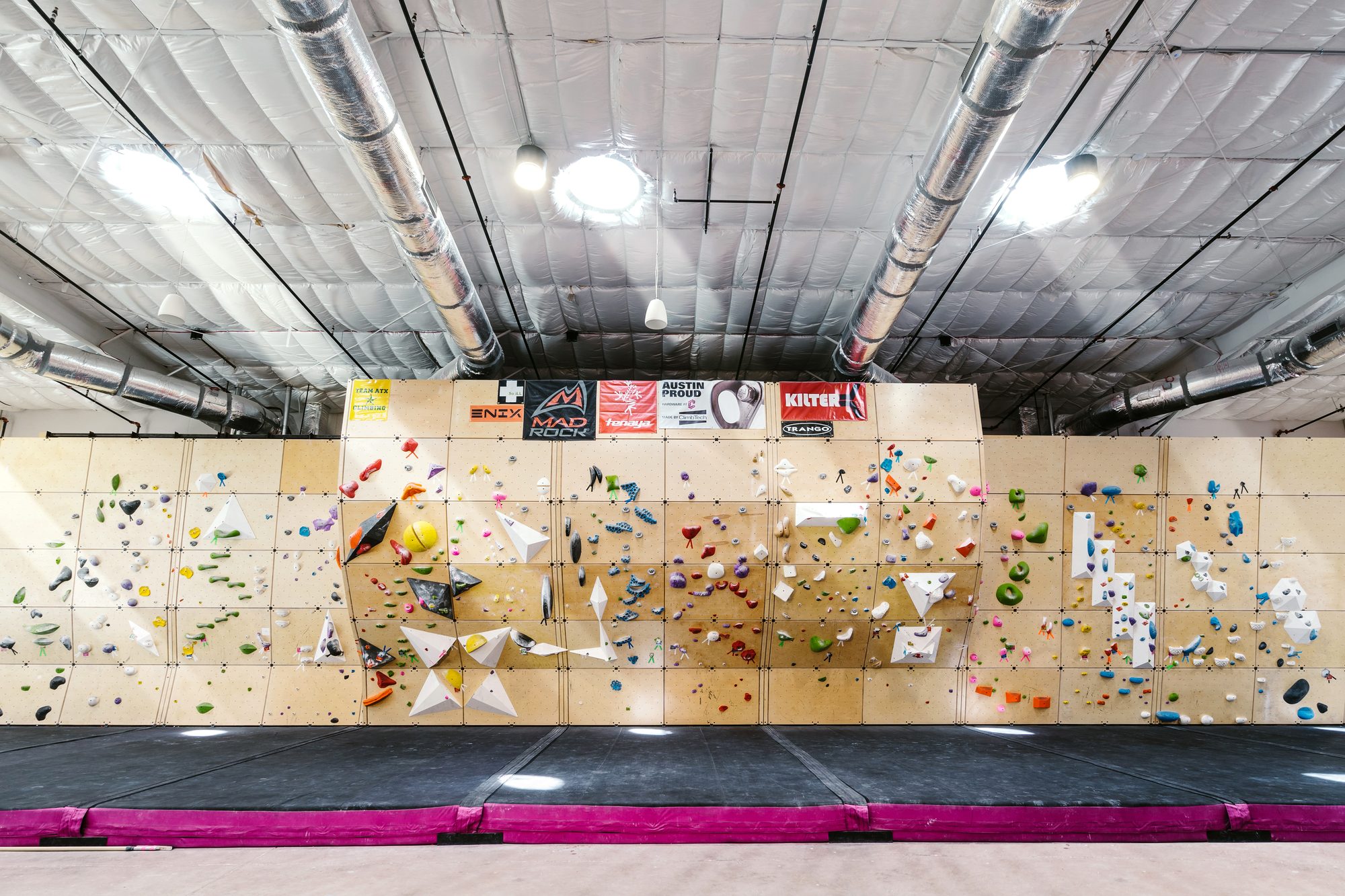
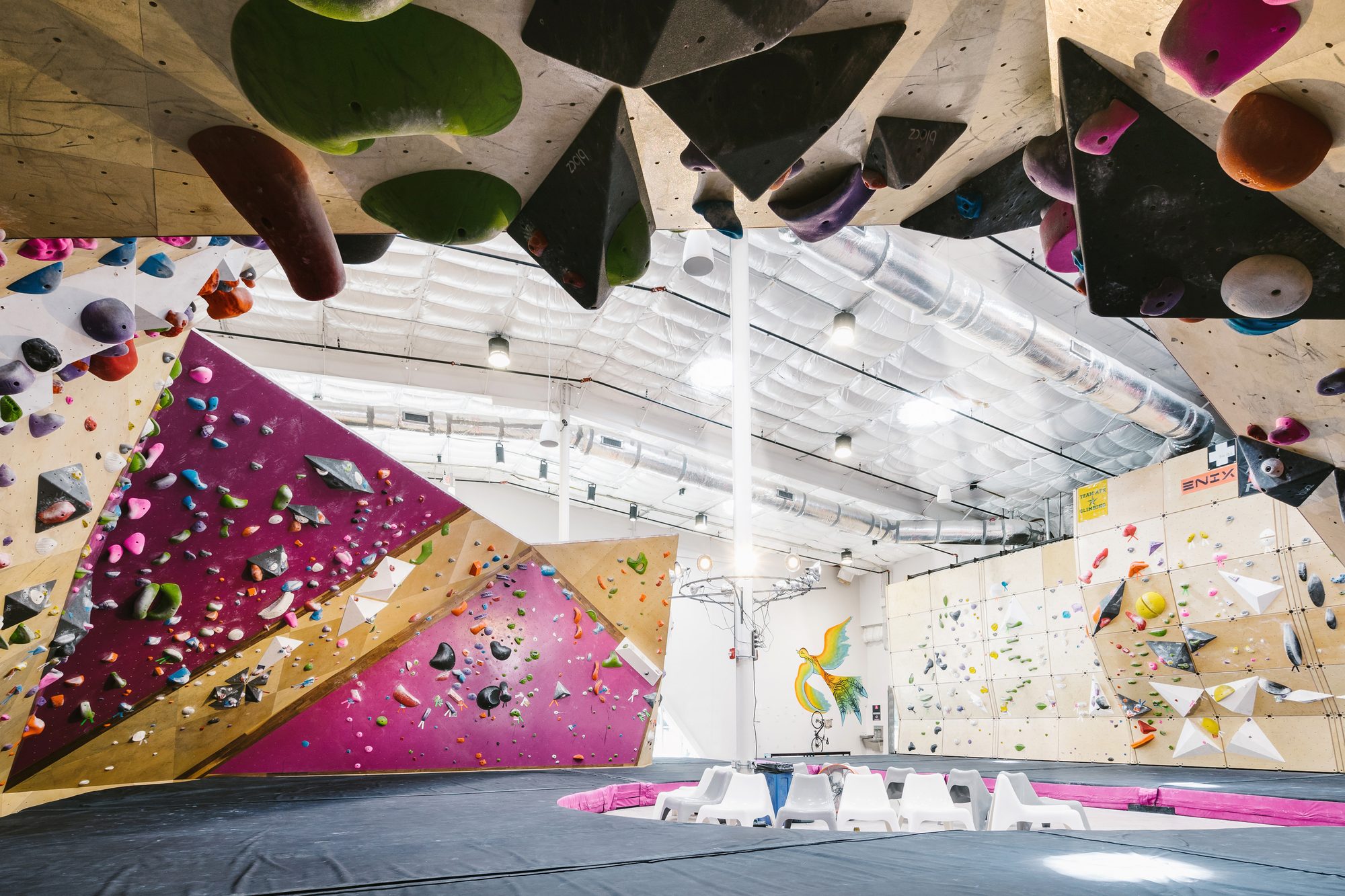
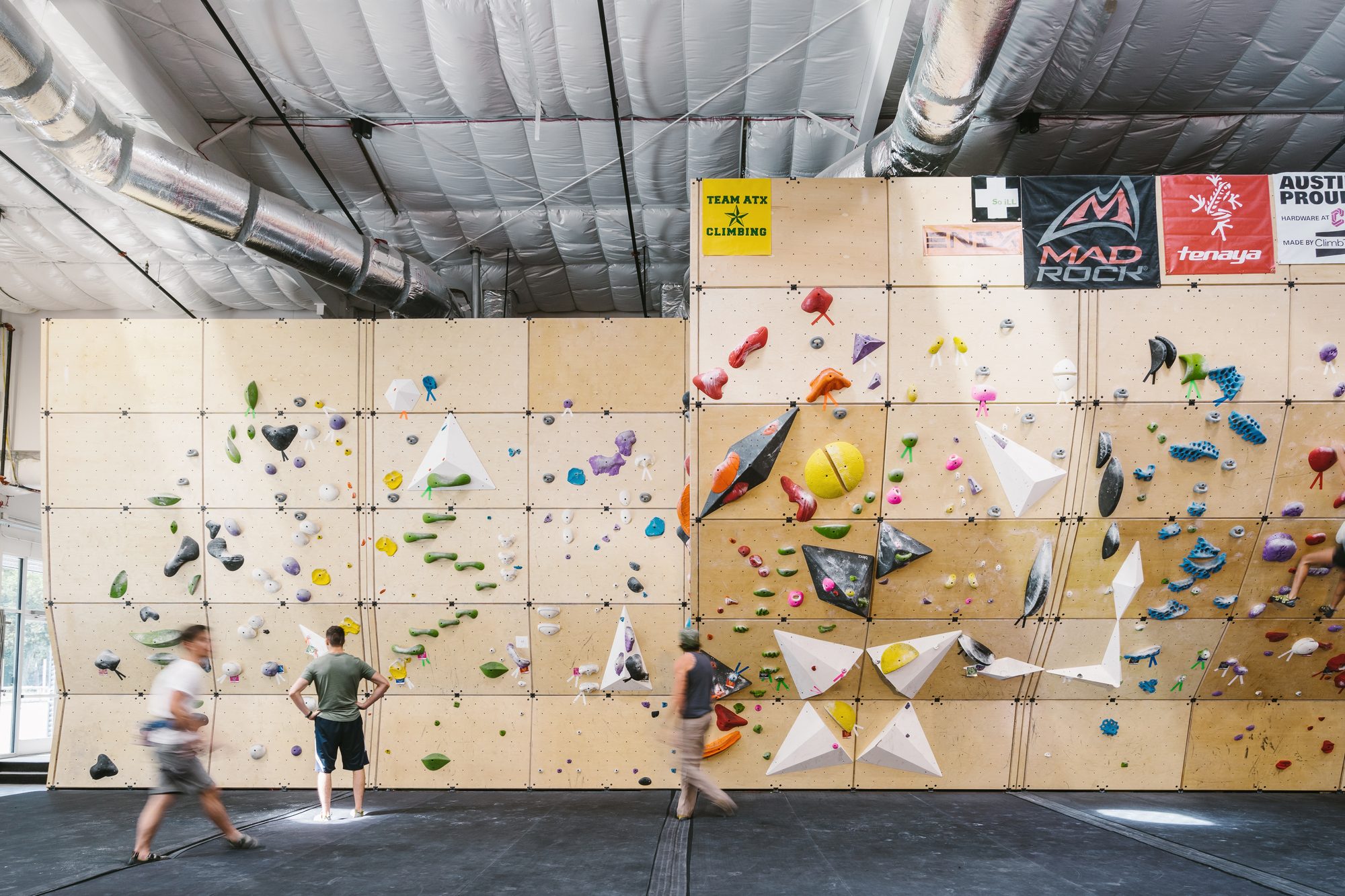
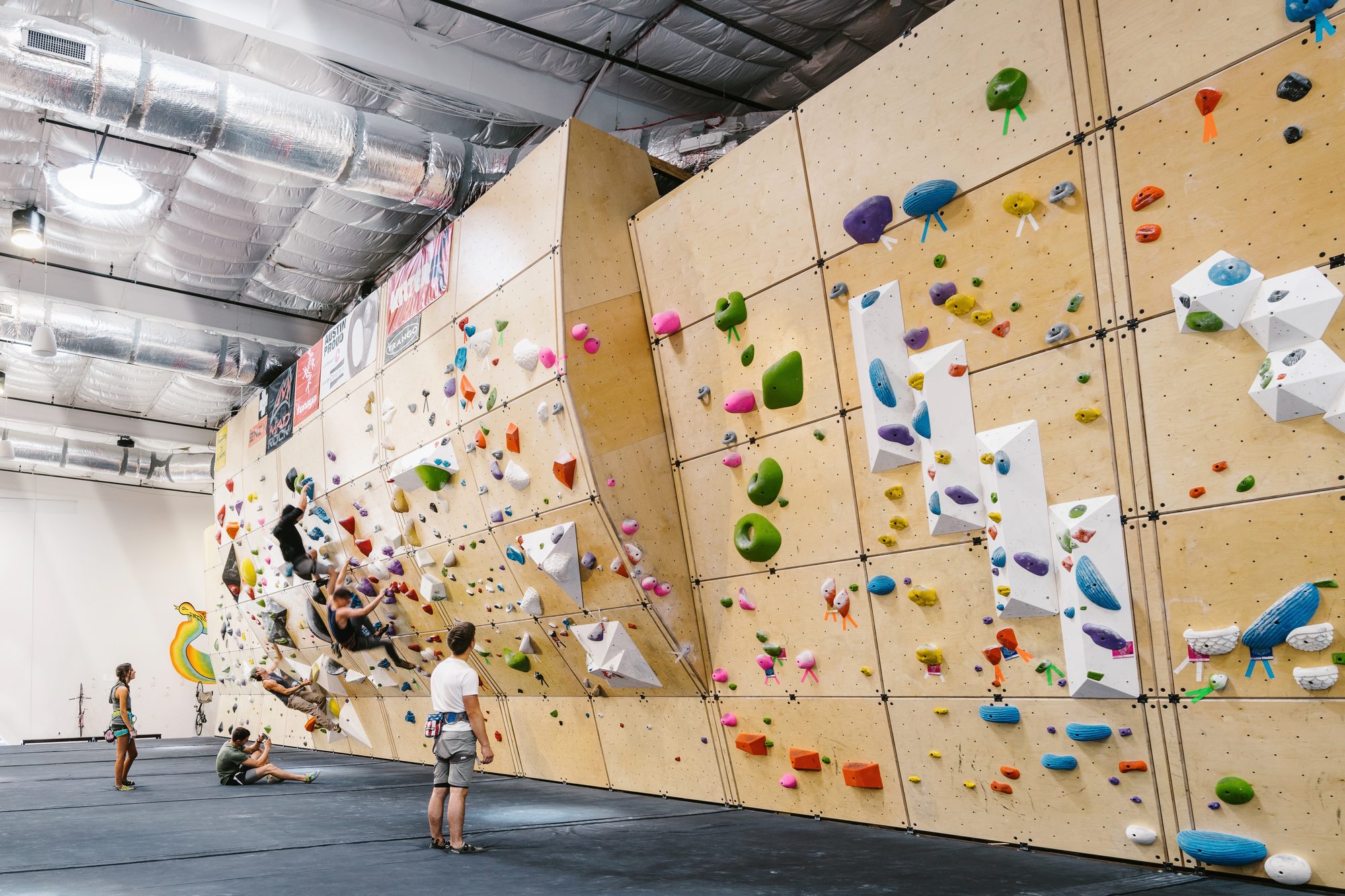
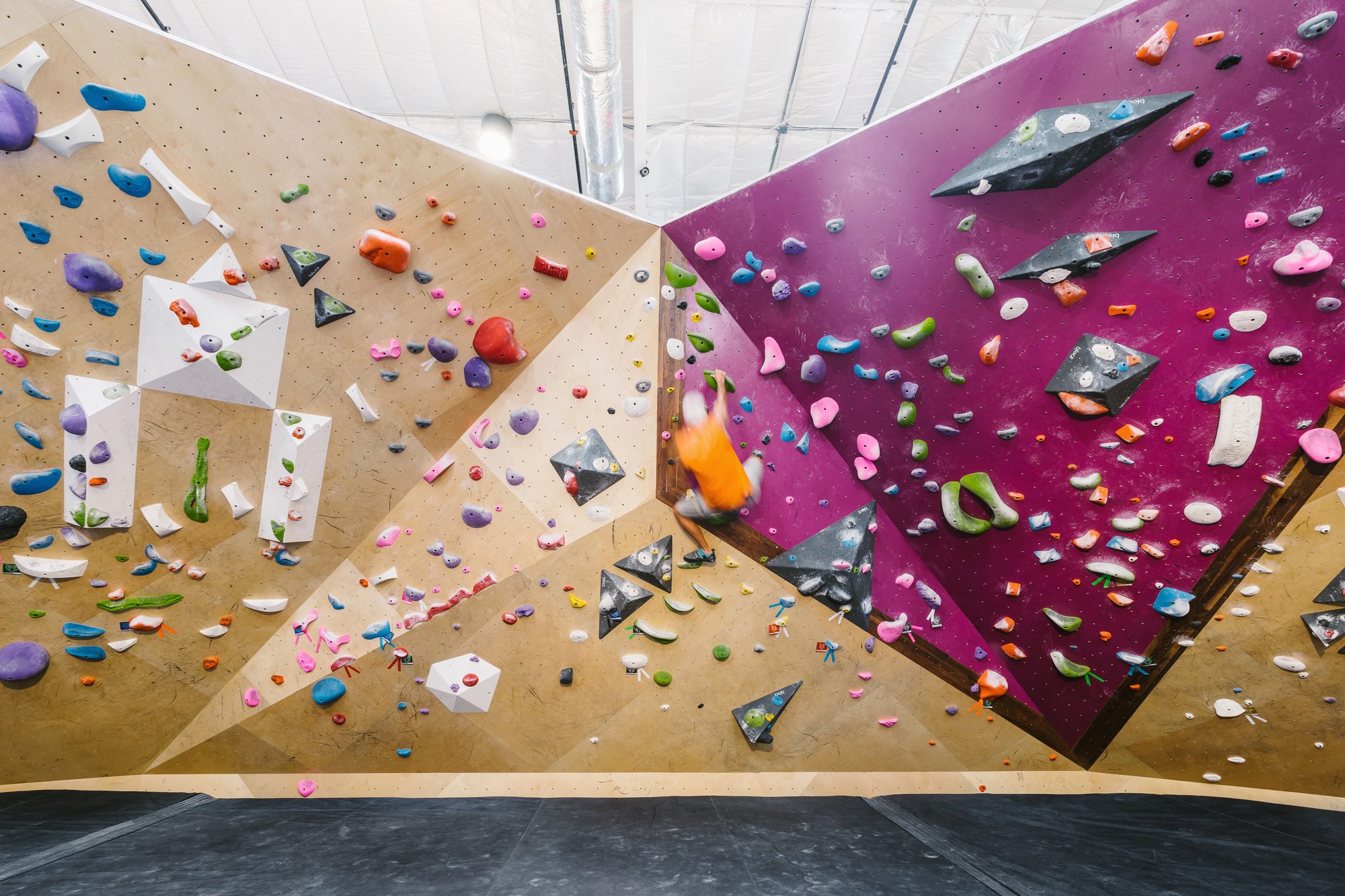
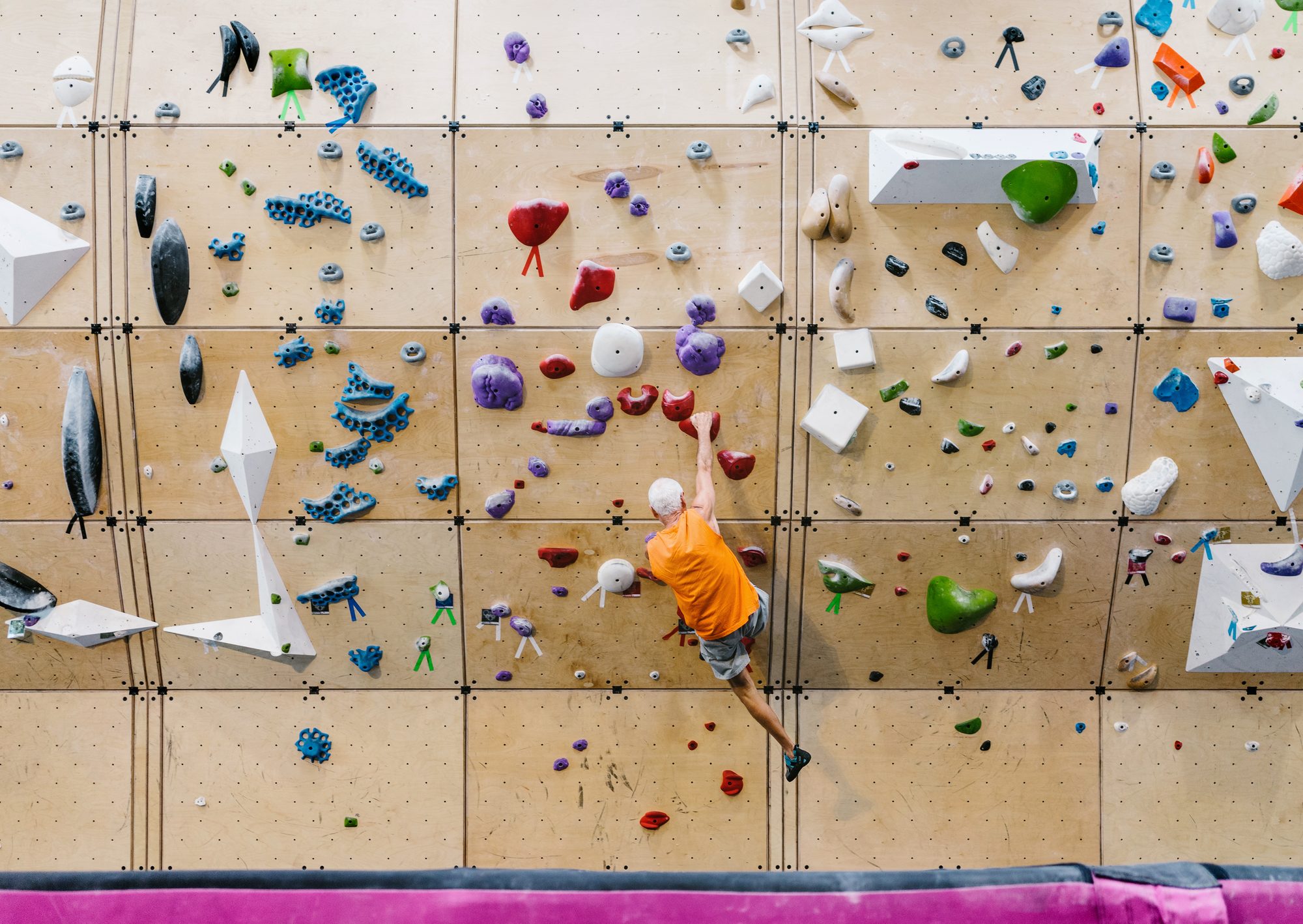
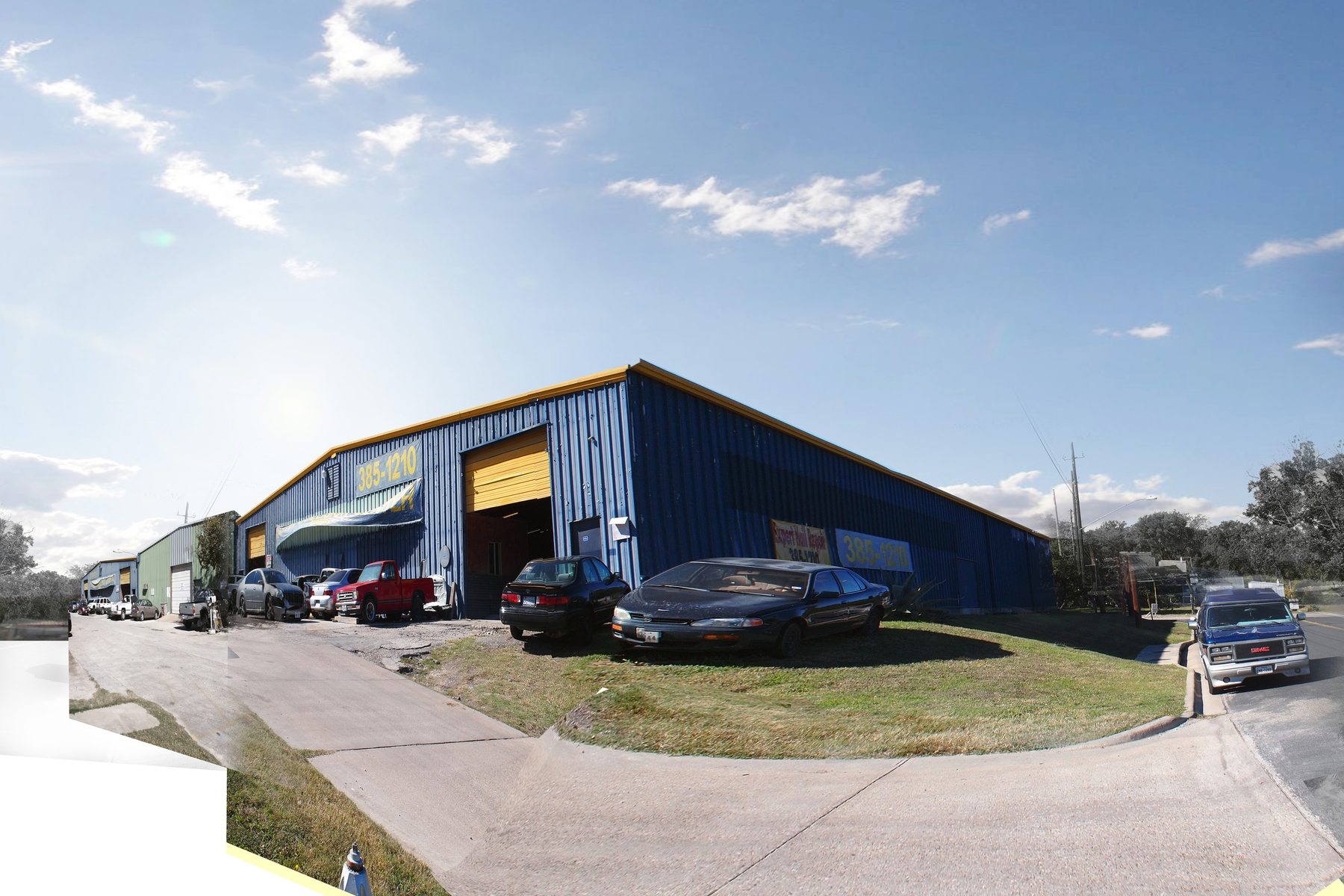
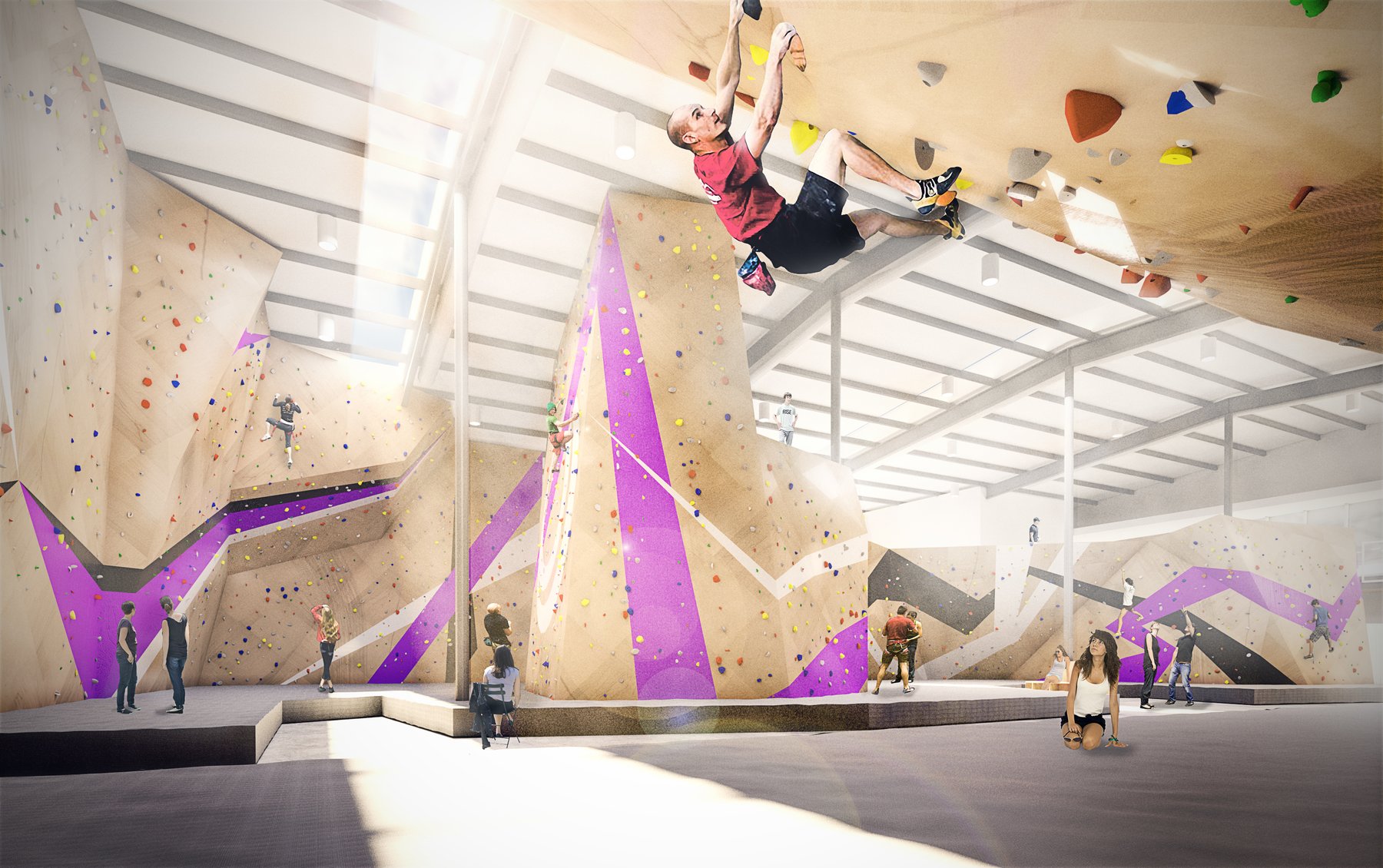
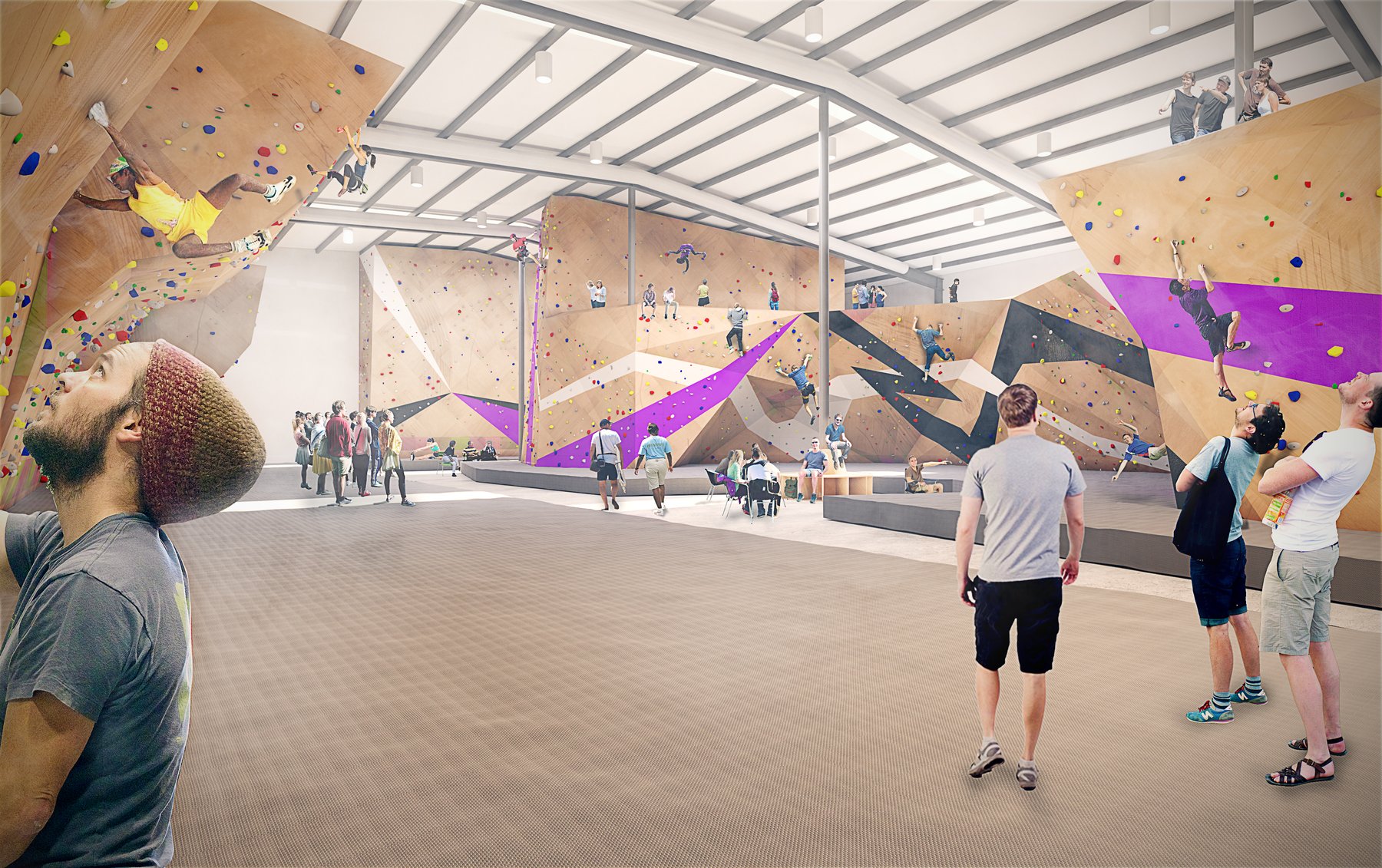
After Crux Central proved the typology could move into existing buildings, the network came back to the studio with a more ambitious adaptive reuse: an industrial shed at the edge of South Congress that needed to become Crux’s most public-facing facility. The brief asked for the same five-zone gym program — bouldering, top-rope or campus, fitness, yoga, retail, and cafe — inside a shell that was generous in volume but anonymous from the road.
Site and constraint
The site is an east-facing parcel on a heavily-trafficked corner, with a creek and pond at the rear that the existing building had turned its back on. The constraints were the road’s pace (the building had two seconds to register at street speed), the existing structural shell (which was sound but visually inert), and the slope at the rear that opened toward the water.
Design move
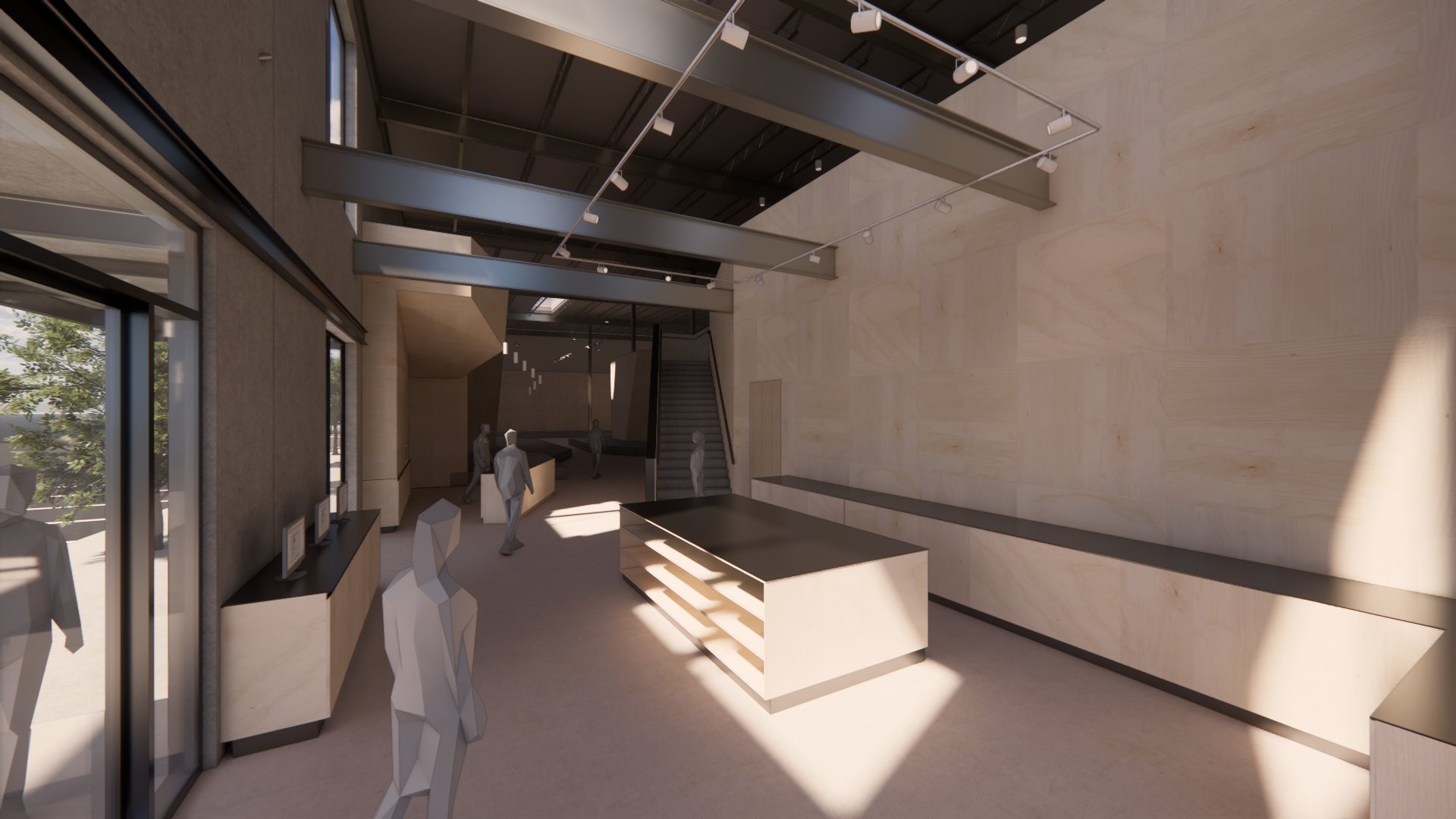
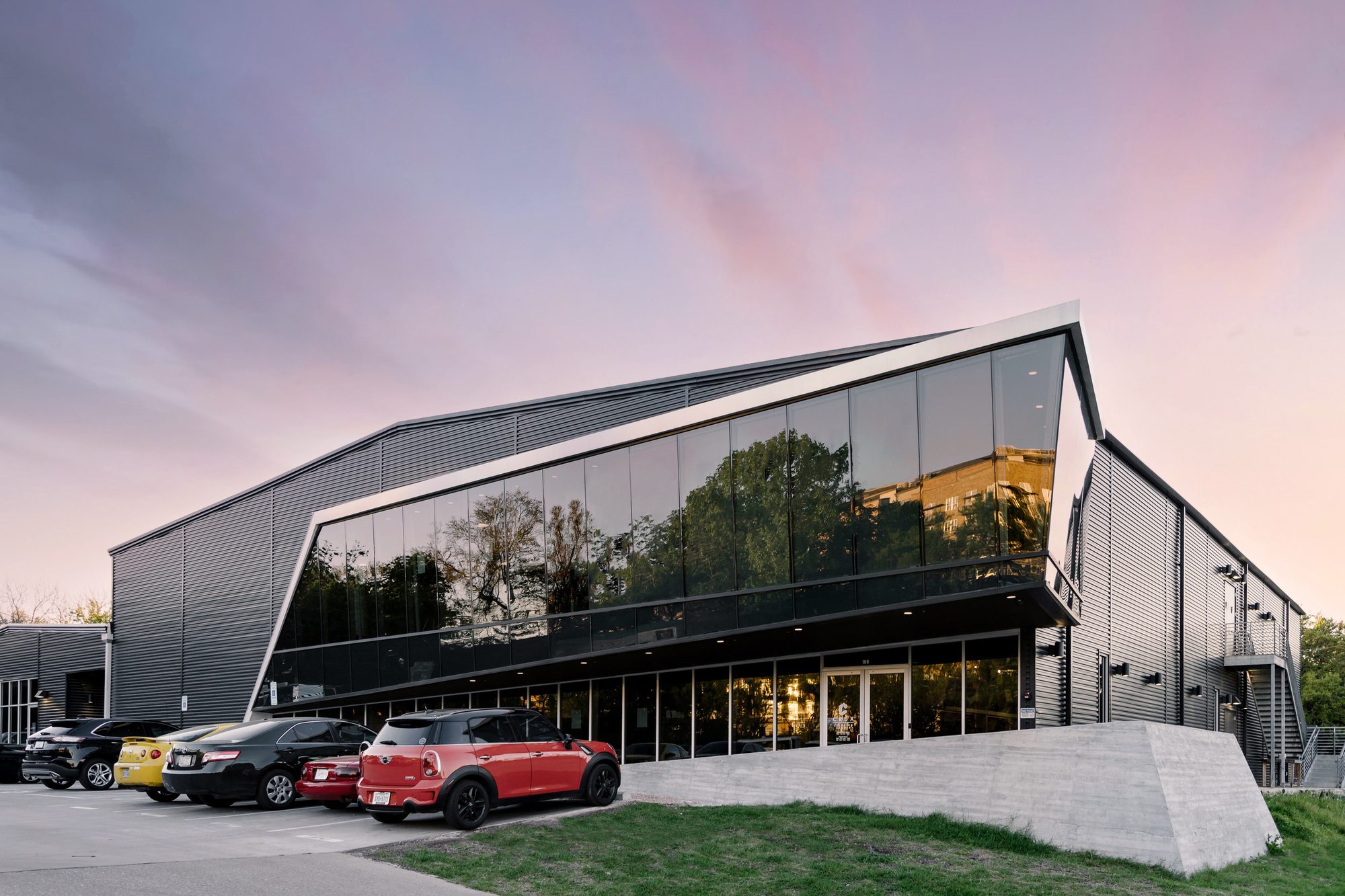
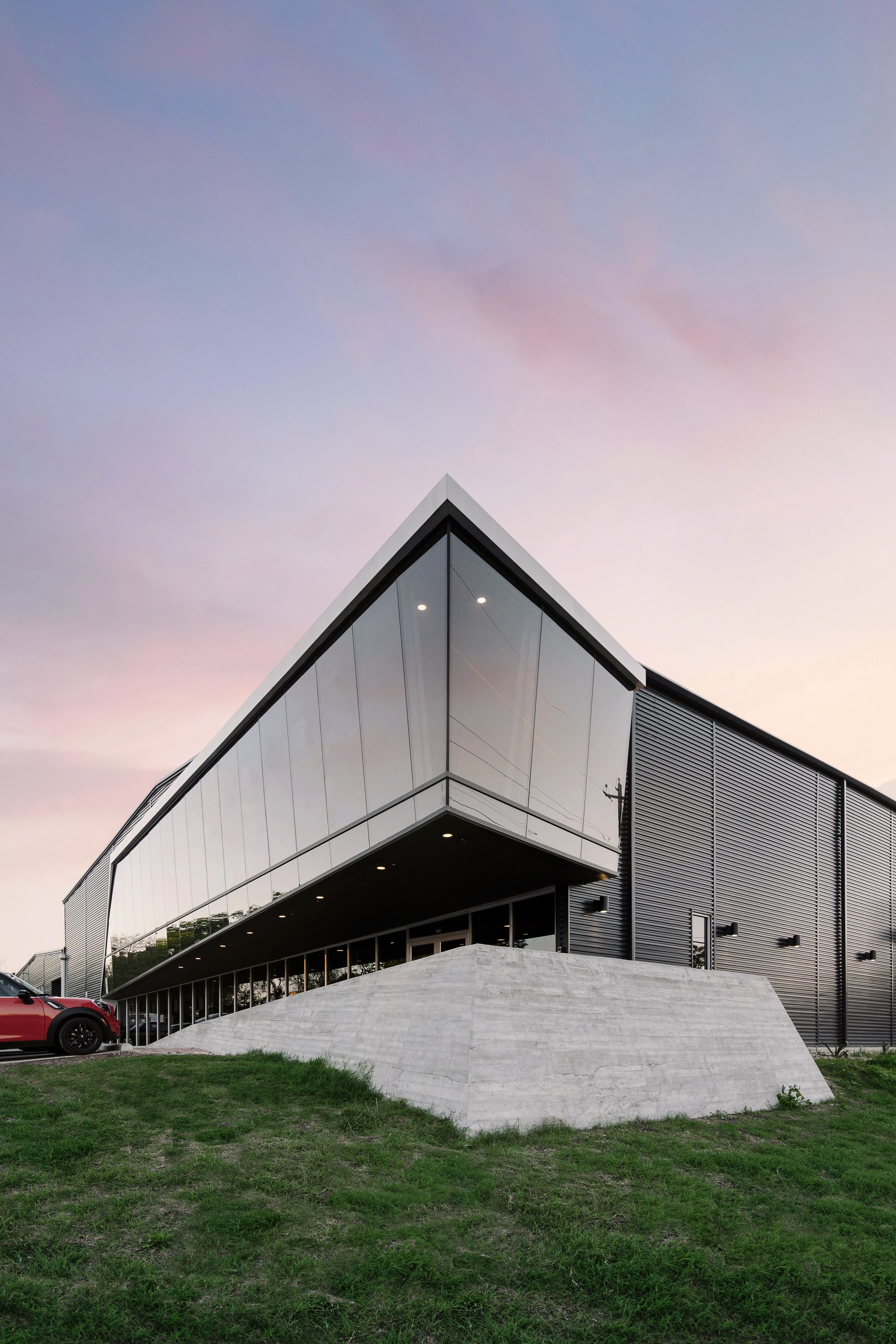
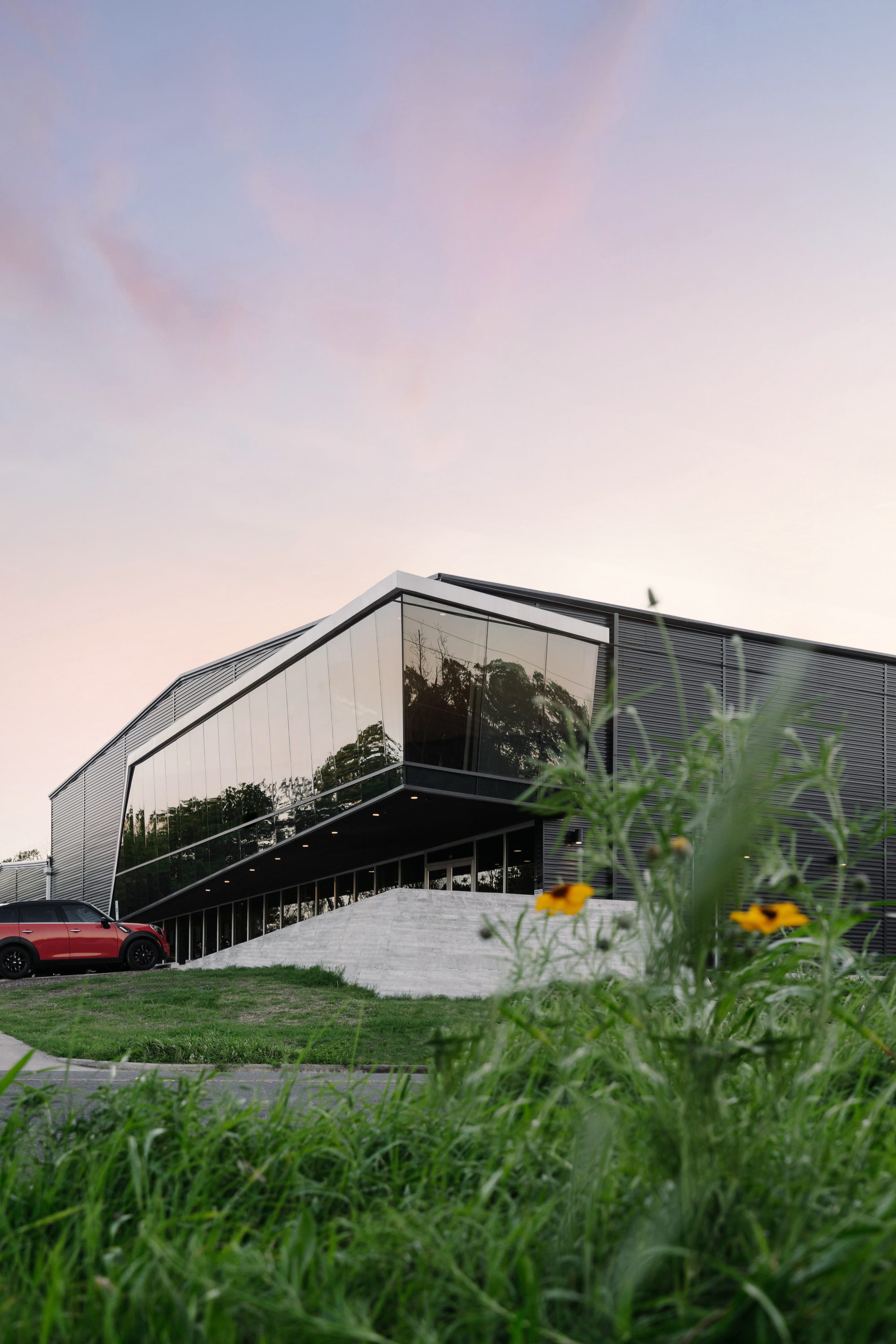
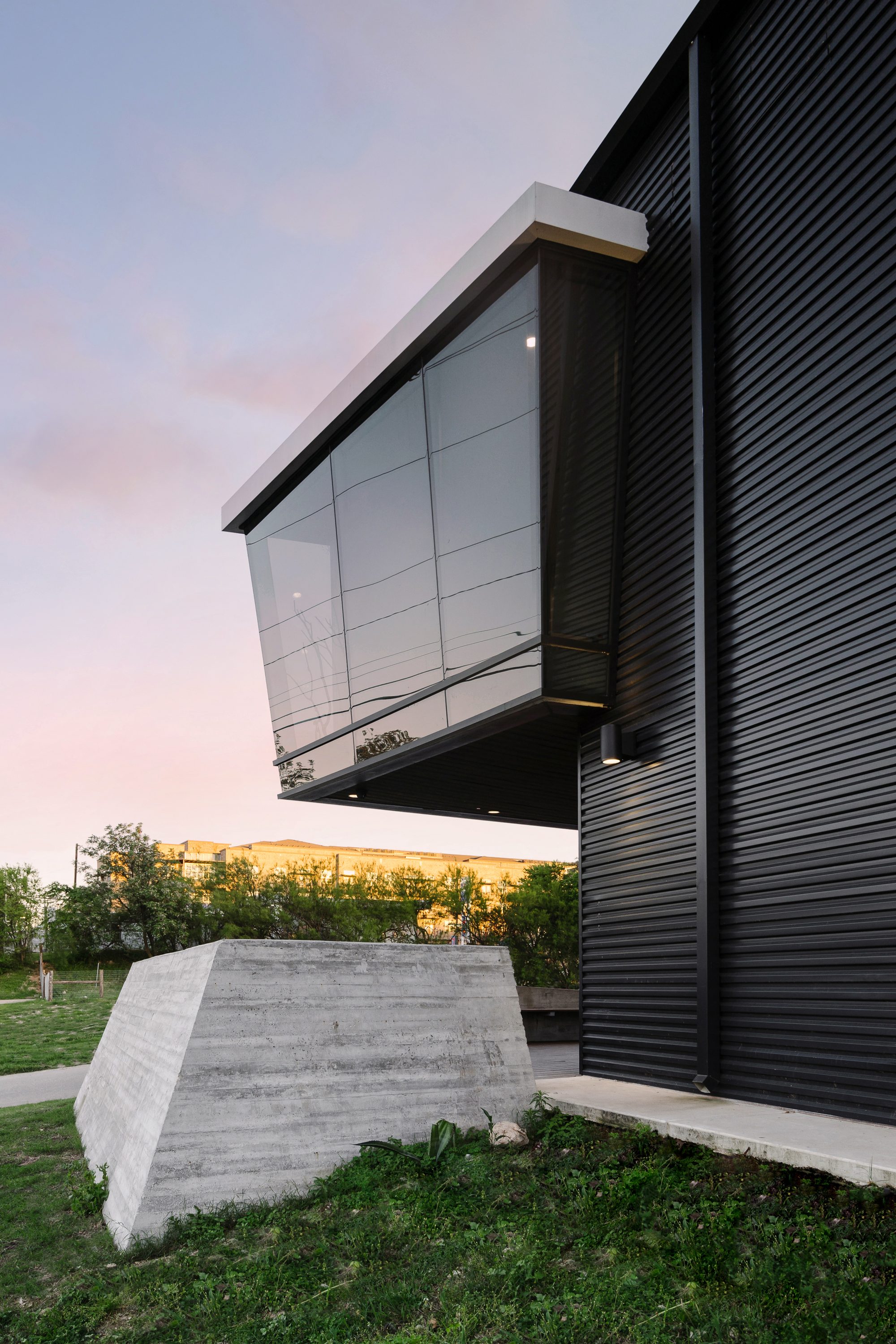
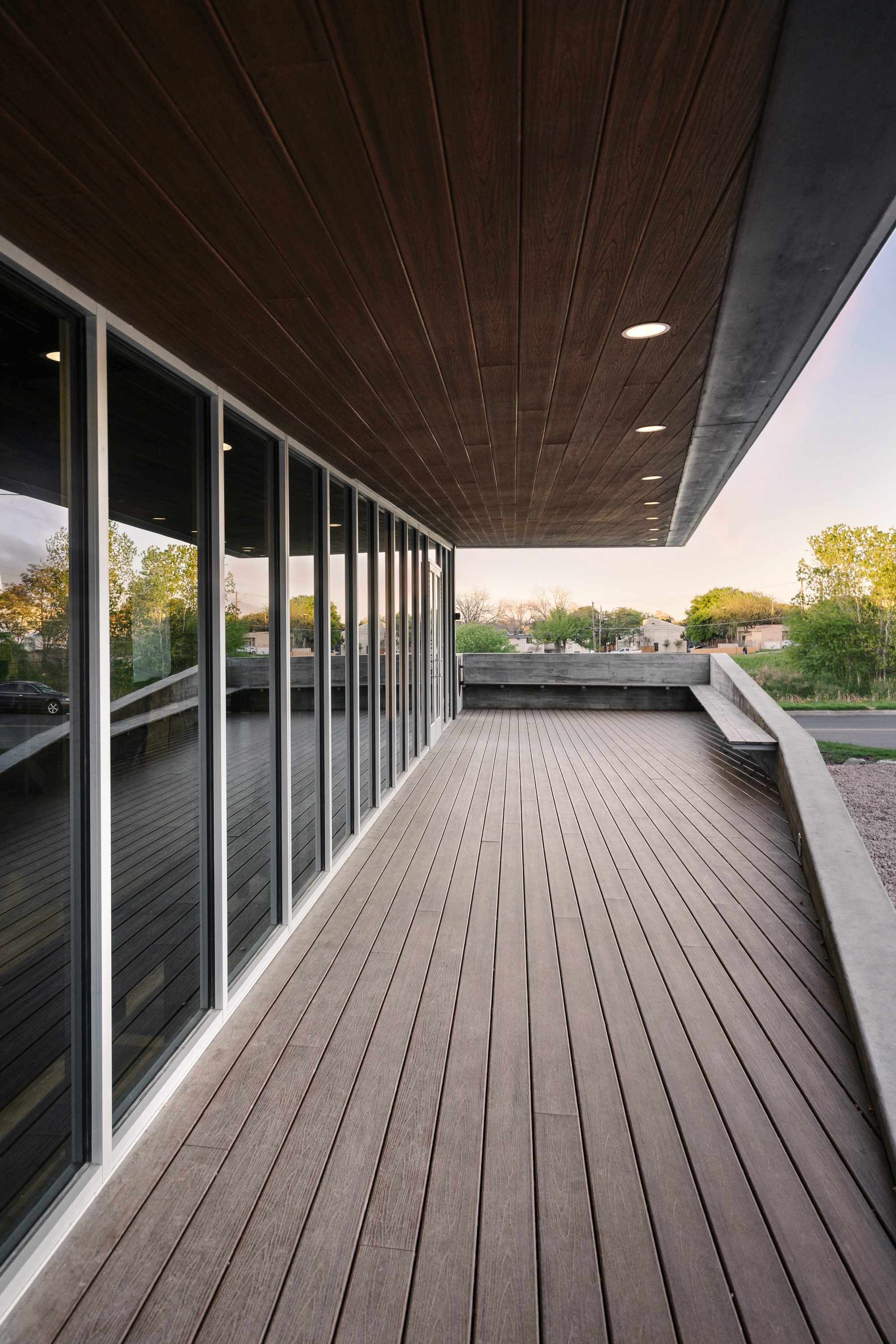
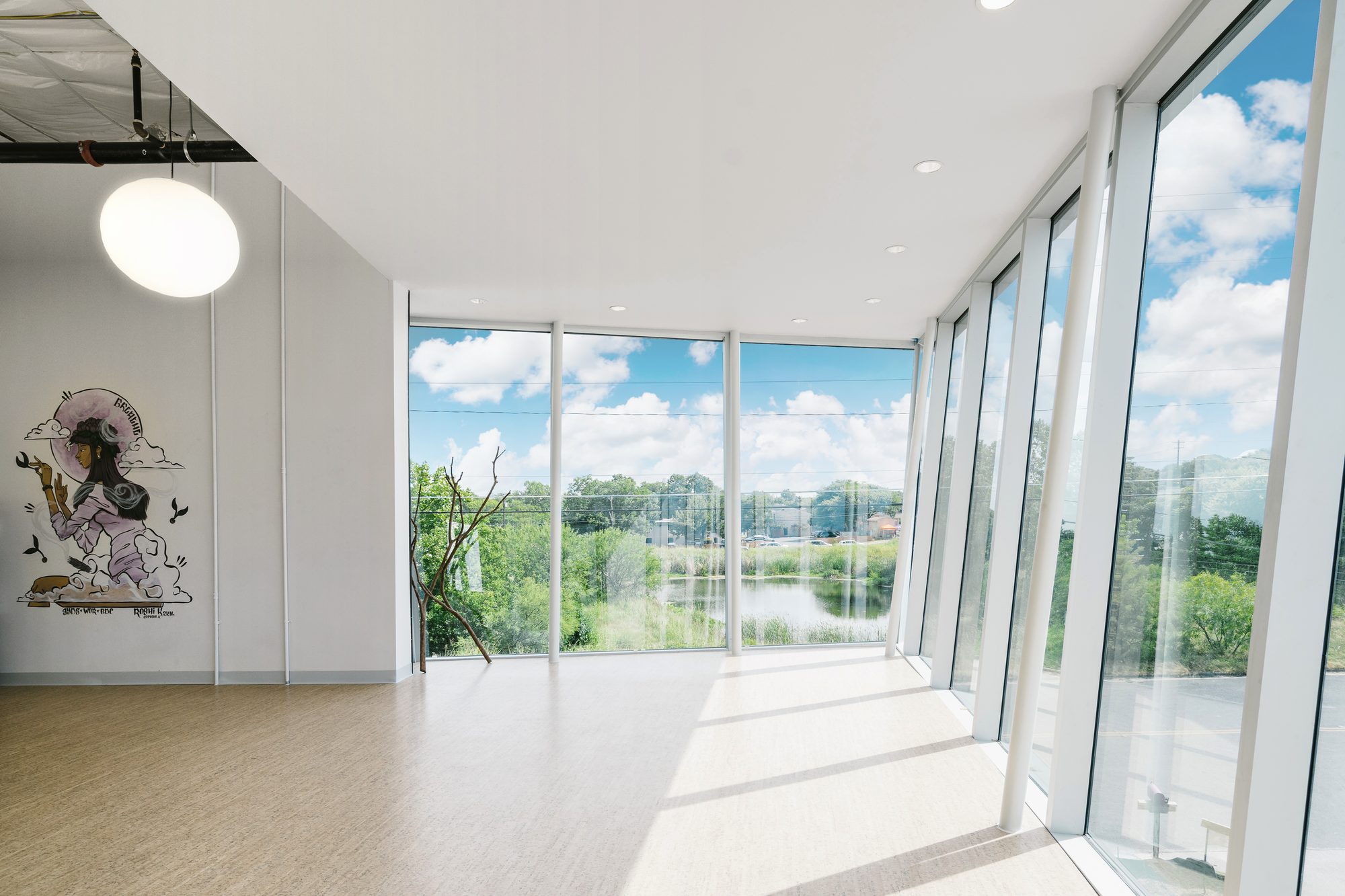
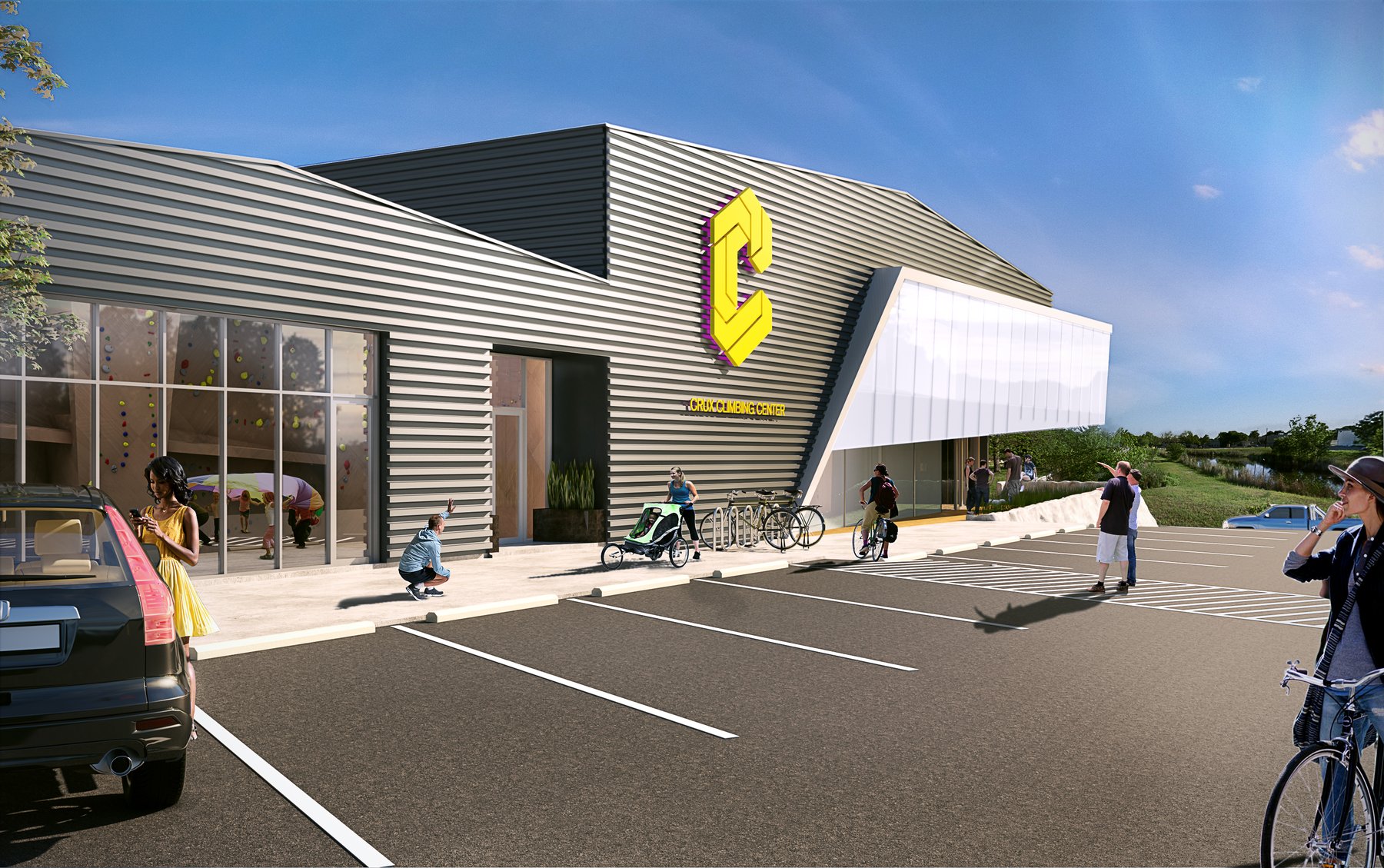
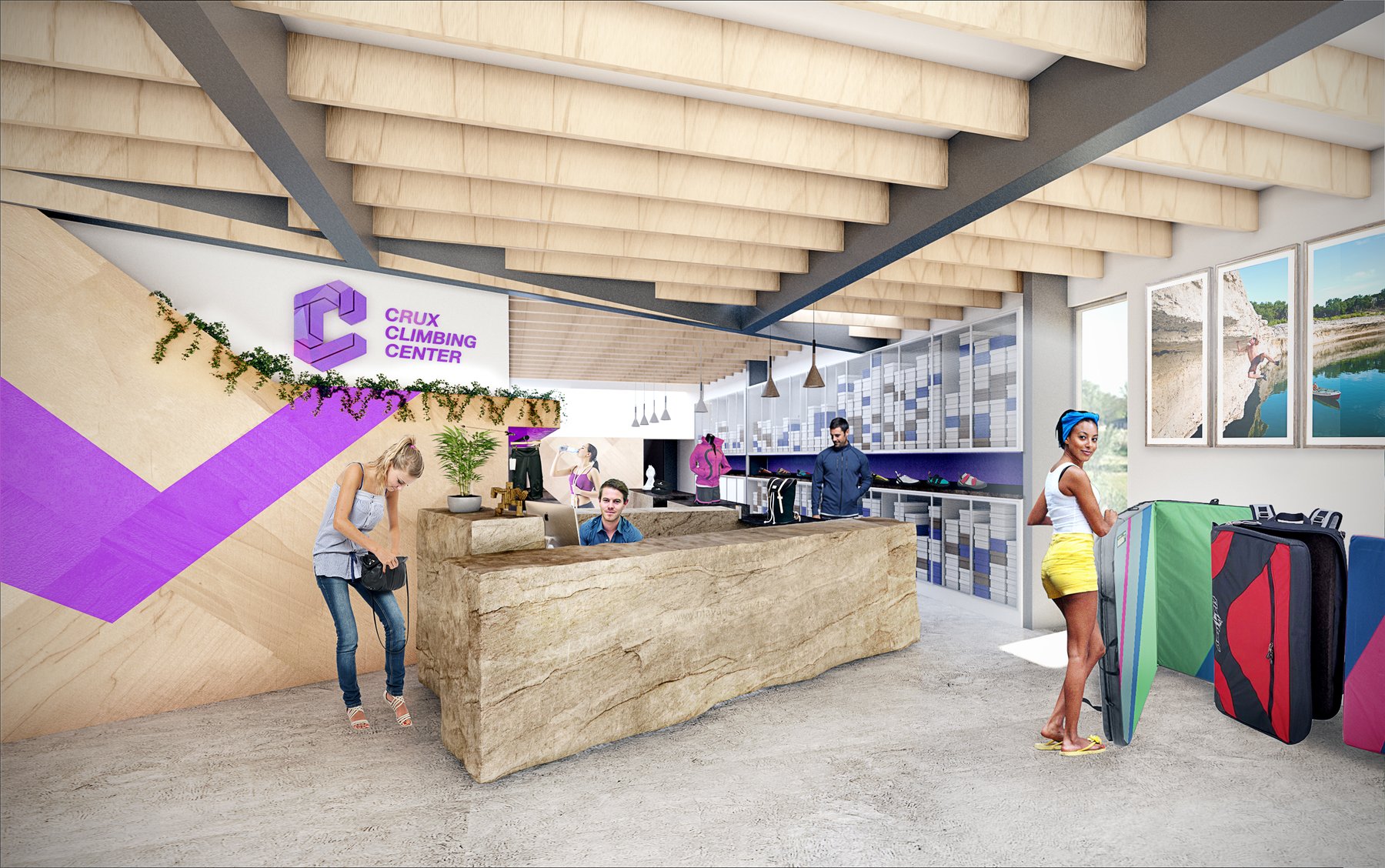
The project is one architectural move repeated at three scales. At the street, a single cantilevered glass volume holds the cafe, reception, and the CRUX wordmark — pulled out from the existing shell so it reads the road first. Behind it, the existing industrial structure is kept exposed: ducts, ceiling, columns, all visible. At the back, the closed face of the original building is opened with floor-to-ceiling glass to capture the creek view, with the yoga room placed precisely where the room can hold that view.
Construction approach
Conventional adaptive-reuse sequencing: structural review of the existing shell, selective demolition where new openings were cut, then the cantilevered addition built as a separate structure tied back into the existing frame. The dark corrugated metal cladding was specified to read as one material when the building is seen from the road at speed.
Outcome
Crux South Congress is the gym in the network that introduces the brand to people driving past — and the project that confirmed adaptive reuse could deliver a building with as much architectural identity as a ground-up commission. It carried Crux from a network of mostly-anonymous industrial conversions to a network with a public face.