Client and program
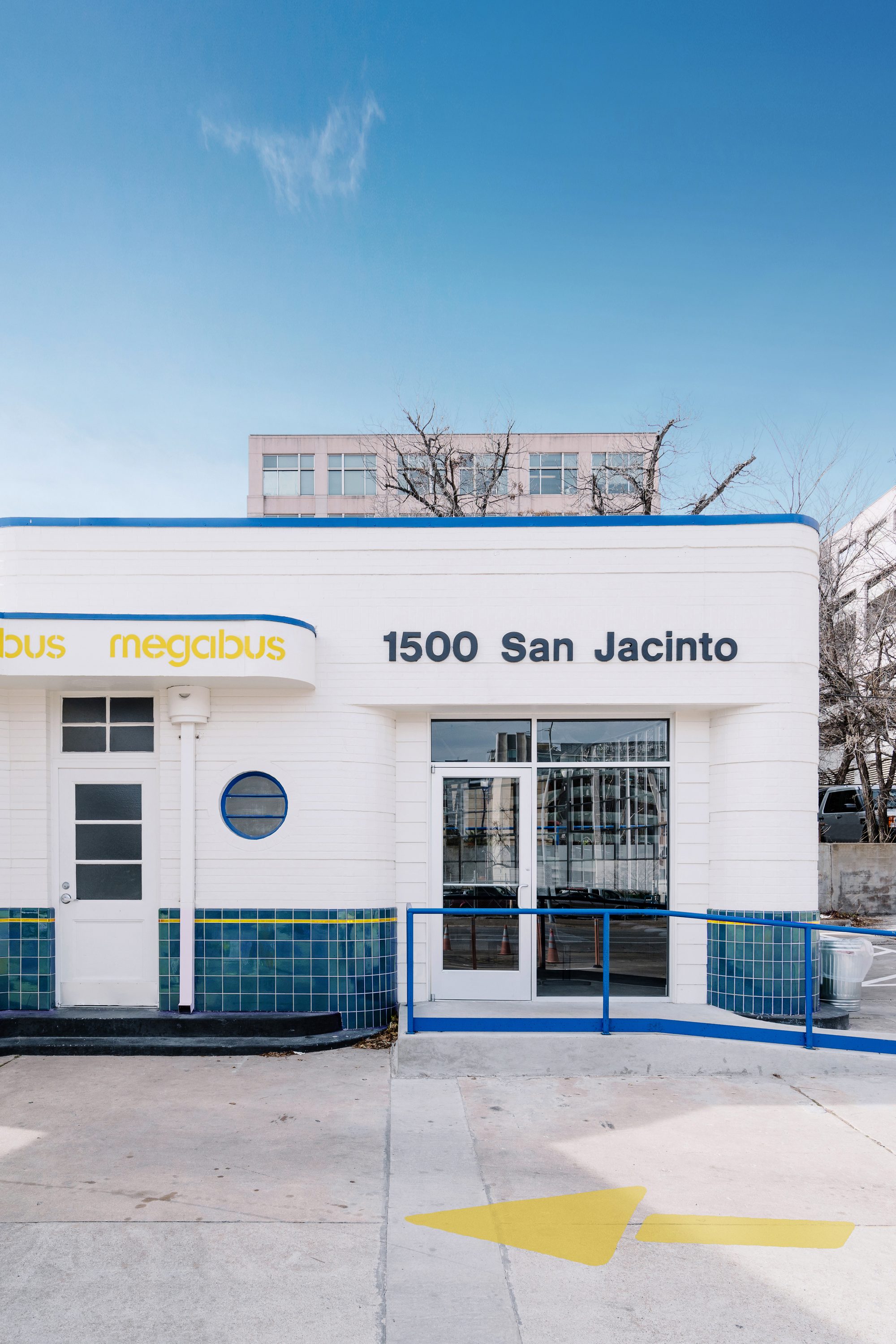
Megabus needed a downtown Austin terminal: a place for passengers to wait, a clear ticket-and-loading area, and a building that could read as a transit destination from the street. The site at 1500 San Jacinto already had a building — a 1942 Streamline Moderne service station originally built as Craddocks — that had been altered, neglected, and partly stripped of its original details. The brief was a restoration that would let the operator move in without losing what made the building worth preserving.
Site and constraint
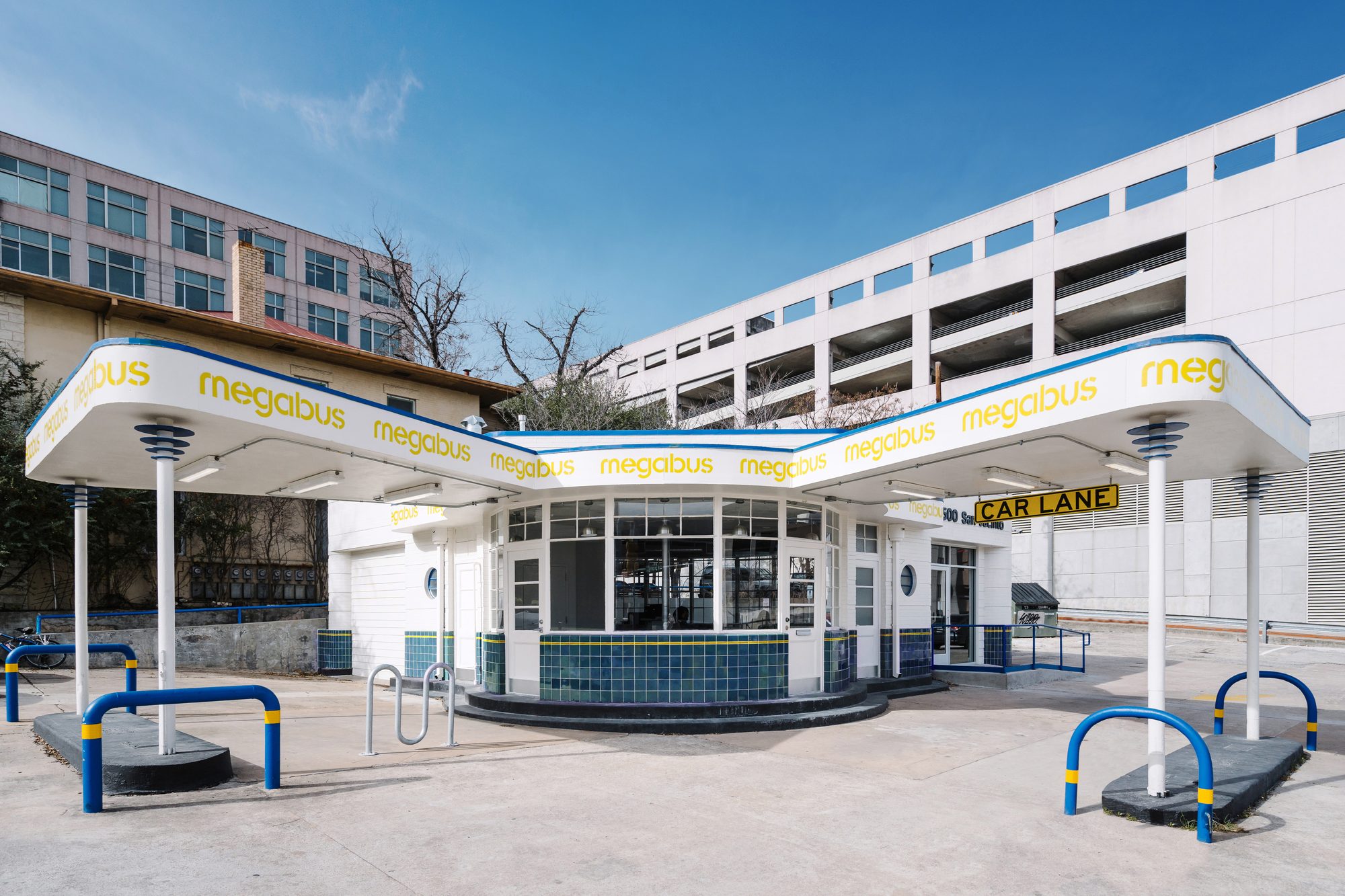
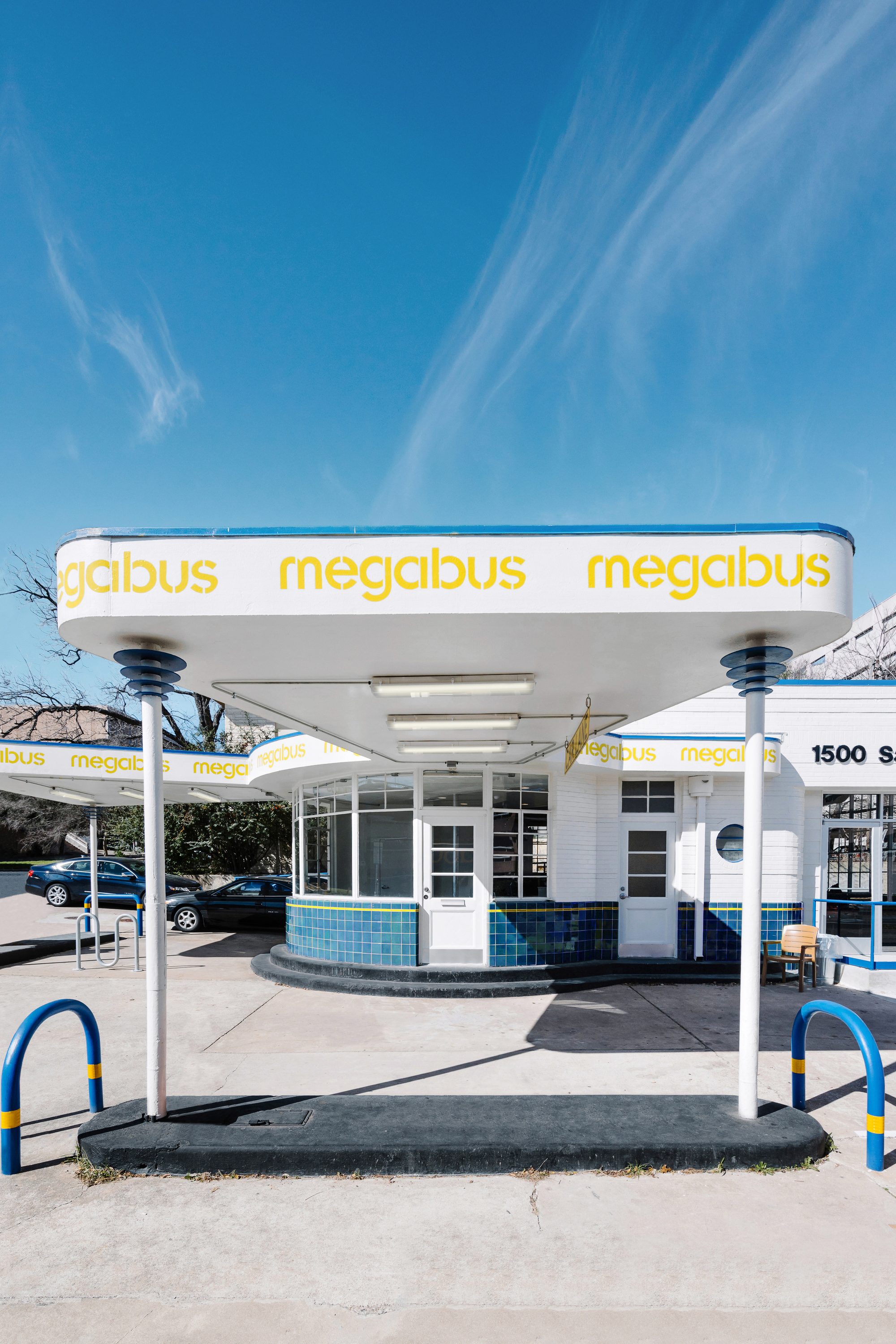
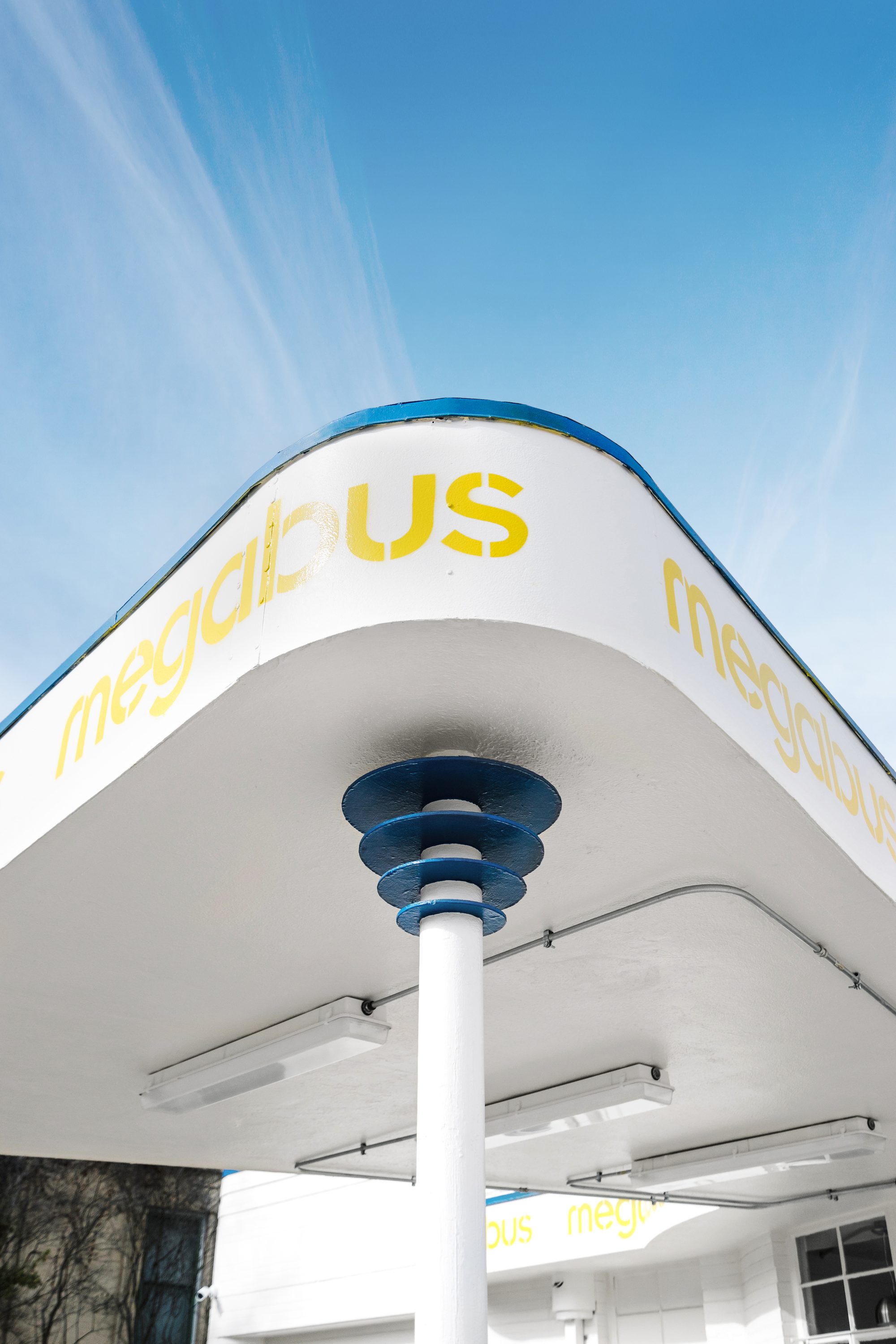
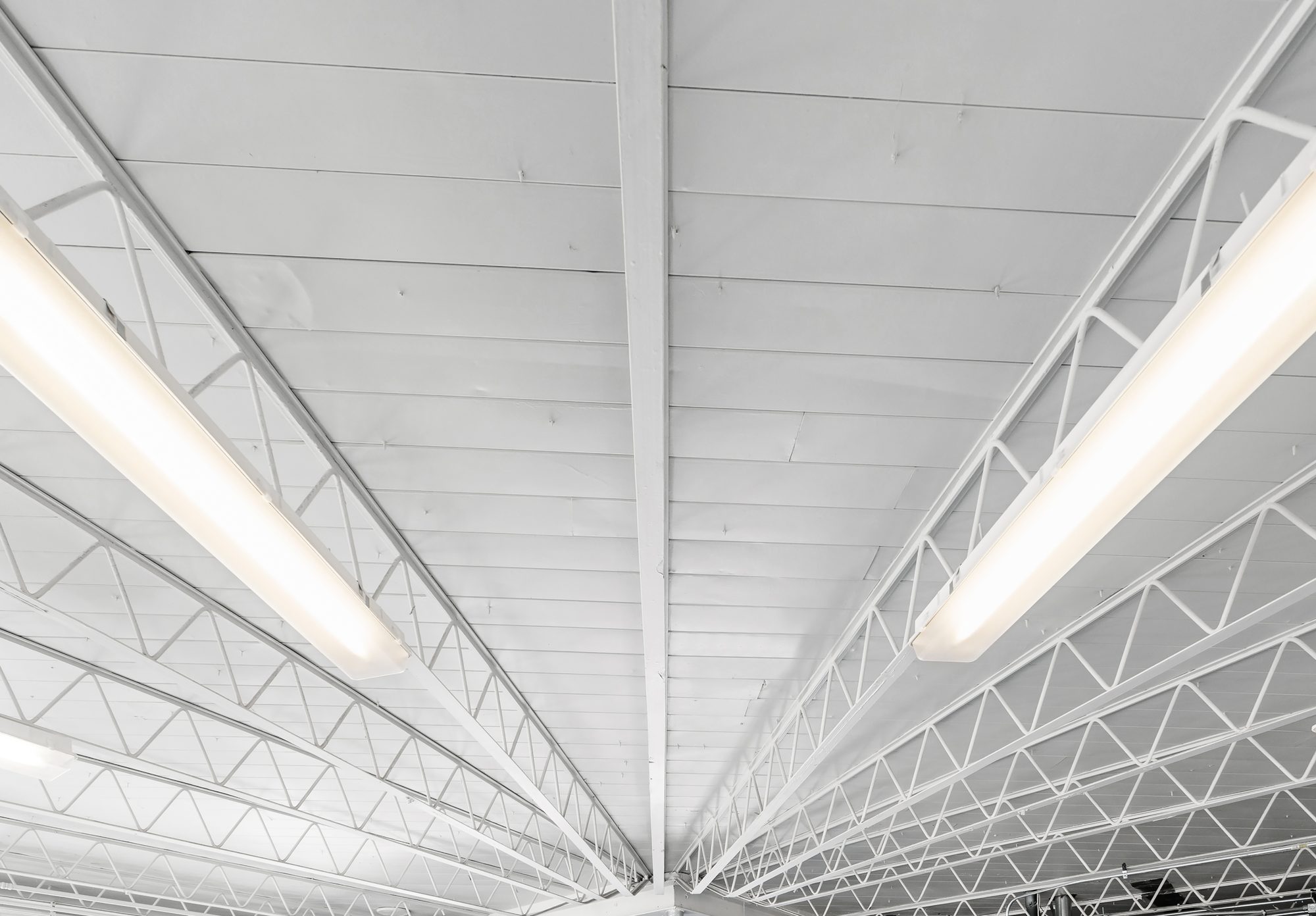
The site is a downtown corner held between contemporary office and parking-garage construction, with the small Streamline Moderne building isolated as a survivor of an earlier Austin. The constraints were what remained of the 1942 fabric: original curved walls and tile bands, original cantilevered canopy with circular fluted columns, original steel-framed clerestory windows, and the original bowstring-truss roof structure that had been hidden under acoustic tile for decades.
Design move
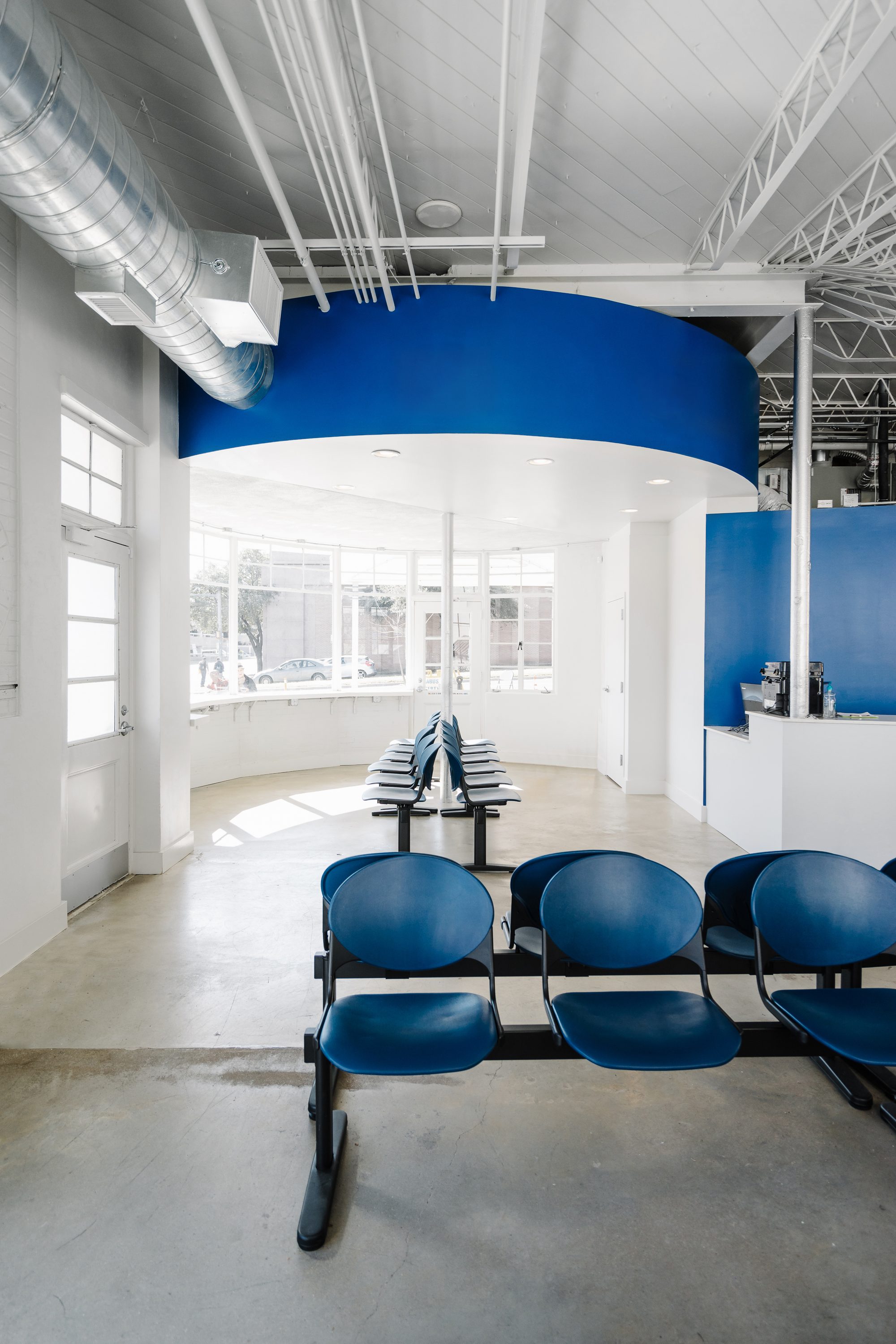
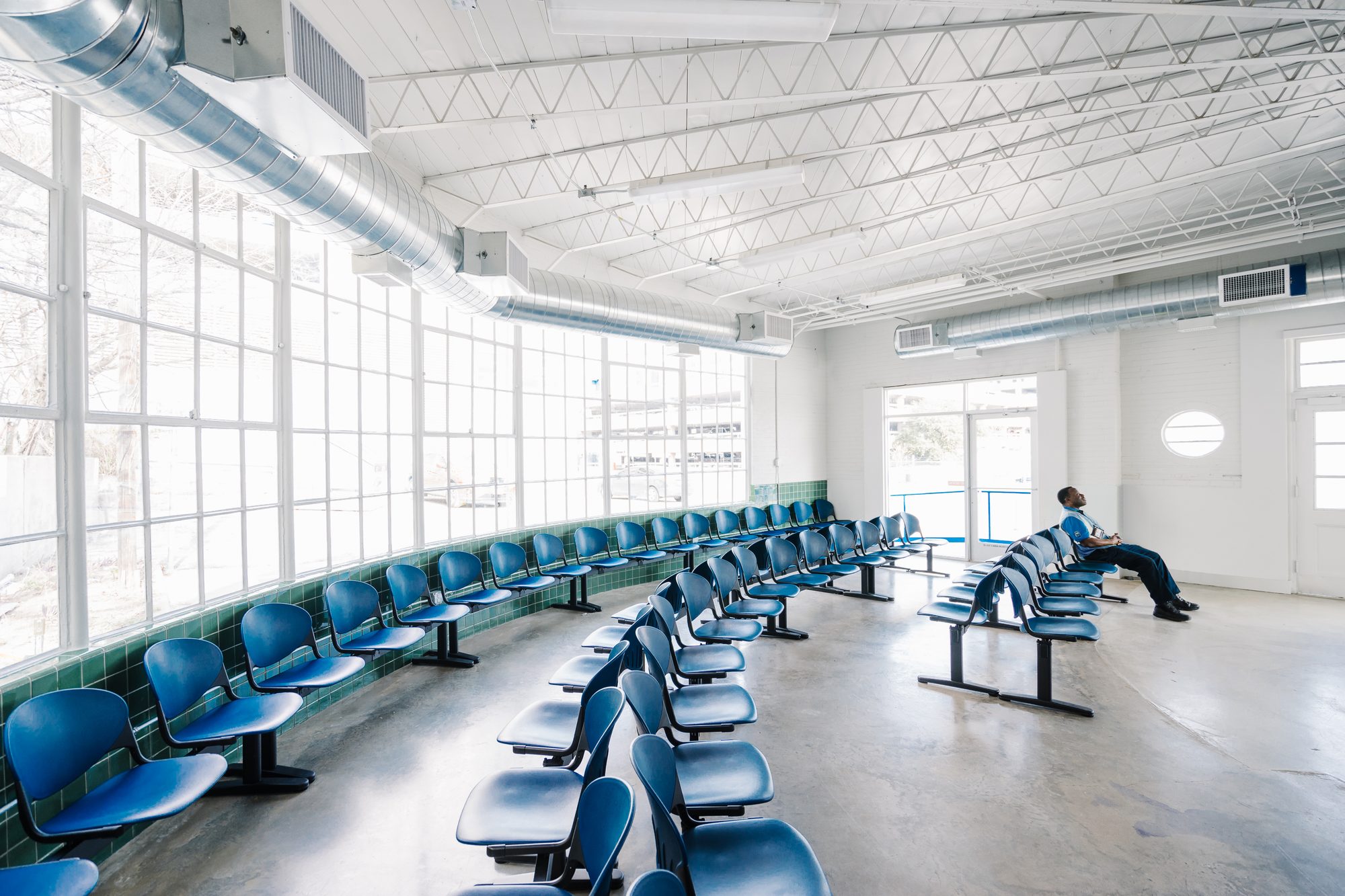
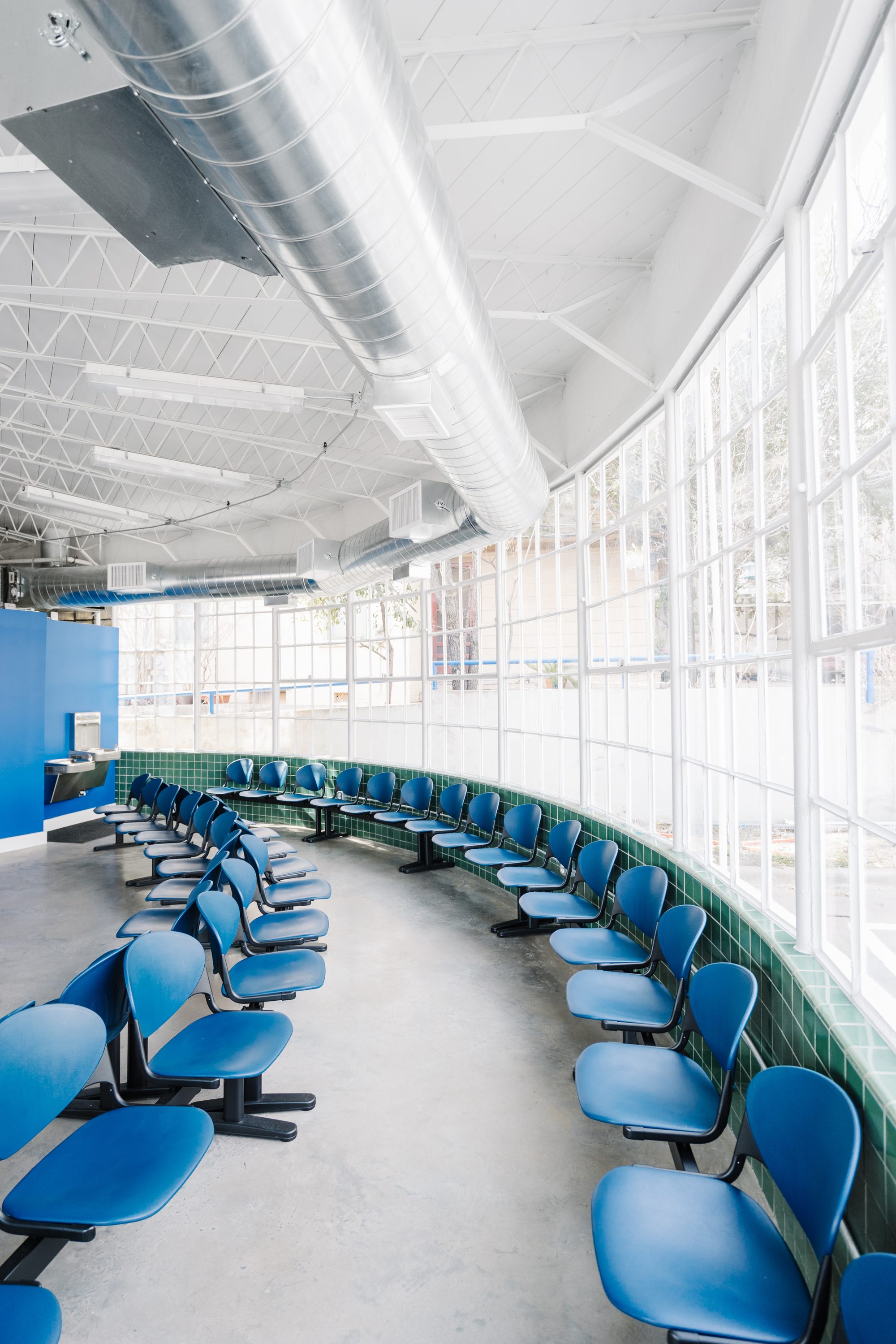
The restoration kept every original element that could be saved and removed every later addition that obscured them. The acoustic-tile ceiling came down to expose the original shiplap-plank ceiling and white steel bowstring trusses. The original tile band — yellow and blue at the canopy face, green at the curved entry — was repaired, not replaced. The canopy was repainted in its original colors and lettered with the new operator’s wordmark in a yellow that reads as continuous with the tile band. Inside, a single-room waiting concourse was organized around the existing curved wall, with banks of blue molded chairs sized and colored to match the original tile.
Construction approach
Restoration sequencing: careful demolition first to expose what survived; structural review of the existing trusses; tile repair by craftspeople; new mechanical systems run as exposed silver ductwork rather than concealed in dropped ceilings, so the original ceiling stays visible. The yellow lettering on the canopy was specified for reversibility — paint, not vinyl, applied by hand.
Outcome
The Megabus Station received the 2017 Preservation Merit Award and is now one of the most visible restored Streamline Moderne buildings in downtown Austin. The project’s most consequential decision was the ceiling: keeping the bowstring trusses exposed transformed a one-story room into a vaulted volume, and re-established the building’s original architectural character at a scale a passenger could read at a glance.