Client and program
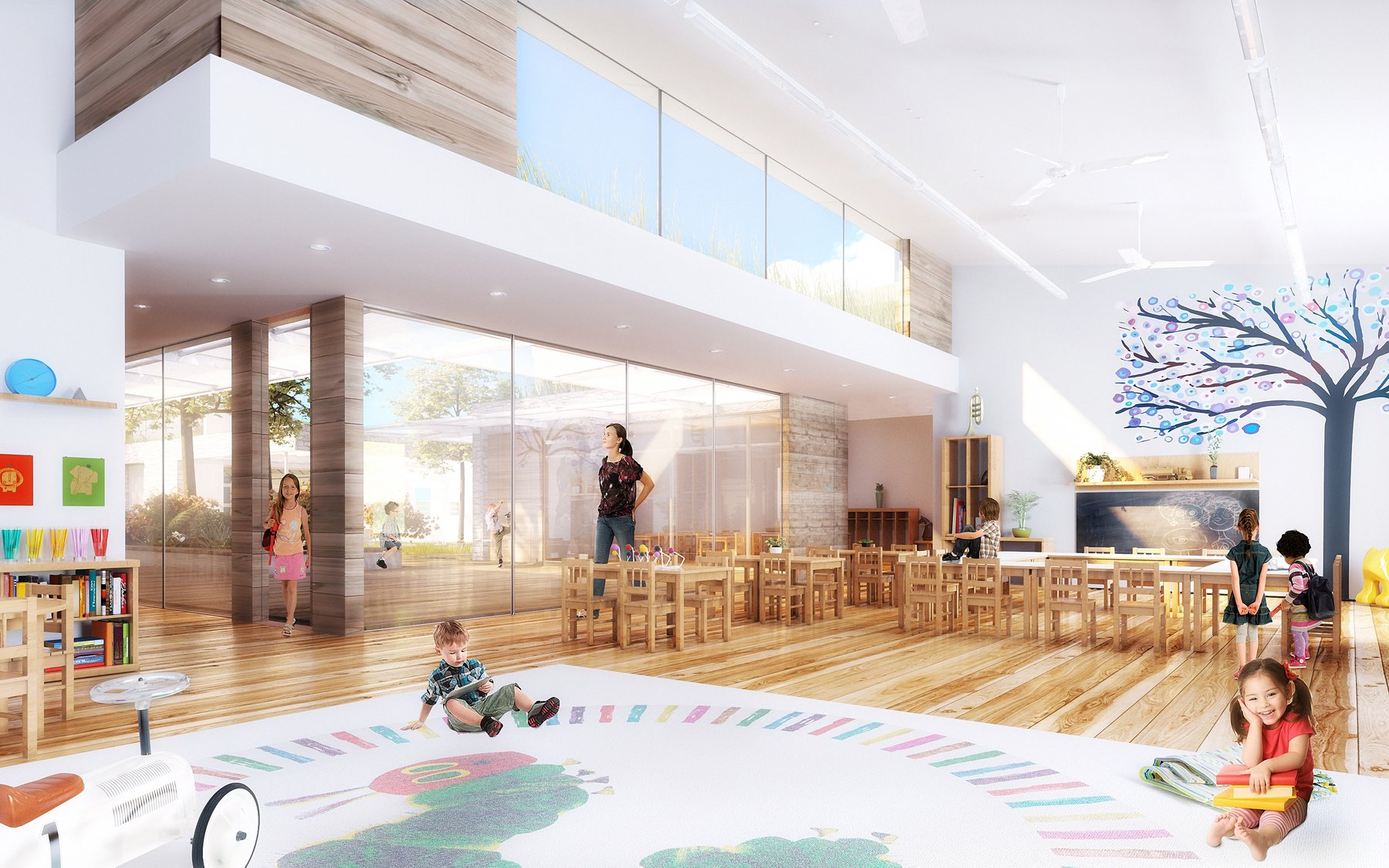
The Headwaters School (then Khabele) needed a lower-elementary classroom expansion that could carry the school’s growing Montessori enrollment without losing the intimacy that had defined the campus. The brief was two classrooms, paired, with shared support space — and a strong request from the Montessori faculty for high vaulted ceilings, generous daylight, and the kind of indoor-outdoor connection their pedagogy depends on.
Site and constraint
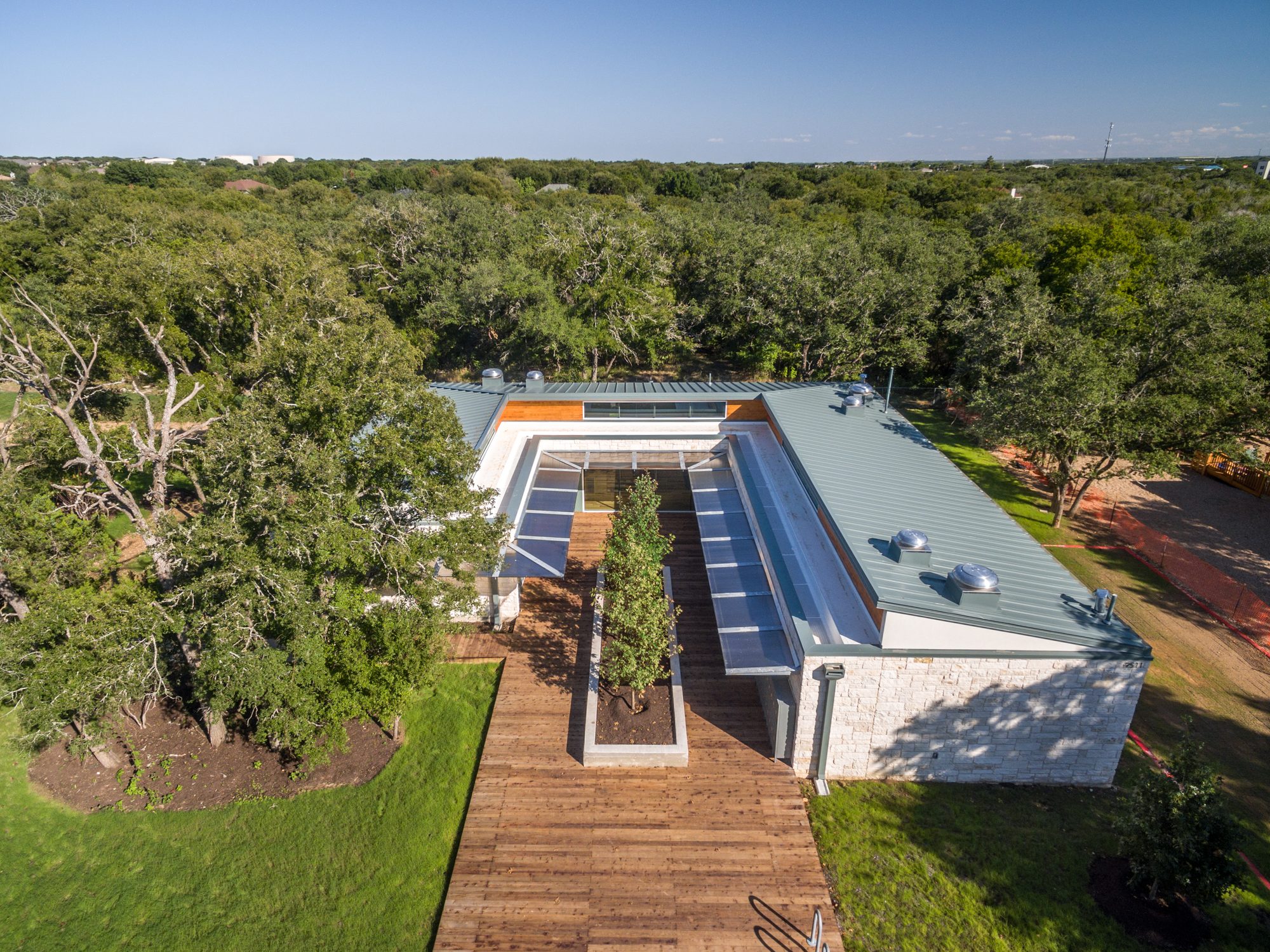
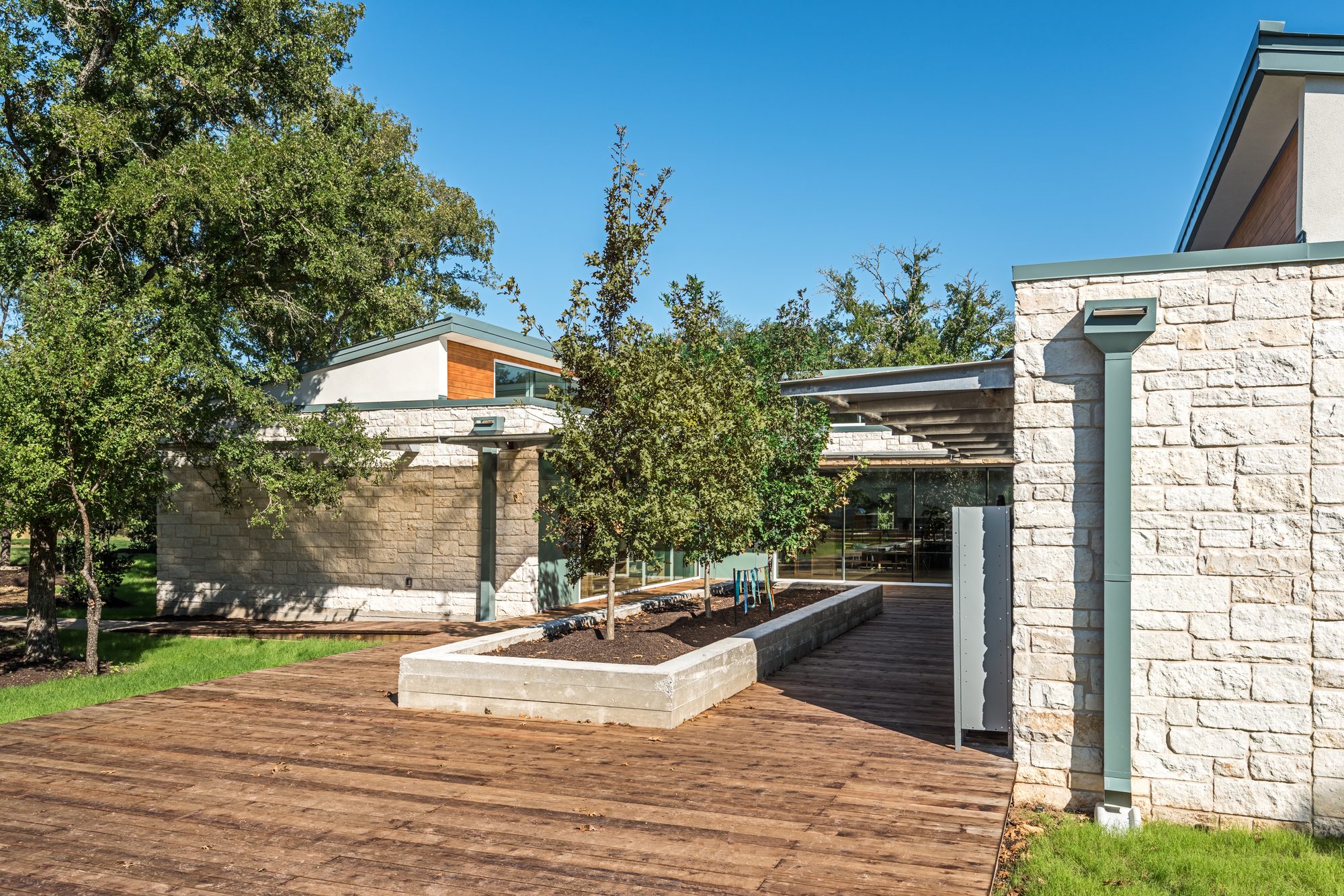
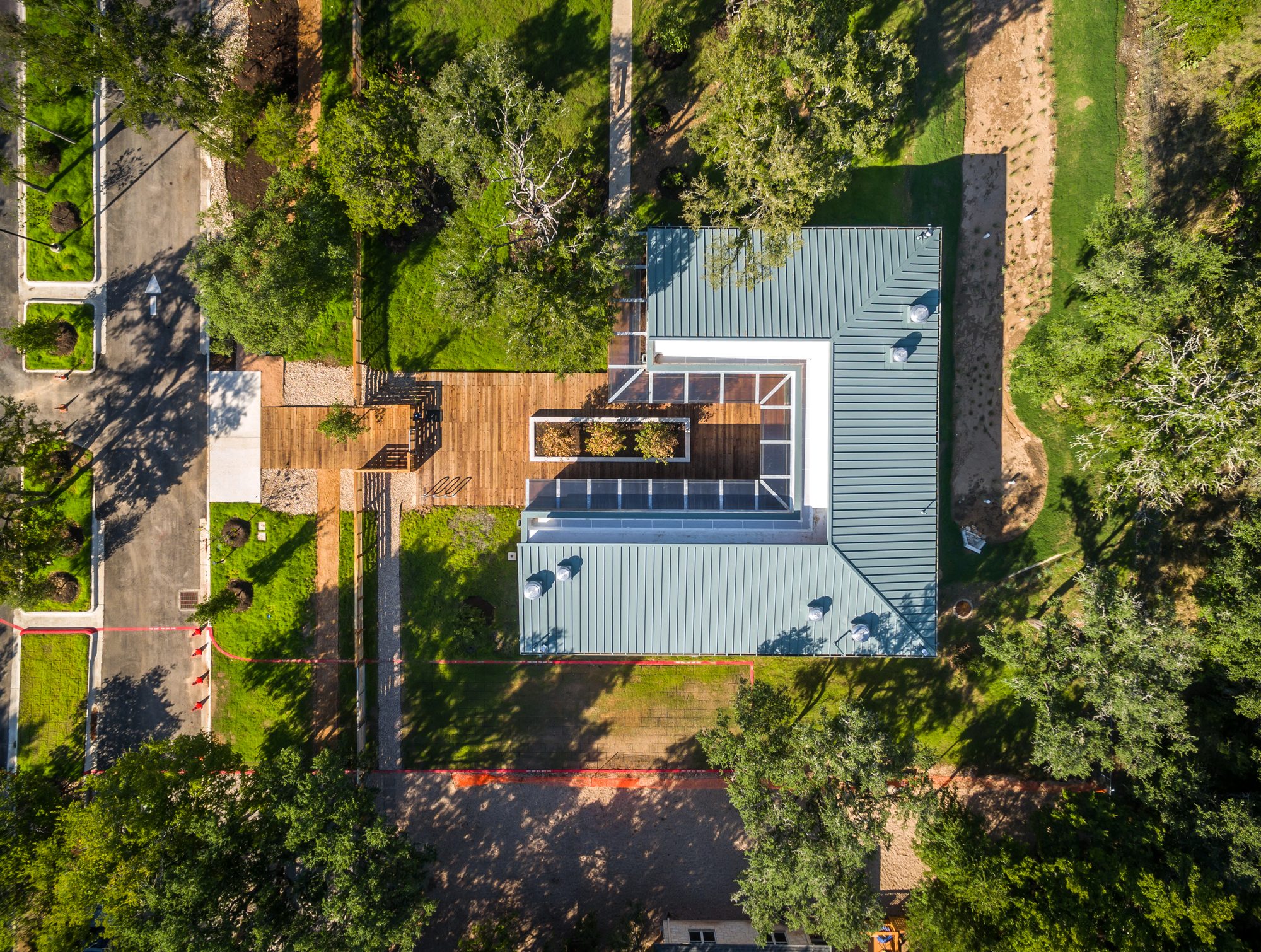
The site is a wooded slope at the edge of the existing campus, dotted with mature oaks the school was unwilling to cut. The footprint that was buildable without losing trees was narrow and elongated. The constraints set the geometry: a long, low building with a roof shaped to thread the canopy rather than clear it.
Design move
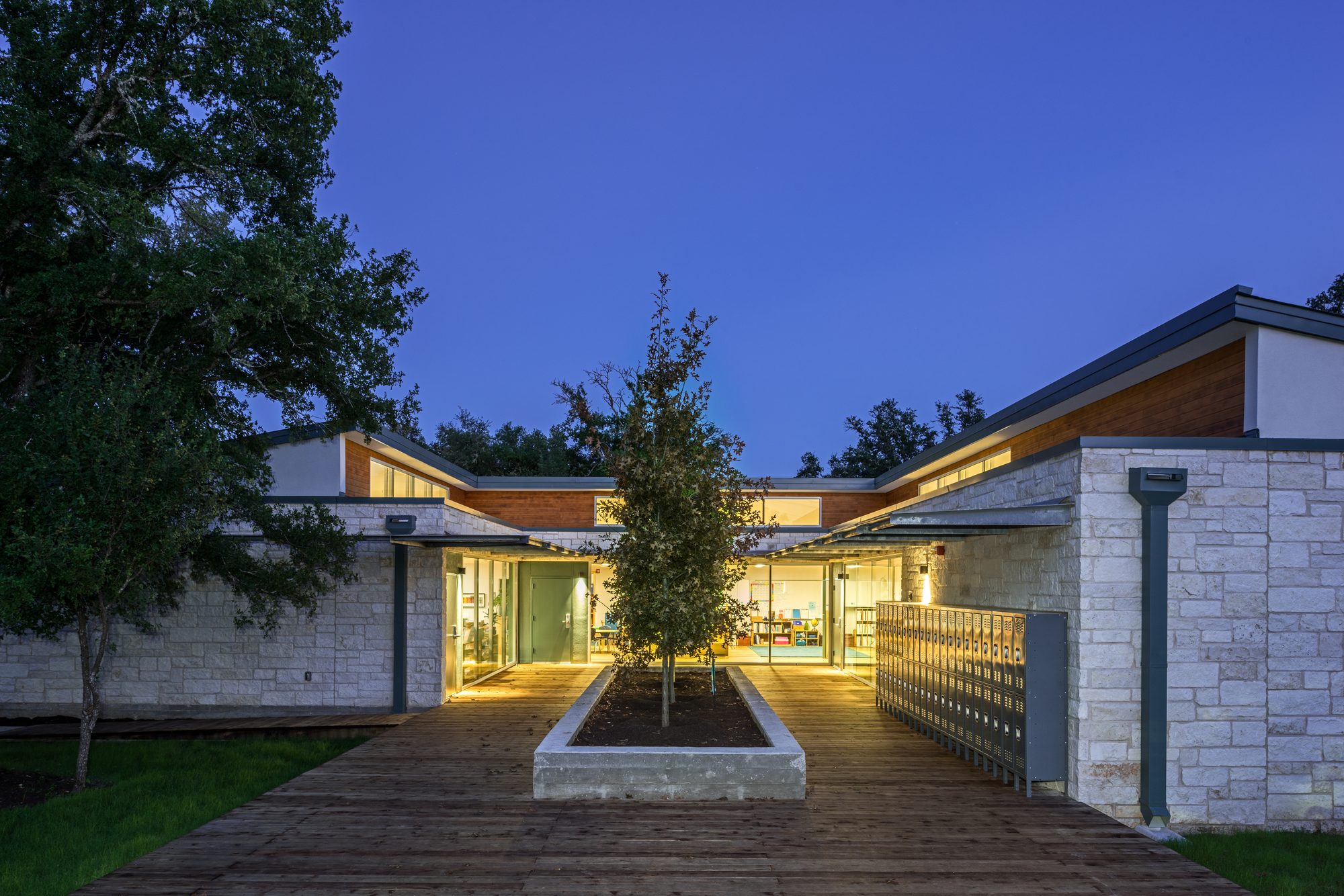
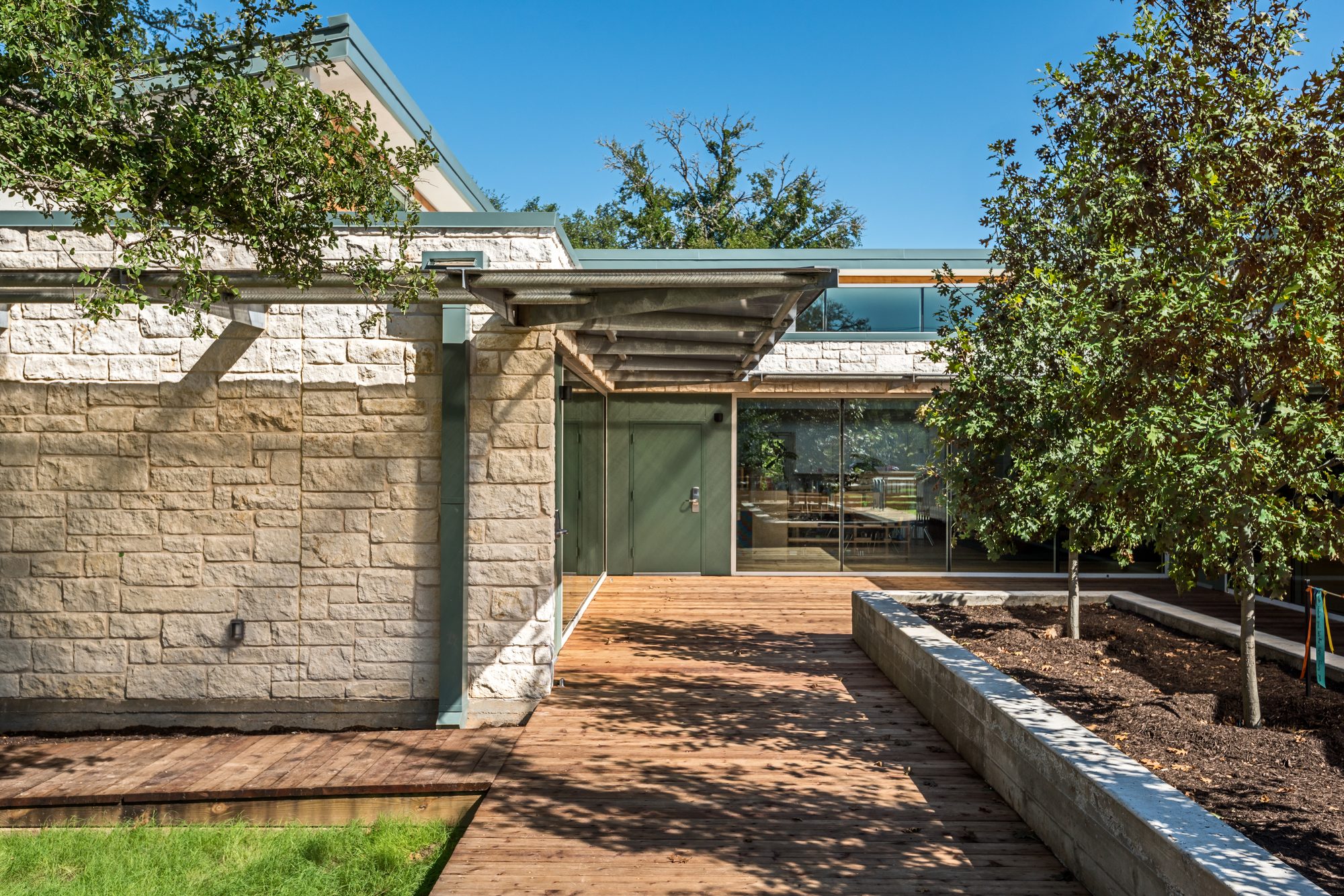
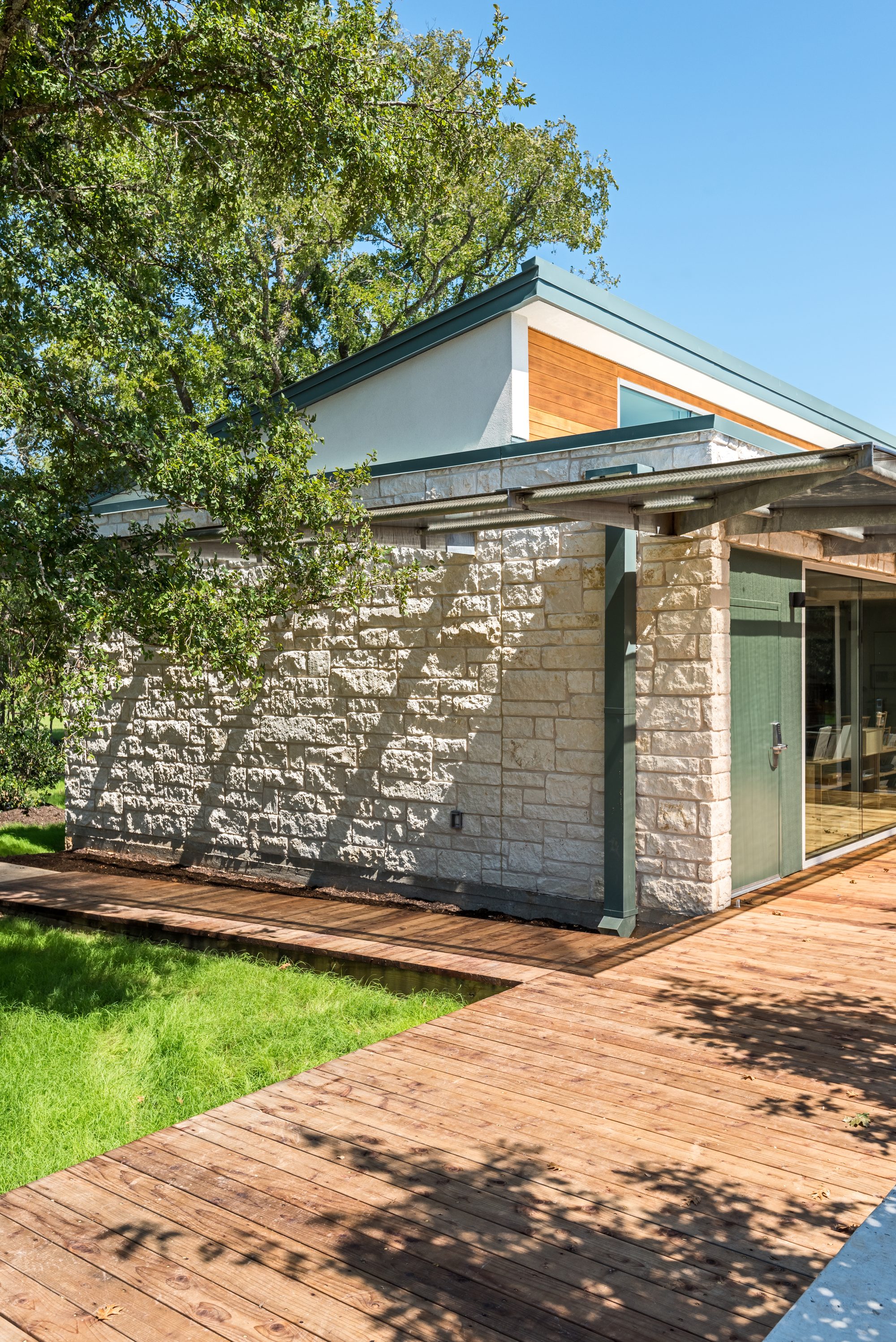
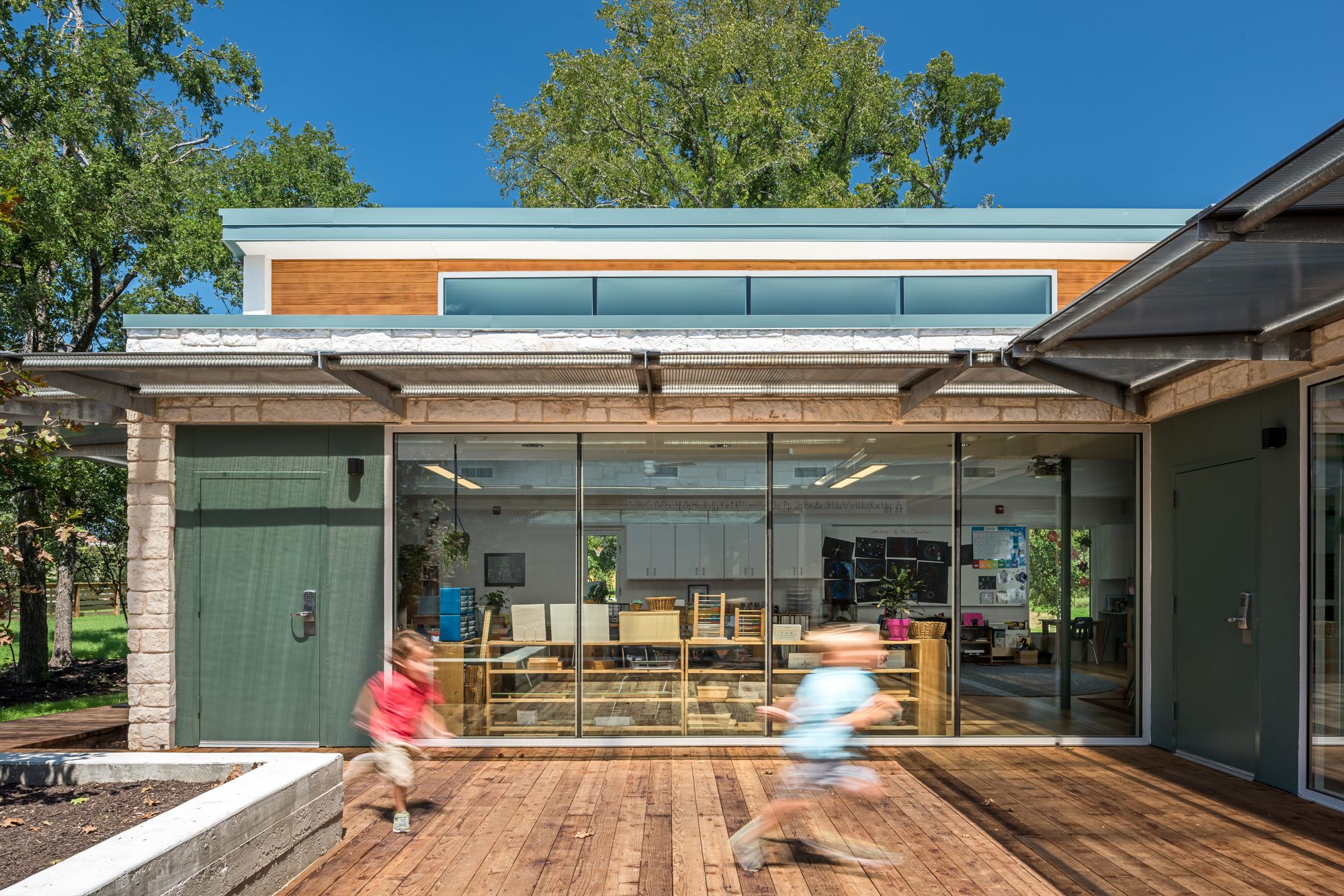
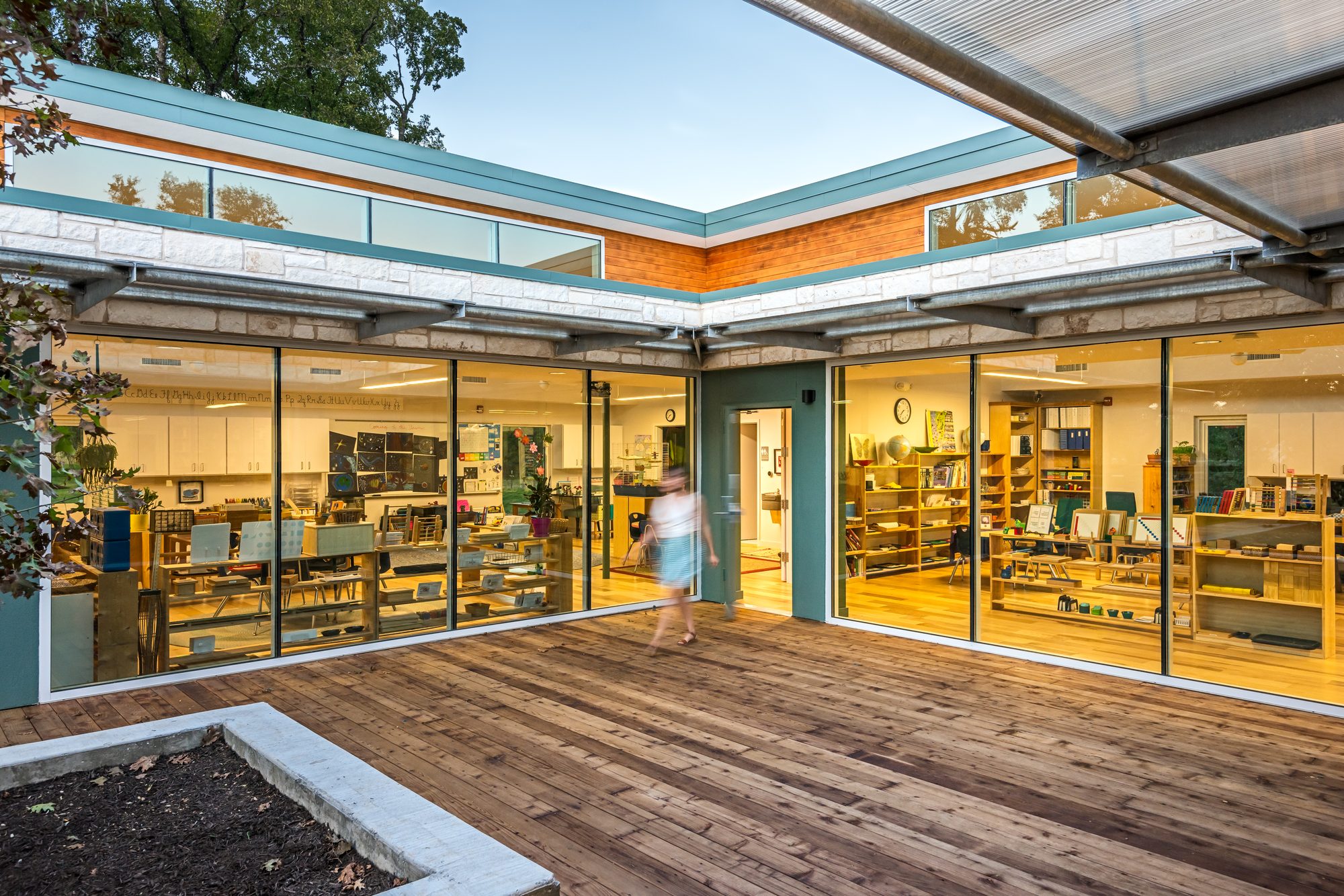
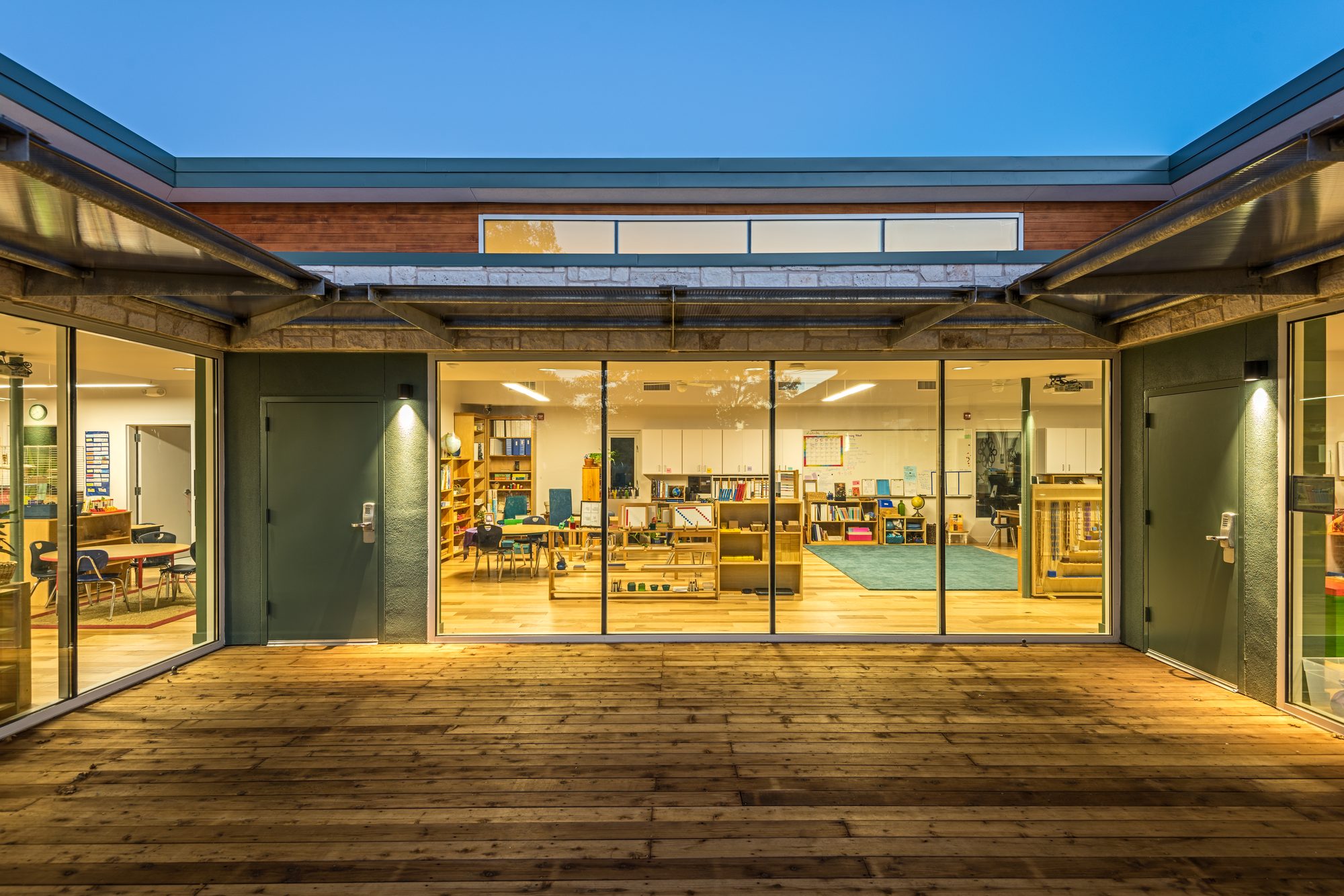
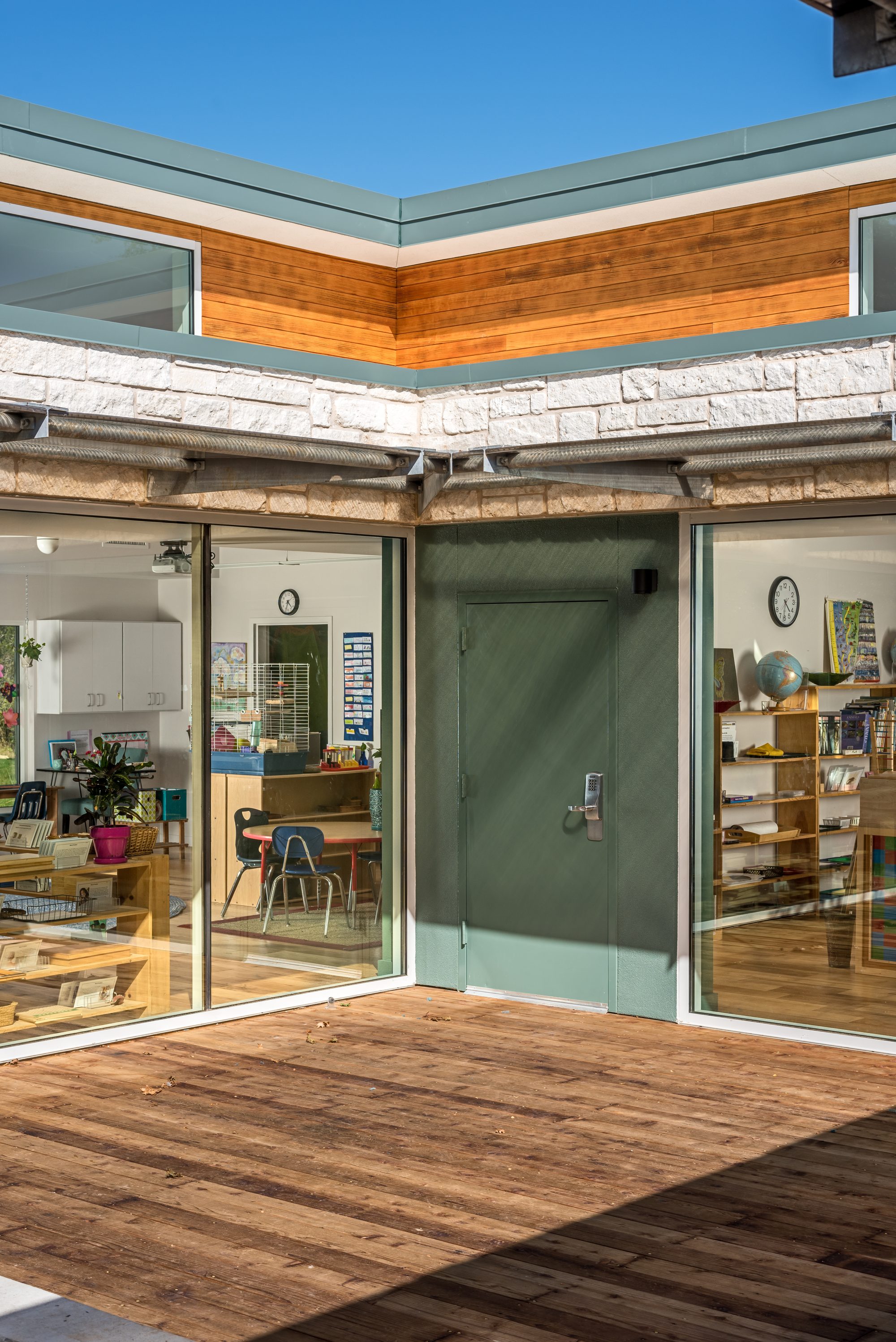
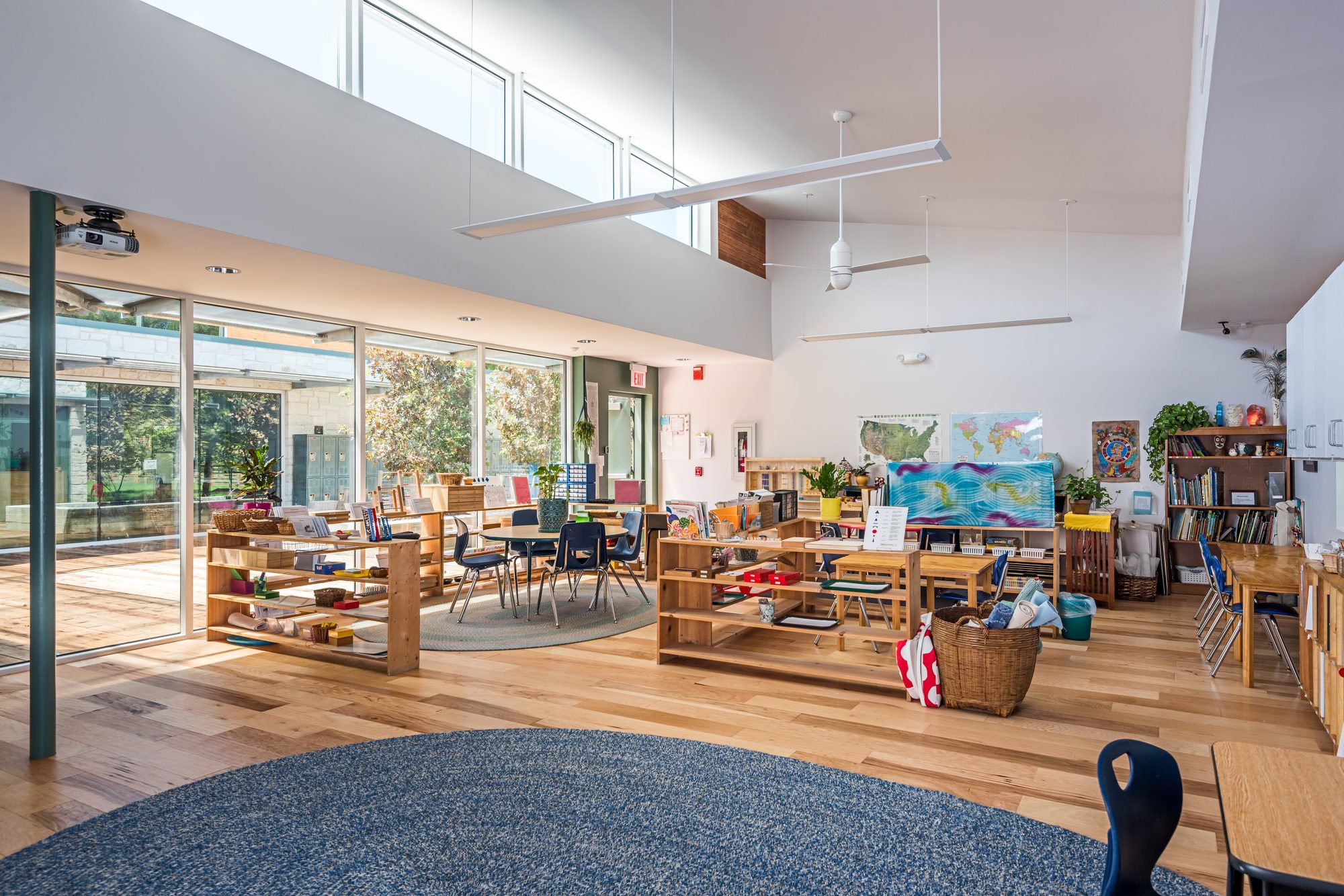
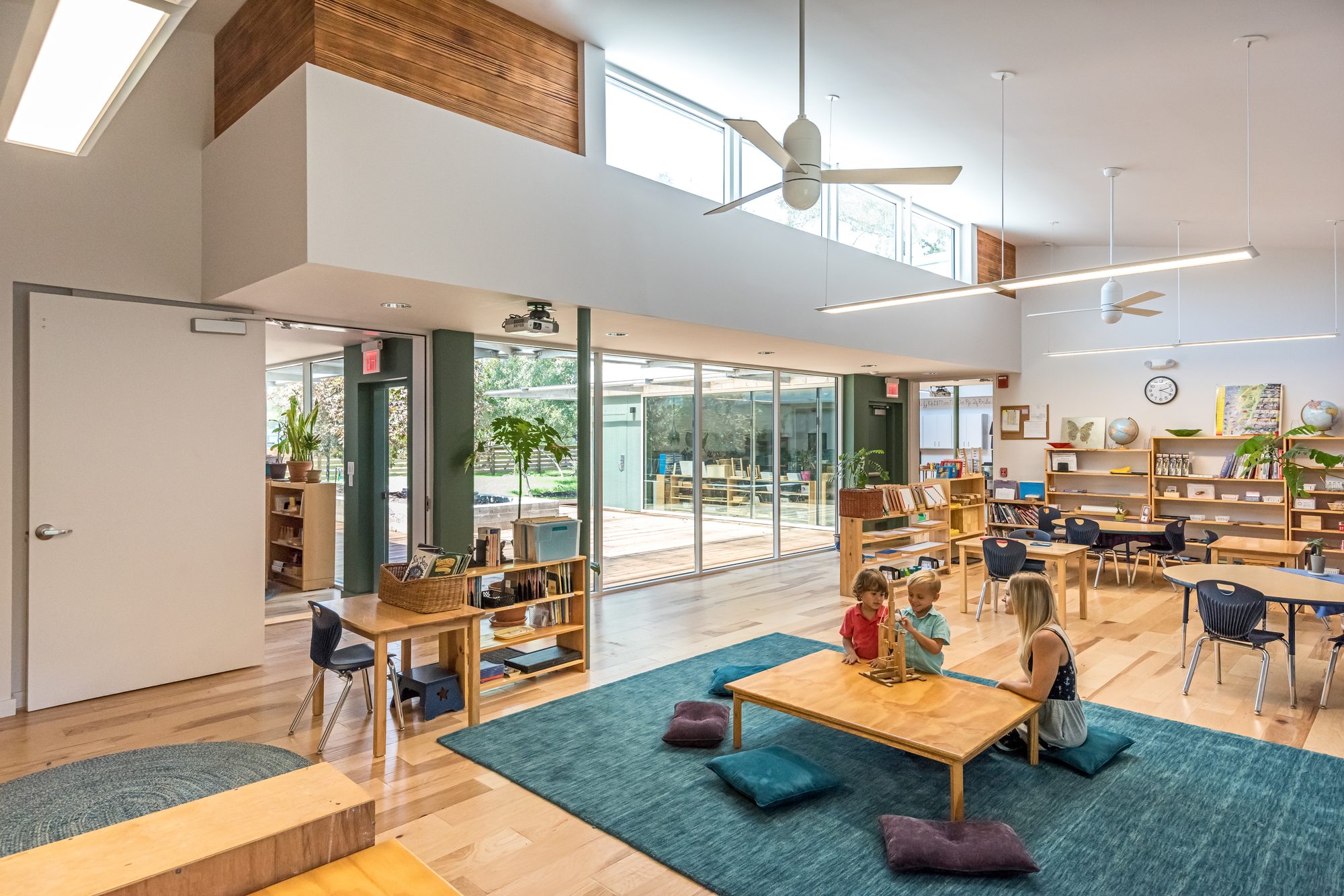
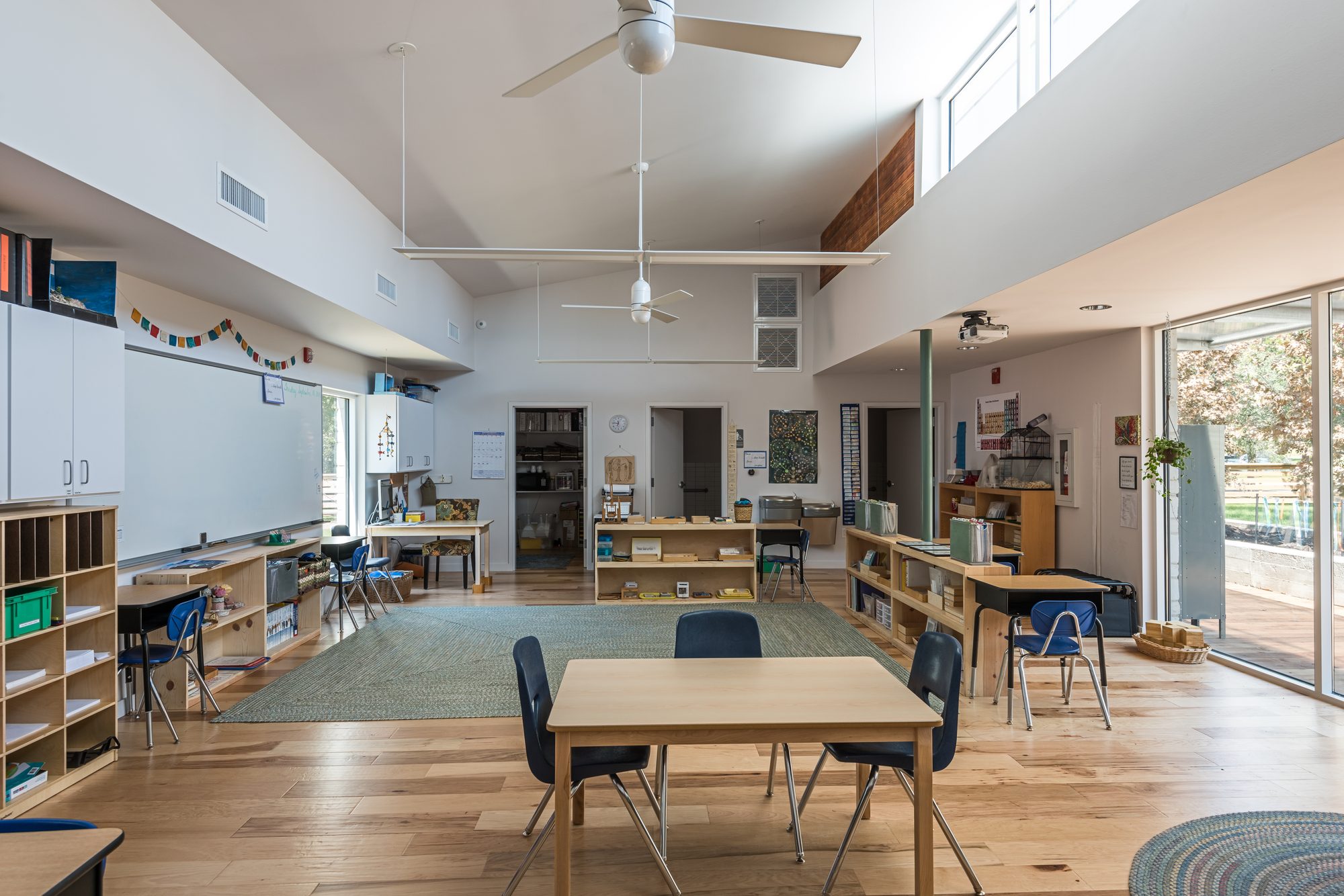
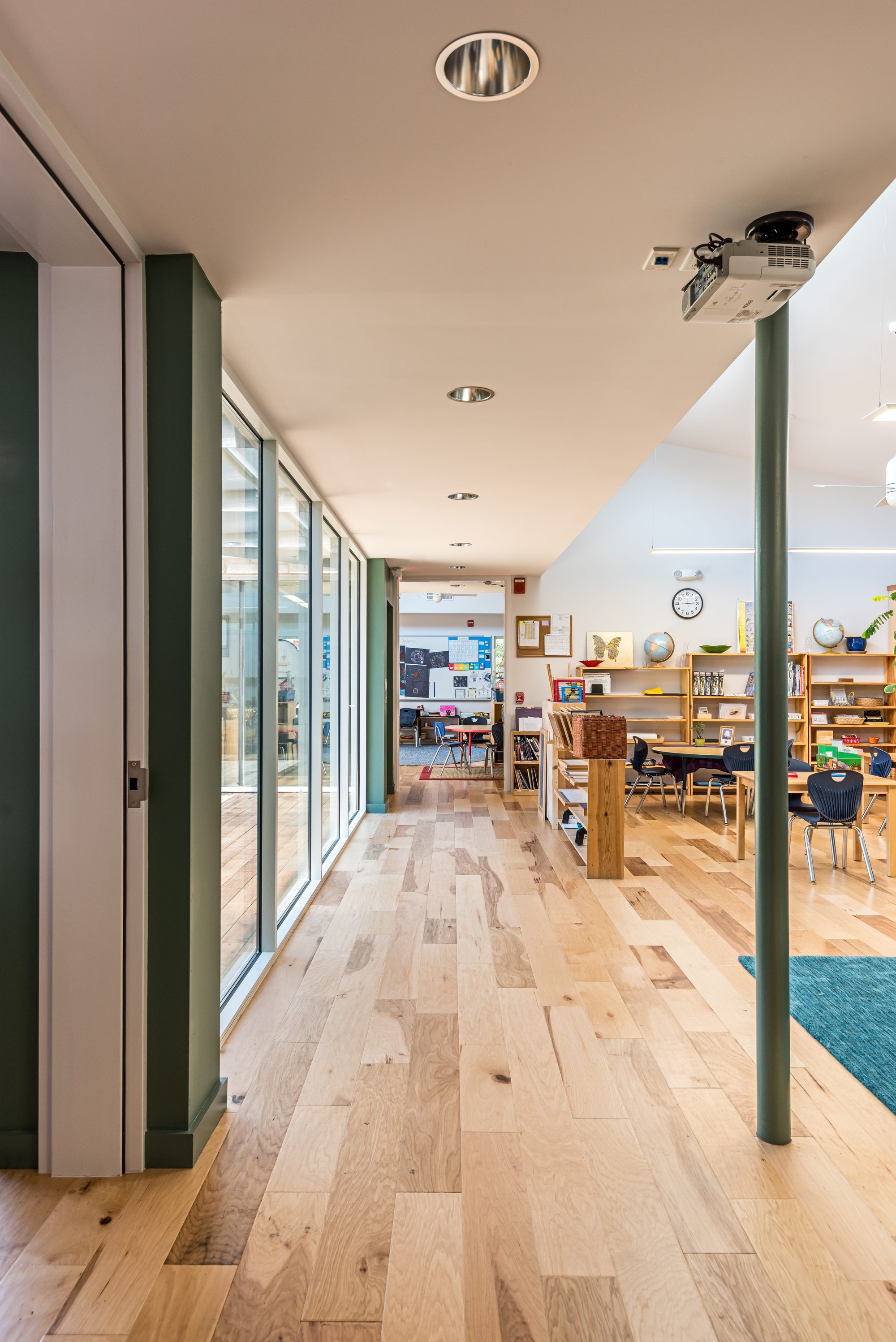
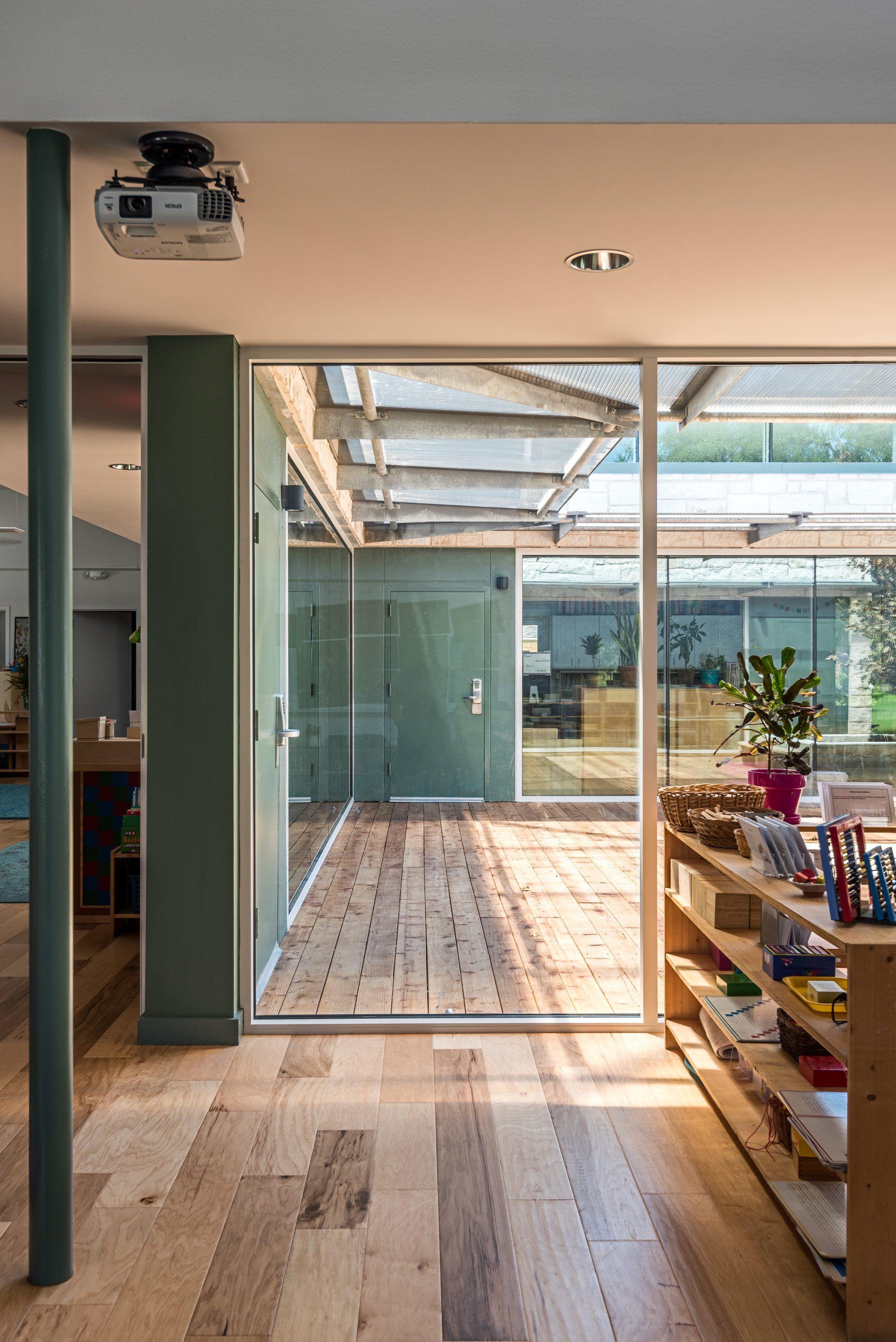
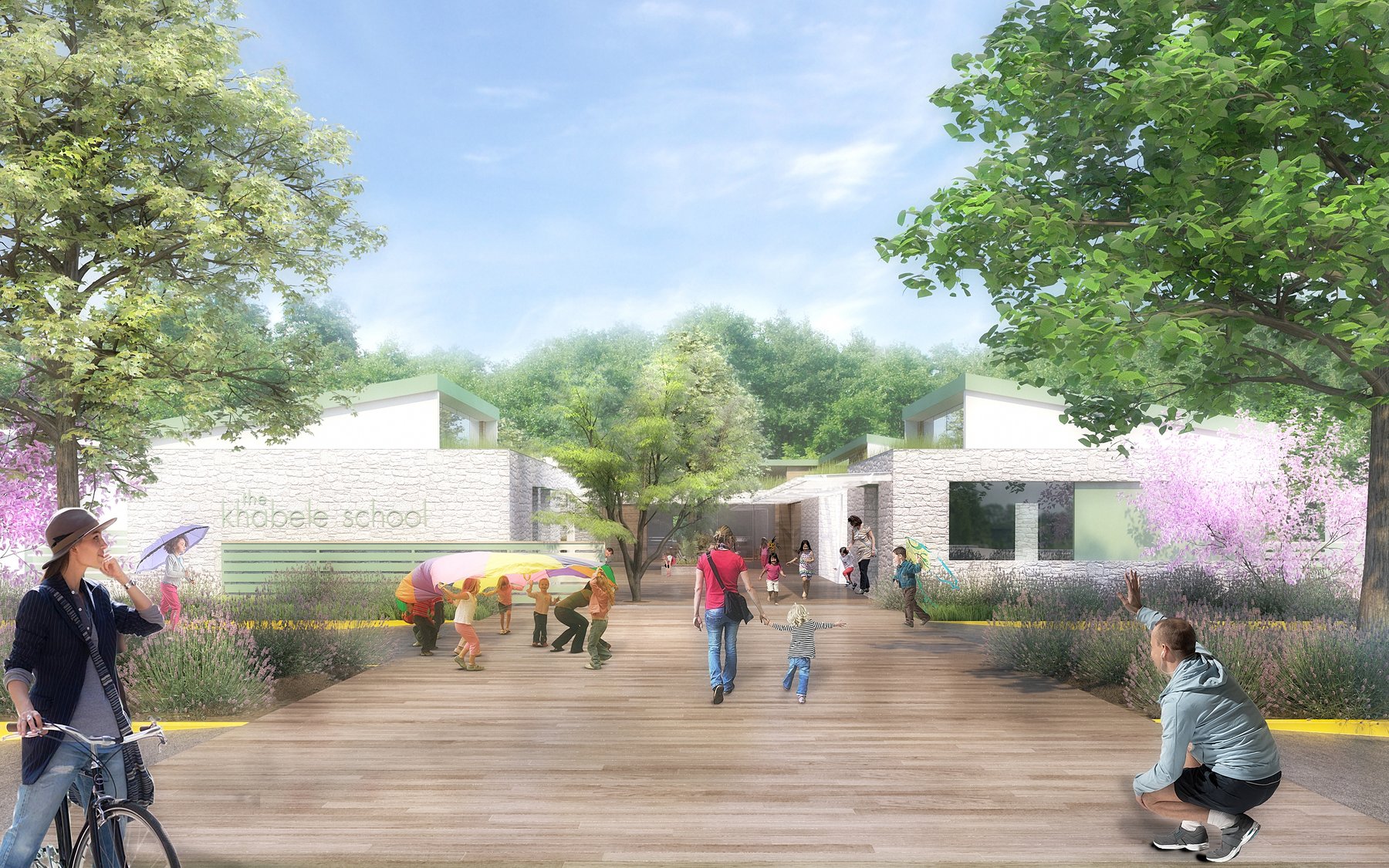
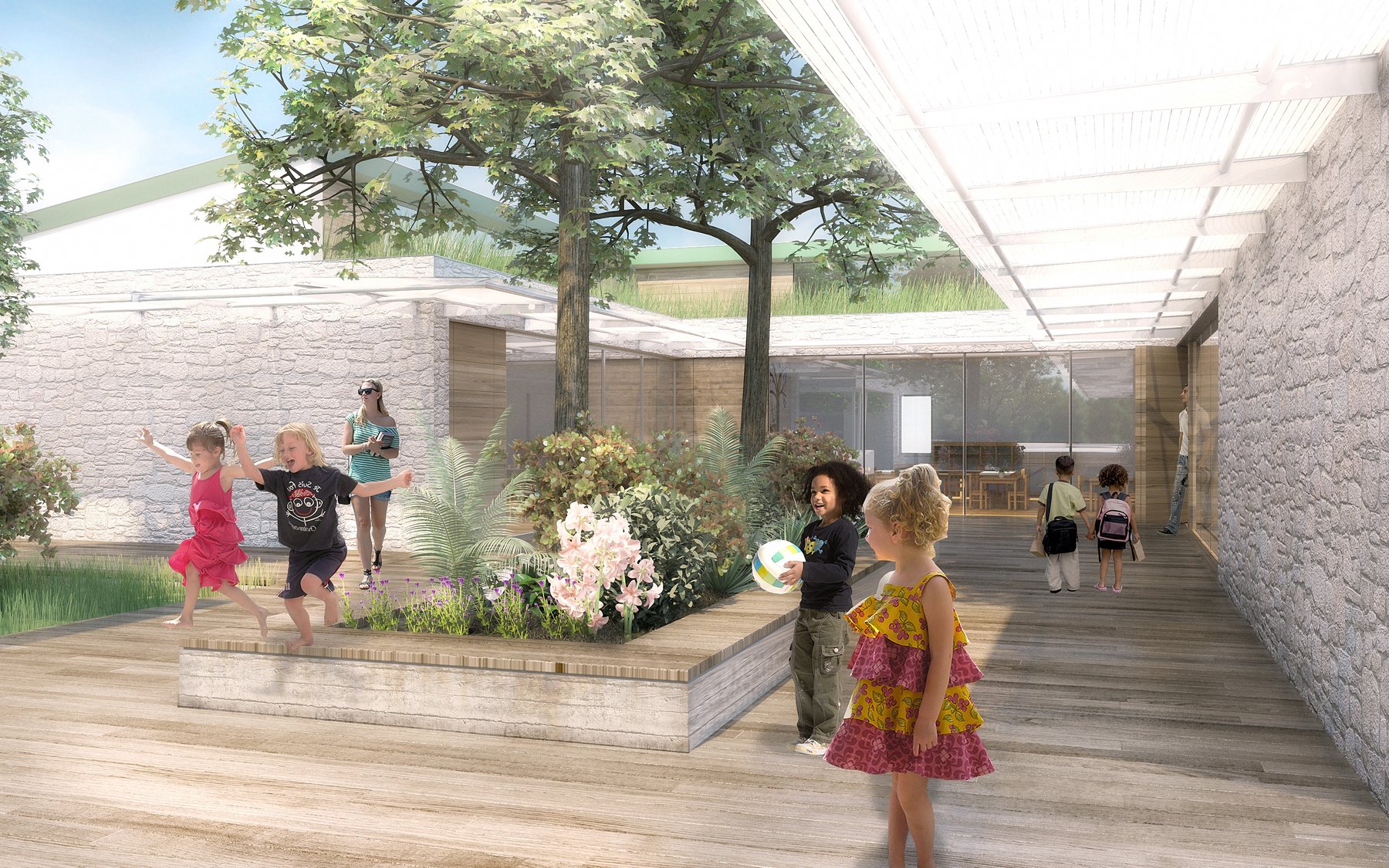
The two classrooms wrap a covered exterior courtyard that becomes the room they share. The courtyard is the project’s most consequential decision — not a circulation path between rooms, but a third space that the program is organized around. Limestone walls, green steel structure, cedar clerestory bands, and translucent canopy panels carry the architectural work. Inside, the vaulted ceilings give every classroom the volume that Montessori work demands, and the clerestory daylight enters above the work surfaces, never glaring on them.
Construction approach
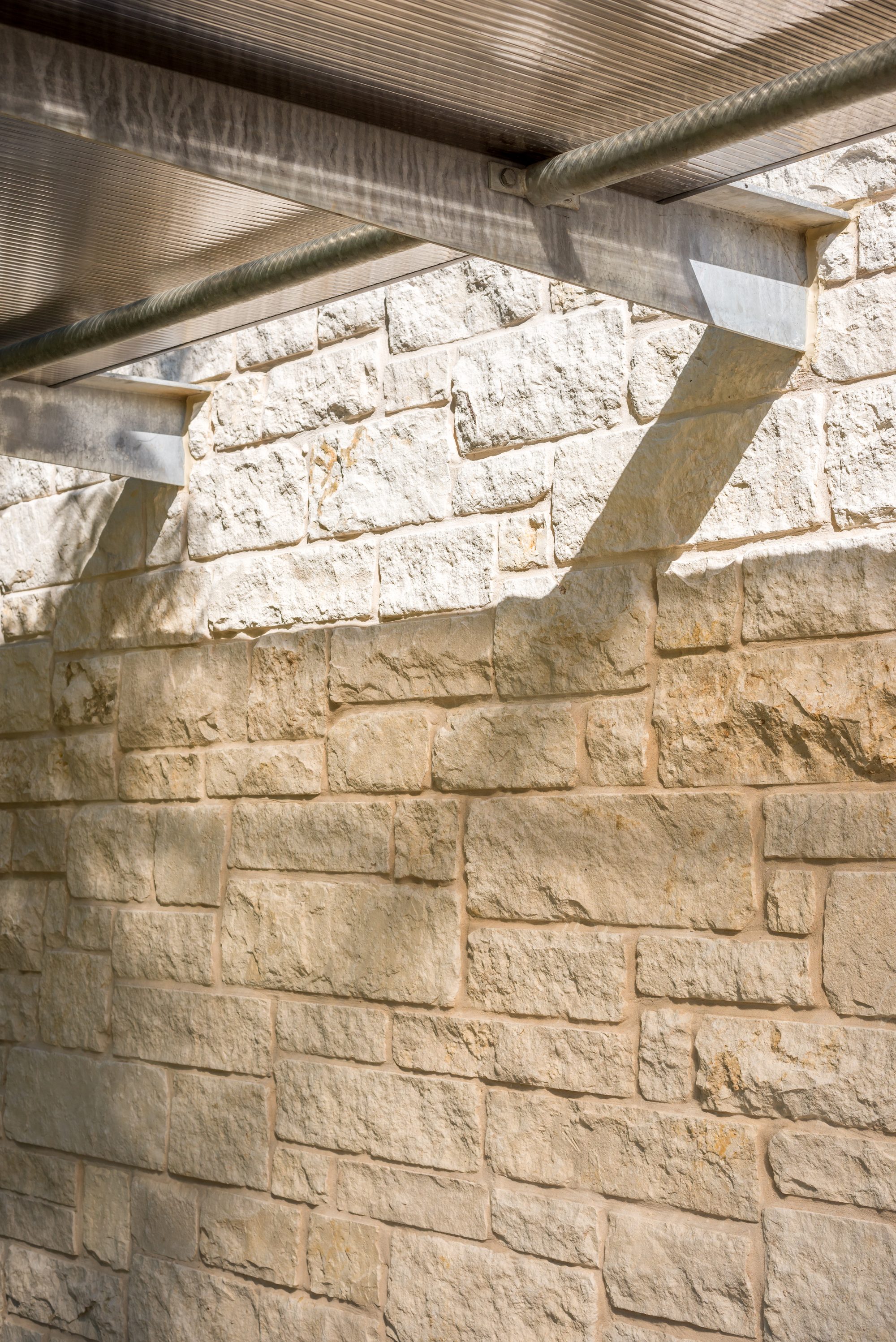
Standard wood and steel construction, with the limestone walls treated as both structural and cosmetic — the rough-face Texas limestone reads as continuous with the surrounding hill country geology. The translucent canopy over the courtyard is detailed as a separate lighter assembly so it reads as canopy rather than as building extension.
Outcome
The Headwaters Expansion received the 2016 AIA Austin Design Award and the Texas Architecture Design Award the same year. More importantly, it is the building from which the studio’s confidence in clerestory daylight, courtyard organization, and modest civic-scale architecture has carried forward — the courtyard logic in particular has become a pattern the practice continues to apply across experiential and educational typologies.